YELLOWKNIFE — A new international study released this week concludes that human-caused climate change has made extreme wildfire conditions in the Northwest Territories about two times more likely this season, as the territory battles hundreds of active fires and communities continue to feel the impacts.
Research links warming to increased fire risk
The analysis by World Weather Attribution examined weather conditions linked to the recent wildfire season and concluded that human-driven warming has significantly increased the probability of the extreme fire weather now affecting parts of the North.
Jonathan Boucher, a co-author of the study and research scientist with the Canadian Forest Service, said the territory’s boreal forests are particularly vulnerable to such conditions. “Boreal forests are really prone to extreme wildfires under extreme fire weather conditions. And you guys happen to be in extreme fire weather conditions right now,” he told reporters.
How the season looks on the ground
As of Aug. 7, the Northwest Territories had recorded 274 fires in 2026, with 219 still active. The study notes that, in terms of total area burned, this year is tracking close to 2023 — currently the worst fire year on record for the territory.
| Measure | 2026 (as of Aug. 7) | Context |
|---|---|---|
| Total fires recorded | 274 | Includes both active and contained blazes |
| Fires still active | 219 | Majority of recorded fires remain ongoing |
| Historic comparison | On track with 2023 | 2023 remains the largest area burned in recent records |
Community impacts and evacuations
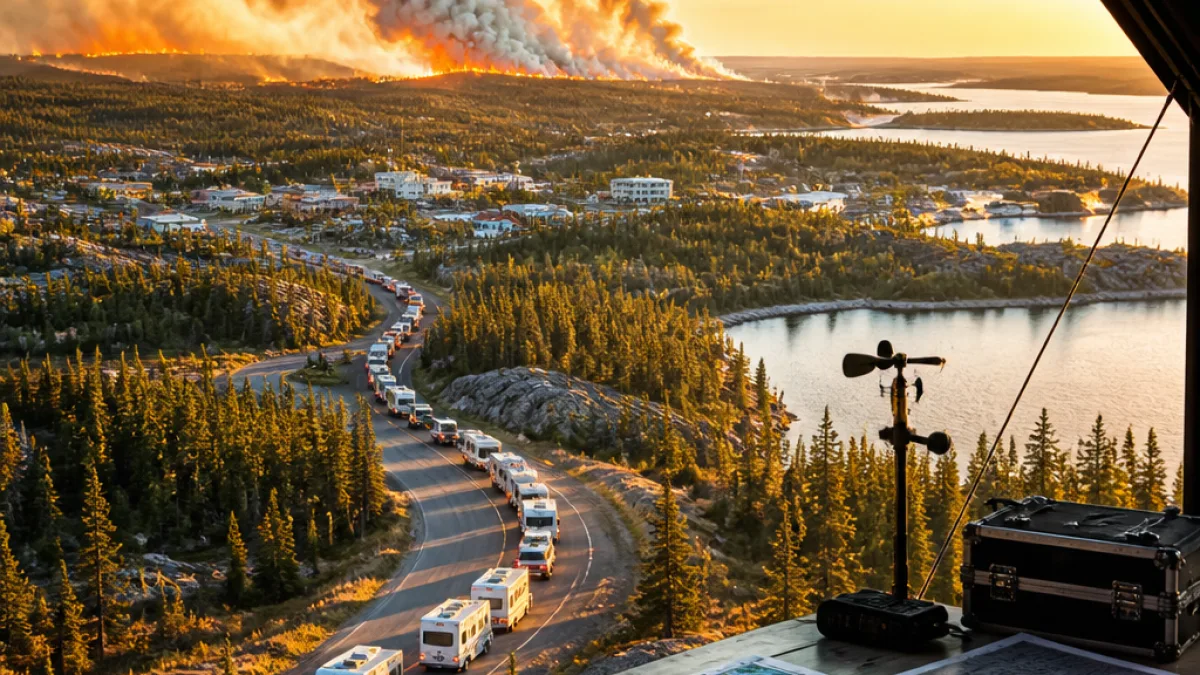
The research arrives while the territory contends with significant local consequences. Wildfires have forced prolonged evacuations of residents from communities including Fort Simpson and Wrigley. Across Canada, thousands have been compelled to leave homes as fires encroach on communities and infrastructure.
“We urgently need to decrease our fossil fuel use if we don't want this to get worse year on year.”
The line above, voiced in public commentary on the report, reflects growing concern among health and climate experts that emission reductions are necessary to prevent worsening trends.
Health and emergency perspectives
Local health professionals and emergency responders have been monitoring the smoke, evacuations and strain on services. The hazards from large wildfires include immediate threats to life and property, but also broader public-health effects from prolonged smoke exposure, disruptions to supply chains and pressure on medical services in affected communities.
Dr. Courtney Howard, an emergency physician in Yellowknife and chair of the Global Climate and Health Alliance, welcomed the World Weather Attribution findings, saying they help clarify the role climate change plays in the disaster patterns now unfolding.
What the findings mean for the territory
For residents, the study reinforces what many in the North have experienced in recent years: fire seasons are getting more intense and less predictable. For territorial and federal policymakers, the analysis adds to the evidence base supporting stronger mitigation and adaptation measures, including fuel-emissions reductions, improvements to community preparedness and increased support for firefighting capacity and evacuation planning.
- Prepare early: Residents in fire-prone areas should review evacuation plans and emergency kits.
- Stay informed: Monitor official N.W.T. wildfire updates and community bulletins for evacuation orders.
- Health precautions: Vulnerable people should minimise smoke exposure and follow local public-health advice.
The World Weather Attribution study adds a rigorous, climate-science lens to the reality seen across the territory this summer. As the season continues, officials and communities in the Northwest Territories face mounting pressures to respond to immediate impacts while also confronting the longer-term challenge of a warming climate that is altering the frequency and intensity of wildfires.
Reporting for NEXO RADAR will continue to track developments in fire activity, evacuations and official responses across the territory.