Discussion over where and how to host the next generation of computing infrastructure has arrived in the Northwest Territories, with competing visions emerging for smaller, Indigenous-led data centres and a much larger, hydro-powered approach that would rely on dams along the Mackenzie River. The debate has implications for energy, land stewardship and economic development in and around Yellowknife.
Two very different proposals
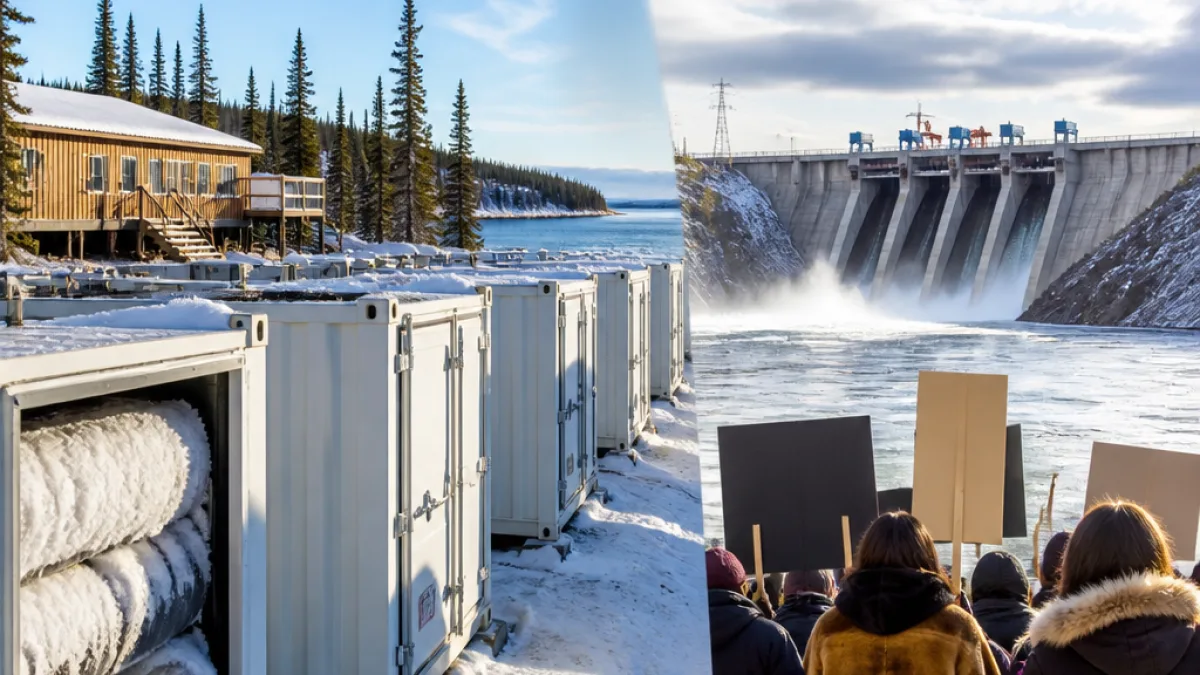
On one side, K’atl’odeeche First Nation entrepreneur Lyle Fabian, chief executive officer of KatloTech Communications, is pitching a model he describes as a conventional, container-sized data centre built on First Nation lands near Hay River. The KatloTech website describes the planned IceFox Data Center as hydro-powered and snow-cooled, and emphasises that all hosted data would remain within Indigenous and Canadian jurisdiction.
Fabian stressed the distinction between his proposal and the much larger, so-called hyperscale facilities that host large-scale artificial intelligence services. He argued such mega-sites — commonly referred to as "hyper scalers" — would not be appropriate for the territory.
“I’d never allow a hyper scaler to come into the Northwest Territories, ever,”
Fabian pointed to concerns over water consumption, development footprint and possible environmental impacts from large hydro projects as reasons to favour smaller, locally governed facilities.
Ambitious hydro plans and a counterargument
Advocating the opposite approach, Yellowknife prospecting geologist Lou Covello has put forward a provocative idea: construct a hydroelectric complex on the Mackenzie River to supply large volumes of power for an NWT-based AI data centre that could also export electricity to Alberta and Saskatchewan. Covello framed the concept as a major economic opportunity for the region and circulated an essay titled, ‘Canada’s trillion-dollar opportunity: the Mackenzie River hydroelectric complex and the AI data centre revolution.’
In an unusual detail, Covello disclosed his essay was written in part using Microsoft’s Copilot artificial intelligence tool.
Indigenous leadership urges caution
K’atl’odeeche First Nation leadership has signalled that any development on its lands requires careful review. While Chief Elaine Auger was not available for immediate comment, the K’atl’odeeche leadership released a public statement saying any proposed development — including consideration of an AI data centre — must be approached with care, responsibility and due diligence.
The statement specifically listed concerns that must be examined before decisions are made:
- environmental protection
- water resources
- potential impacts on KFN lands
- regulatory requirements
- interests and concerns of KFN members
Local stakes and unanswered questions
For Yellowknife and the rest of the Northwest Territories, the debate raises practical questions about who benefits from new infrastructure, how environmental risks will be managed, and what governance framework will oversee projects that cross municipal, territorial and Indigenous jurisdictions. Proponents of smaller facilities point to a lower environmental footprint and local control; advocates for large hydro projects argue for scale and export revenue potential.
Key decisions will hinge on environmental assessments, regulatory approvals and consultation processes led by Indigenous governments. For residents of Yellowknife — whose economy and social services are tied to territorial policy and large-scale resource decisions — the outcome could shape regional energy planning and opportunities for local providers and workers.
| Proposal | Characteristics |
|---|---|
| IceFox (KatloTech) | Container-sized, hydro-powered, snow-cooled, Indigenous/Cdn jurisdiction |
| Mackenzie hydro + hyperscale AI | Large dam(s), high power output, export potential, significant environmental concerns |
At this stage there are no final approvals reported for either approach. K’atl’odeeche First Nation’s emphasis on due diligence indicates Indigenous leadership will demand thorough review before any project proceeds. Meanwhile, public conversations — including essays and pitches from proponents — suggest the discussion in Yellowknife and across the NWT will continue as planners, governments and communities weigh economic promise against environmental stewardship.
Any future proposals that advance to formal review will trigger more detailed analysis and public consultation requirements under territorial and federal processes.