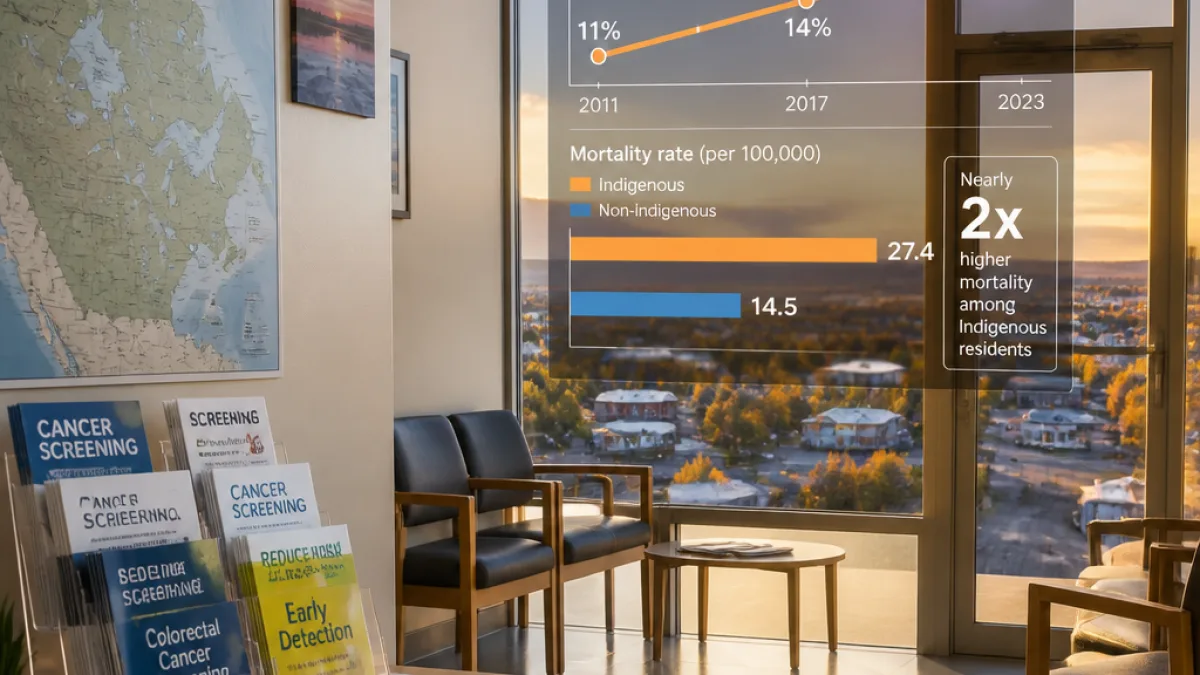
Yellowknife — A territorial review of cancer from 2011 to 2022 found that, after accounting for age differences, cancer mortality remained higher among the Northwest Territories' Indigenous population than among non-Indigenous residents, even though overall cancer rates in the territory have held roughly steady and are generally similar to national patterns.
Key findings and context
The Government of the Northwest Territories' report, Cancer in the Northwest Territories from 2011 to 2022, shows there were 1,971 new cancer diagnoses among residents during the 12-year period and an average of 164 invasive cancer diagnoses per year. Across the period, the territory averaged 62 cancer-related deaths per year — about 17 more deaths annually than the year 2000 baseline the report references.
While the report describes territorial cancer incidence as "generally similar to the rest of Canada" after adjusting for age, it also emphasises a persistent disparity between Indigenous and non-Indigenous mortality. The number of cancer deaths among Indigenous residents exceeded that among non-Indigenous residents in every year observed except 2021, when the numbers were equivalent.
"This report aims to provide a broad profile of cancer in the NWT to help inform program planning, policy, and practice. It also seeks to enhance the understanding of cancer in the NWT in interested members of the public."
Patterns by cancer type and community size
The report lists the most frequent cancer diagnoses in females as breast (29%), colorectal (15%) and lung and bronchus (13%). Together these three sites accounted for 57 percent of new cancer diagnoses in females between 2013 and 2022.
Notably, colorectal cancer represented a larger share of cases among Indigenous women — 21 percent — compared with 8 percent among non-Indigenous women. The territory also saw higher proportions of colorectal cancer in smaller communities (23 percent) than in regional centres (14 percent).
| Cancer (females) | Share of diagnoses (2013–2022) |
|---|---|
| Breast | 29% |
| Colorectal | 15% |
| Lung and bronchus | 13% |
What this means locally
For health providers and communities across the NWT, the report underscores two linked realities: the overall volume and profile of cancer in the territory aligns broadly with Canada after age-standardisation, but Indigenous residents continue to bear a disproportionate share of deaths.
That pattern points to factors that may include differences in access to screening and timely diagnosis, comorbidities, social determinants of health, or barriers to treatment — issues the report is intended to inform rather than resolve. The executive summary frames the document as a tool to guide programming, policy and practice.
Practical takeaways
- Screening and early detection: Colorectal and breast cancers remain leading diagnoses for women; screening uptake and access in smaller communities may be a focus for prevention.
- Service planning: Higher colorectal shares in smaller communities suggest targeted outreach and diagnostic capacity outside regional centres could alter outcomes.
- Data-informed policy: The report provides baseline figures — incidence, deaths and staging data — that the GNWT can reference in program decisions.
The report also notes staging at diagnosis for breast, colorectal and lung cancers in females was similar to Canadian patterns, indicating that for those cancers at least, stage at detection in the NWT does not differ markedly from national experience.
Next steps and limitations
The GNWT's aim is to support planning and public understanding, but the report does not by itself prescribe interventions. Further work would be required to disaggregate causes of the mortality gap and to evaluate specific measures such as expanded screening, culturally safe care models and improved diagnostic pathways for smaller and remote communities.
For residents, the practical advice remains consistent with cancer prevention and early detection principles: participate in recommended screening programs when eligible, consult local health centres about symptoms that persist or worsen, and discuss risk factors with primary-care providers.
As the territory considers program adjustments, the report will be central to conversations among the GNWT, health authorities and Indigenous governments about how to reduce the gap in cancer outcomes and ensure equitable care across the Northwest Territories.