The Government of the Northwest Territories has released its annual technical report evaluating the Junior Kindergarten to Grade 12 education system, highlighting meaningful progress in early learning alongside ongoing challenges with student attendance and graduation.
Early learning participation rises
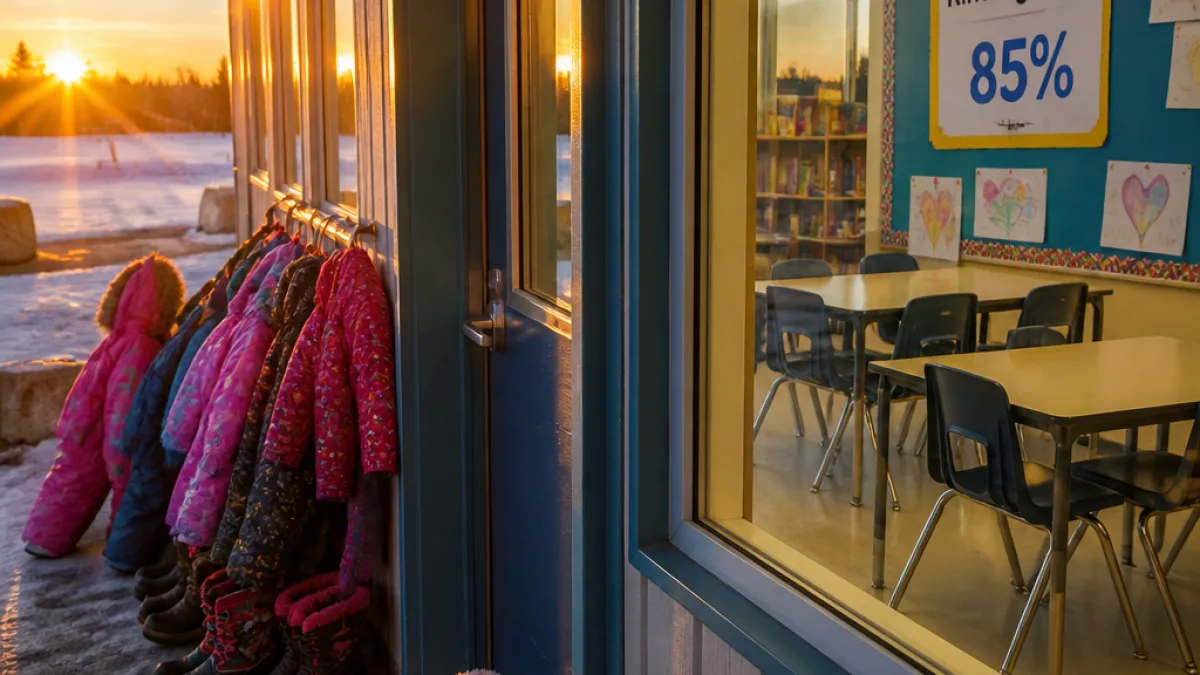
Among the most notable findings, the 2024–25 report documents a strong take-up of early childhood programming: as many as 85 per cent of four- and five-year-olds are enrolled in Junior Kindergarten in some parts of the territory. The report frames that increase as a positive development for long-term educational outcomes, reinforcing the value of early engagement in learning.
Attendance and graduation remain concerns
Despite the early-learning gains, the report stresses that student attendance and graduation rates require continued attention. It notes these areas did not show the same level of improvement and remain priorities for the Government of the Northwest Territories (GNWT) and its education partners.
"Performance reporting helps us understand where our education system is succeeding and where more work is needed. While we are encouraged by continued strengths in early learning participation, this year’s report also reinforces that challenges remain." — Caitlin Cleveland, Minister of Education, Culture and Employment
The minister emphasised that improving educational results is a shared responsibility. The GNWT statement accompanying the report listed a range of collaborators — schools, families, communities, education bodies, Indigenous governments and Indigenous organisations — as central to raising achievement.
Governance and supports highlighted
The government said it is working with education bodies and partners on initiatives intended to boost student engagement, attendance and well-being. Programs focus on fostering a sense of belonging, creating meaningful learning experiences and supporting student mental health — elements the report identifies as linked to better retention and completion outcomes.
- Early learning: Up to 85% Junior Kindergarten participation for four- and five-year-olds in some areas.
- Attendance: Identified as an area needing improvement; no single territorial figure provided in the summary.
- Graduation: Also flagged as a priority for targeted action.
What the data shows — a quick reference
| Measure | Report finding |
|---|---|
| Junior Kindergarten participation | Up to 85% enrolment for four- and five-year-olds in some areas |
| Student attendance | Reported as needing improvement; ongoing focus for GNWT and partners |
| Graduation rates | Highlighted as a continuing challenge requiring priority action |
The report is presented as a technical account of system performance rather than a policy prescription. It is intended to inform decision-making by education authorities, community leaders and territorial ministers by identifying strengths to build on and weaknesses to target.
Officials said the full report is available online for those who want a detailed breakdown of measures, trends and jurisdictional comparisons. The GNWT pointed to the document as part of a cycle of reporting and improvement — using data to set priorities, design interventions and measure progress in subsequent years.
For residents and communities, the results reinforce two practical messages: early childhood programming is increasingly accessible across the territory, and families and local education partners will continue to be central to efforts aimed at improving attendance and graduation. The government’s stated approach couples system-wide initiatives with partnerships intended to tailor supports to local conditions and needs.
As the next school year approaches, officials and education partners face the task of turning the report’s findings into targeted programs and supports that address attendance and completion, while maintaining momentum in early learning participation.