
Four leading Google AI scientists are leaving the company to form a new venture, Discovery Loop, that intends to automate the experimental cycle in fields such as drug discovery, materials science and chip design. Alphabet’s Google will take an ownership stake in the start-up and supply cloud compute credits for its first year, according to published reports.
Senior talent departs with company backing
The founders named in reports include long‑time Google veterans who have played central roles in the firm’s research efforts. The move was disclosed publicly after weeks of speculation and follows a prominent appearance by one founder at a major entrepreneurship event in which the concept was described in broad terms.
"Propose an experiment, run it, evaluate the results, then repeat, thousands of times over"
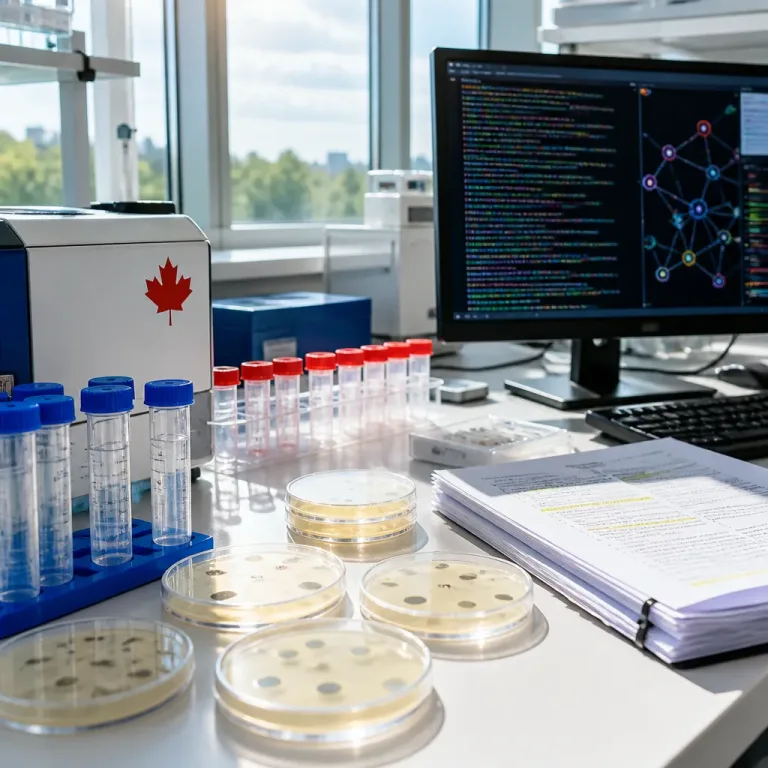
The quoted description captures the venture’s ambition to create closed‑loop systems that generate hypotheses, execute experiments and interpret outcomes with minimal human intervention. The approach aims to accelerate discovery by increasing the speed and scale at which iterative tests can be performed.
What the new company aims to do
Discovery Loop’s stated objective is to combine advanced machine learning with automated laboratory workflows to shorten the time between idea and result. Candidate applications include accelerating the search for new therapeutic compounds, designing semiconductor components and identifying novel materials with desirable properties.
Automating the experimental pipeline would require deep integration of generative models, high‑throughput lab robotics and rigorous evaluation frameworks. Support from a major cloud provider for compute resources in the early stage reduces a significant barrier to training large models and running intensive simulations.
Context and potential consequences
The departure of senior researchers to start an AI company is notable for several reasons. First, it exemplifies the fluid movement of top talent between corporate research labs and commercial start‑ups. Second, the project’s scope — aiming to shorten iteration cycles across multiple scientific domains — could reshape how applied R&D is organised if successful.
Observers say such ventures can speed translation from lab discovery to commercial applications, but they also raise questions about reproducibility, safety and oversight. Automated systems that test thousands of hypotheses have the potential to produce unexpected results that require careful validation and governance.
Major technology transfers and commercial spinouts have regulatory and policy implications in Canada and internationally. Policies governing research integrity, data sharing, biosafety and export controls could come under renewed scrutiny if automated discovery platforms become widely adopted for sensitive domains such as pharmacology or advanced materials.
Founders, support and early resources
Reports identify the founding team as senior figures from Google’s research ranks. The company is reported to have agreed to provide cloud computing for the start‑up’s first year and to take an equity stake, signalling continued corporate interest despite the founders’ departures.
| Founder | Role / background |
|---|---|
| Jeff Dean | Long‑time Google researcher and chief scientist |
| Sanjay Ghemawat | Senior systems and infrastructure researcher |
| Oriol Vinyals | Prominent AI researcher |
| Quoc Le | Senior researcher in machine learning |
Early backing of cloud compute and an equity stake from a major platform provider reduces capital needs and enables rapid prototyping, but it also highlights the intertwined nature of corporate research ecosystems and emerging start‑ups.
- Ambition: Build closed‑loop AI systems to run experiments end‑to‑end.
- Support: Google is reportedly supplying compute credits and taking a stake in the start‑up.
- Implications: Potential to accelerate R&D but also to raise governance and reproducibility concerns.
The formation of Discovery Loop adds to a broader trend in which AI capabilities are being deployed to address complex scientific problems. How regulators, academic institutions and industry partners adapt will shape whether such platforms drive responsibly governed innovation or create new challenges for oversight.
This development will be closely watched by researchers, investors and policy makers in Canada and abroad as the balance between rapid technological progress and societal safeguards continues to evolve.