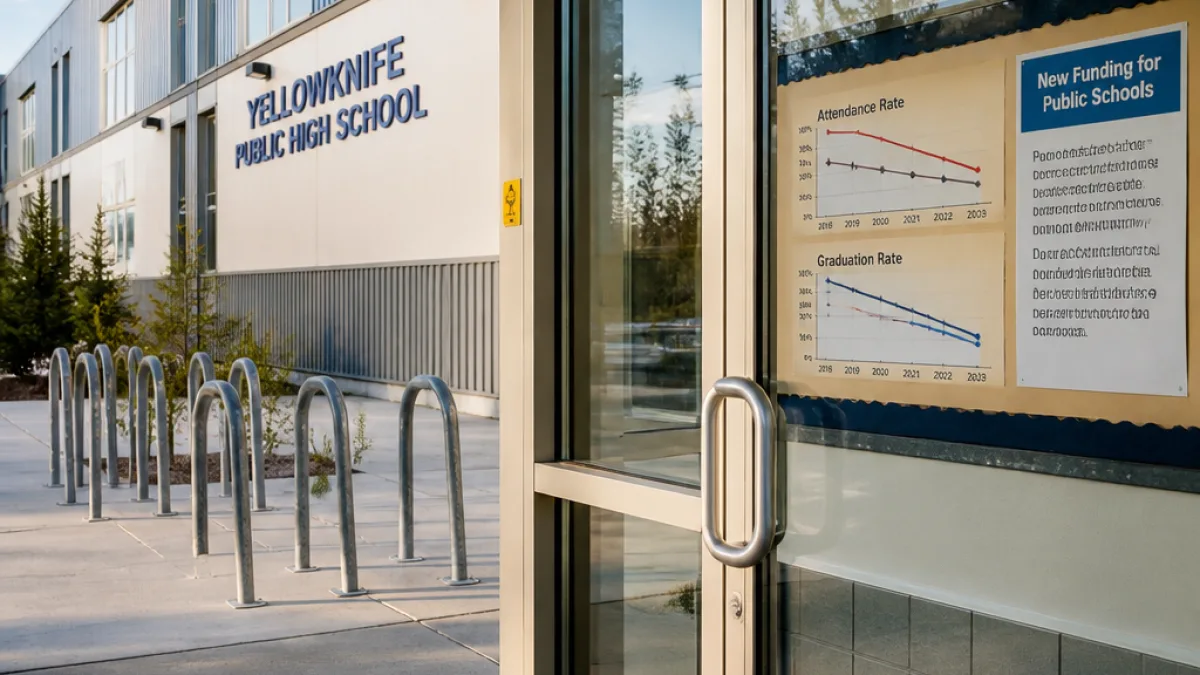
The Northwest Territories is confronting a sustained slump in student outcomes, with attendance and graduation figures for the 2024-25 school year marking the lowest levels in at least a decade, Education Minister Caitlin Cleveland said July 28.
Troubling metrics prompt fresh investment
Speaking on Cabin Radio’s The North Today, Cleveland said the territory is attempting to reverse what the latest data describe as a years-long decline by reallocating resources and adding new funds. She acknowledged that the system’s current indicators are unacceptable to school officials and the department.
Among the figures released this week is a six-year graduation rate of 54 percent. Cleveland pointed to the cumulative effects of events such as the COVID-19 pandemic, wildfires and flooding as disruptive forces that have contributed to deteriorating attendance and completion rates.
Funding changes as federal support wanes
The minister said the Government of the Northwest Territories is moving to plug gaps left as federal Jordan’s Principle funding diminishes. She said the GNWT is committing "tens of millions of dollars" in new support to try to stabilise and improve outcomes for students.
Details on the precise programs or where the money will be directed were not disclosed in full during the interview, but Cleveland indicated the funding will target student supports and system-level changes intended to bring the territory back toward pre-pandemic performance levels.
Local policy shifts and classroom practices
Cleveland also described anecdotal improvements tied to changes in school rules governing cell phone use. She said schools that have tightened phone policies are seeing less in-class disruption and a stronger focus on extracurricular engagement.
"There’s less drama in the classroom, there’s more connection between students, there’s more uptake in school sports, and those items together create better outcomes for our kids," Cleveland said.
The minister said she expects those behavioural and engagement shifts to be reflected in next year’s provincial data.
What the data means for students and communities
Low attendance and graduation rates carry immediate and long-term implications across the territory. Lower high-school completion can limit access to post-secondary education and training, reduce workforce readiness and place greater strain on social and economic supports in communities already facing labour and service challenges.
Community leaders and educators have repeatedly told territorial officials that stable funding, culturally relevant programming and targeted student supports are central to improving outcomes. Cleveland’s announcement indicates the GNWT is prioritising financial investment as one lever to address the decline.
- Key figure: Six-year graduation rate — 54% (2024-25)
- Primary drivers cited: COVID-19, wildfires, flooding and other disruptions
- Policy note: New cell phone rules at some schools are reported to be improving classroom climate
Next steps and timelines
Cleveland said the department’s ambition is to return students to pre-pandemic success levels and continue to build from there, but she did not provide a specific target graduation rate or a firm timeline for reaching it during the interview. The minister indicated more detailed results will be available when the next set of annual data is released, which she expects will show improvements if current measures take hold.
As federal Jordan’s Principle funding tapers, the GNWT’s newly announced investment will be closely watched by school boards, teachers and families across the territory. Education stakeholders will be looking for clarity on how funds are allocated, which programs will receive prioritisation and how progress will be measured.
The interview with Cleveland was recorded July 28 and has been edited for length and clarity.
| Indicator | 2024-25 |
|---|---|
| Six-year graduation rate | 54% |
| Attendance | Reported as lowest in at least a decade (no specific percentage released) |
Officials have signalled they will release further details on funding allocations and program planning in the coming months as they work to stabilise and improve outcomes for students across the Northwest Territories.