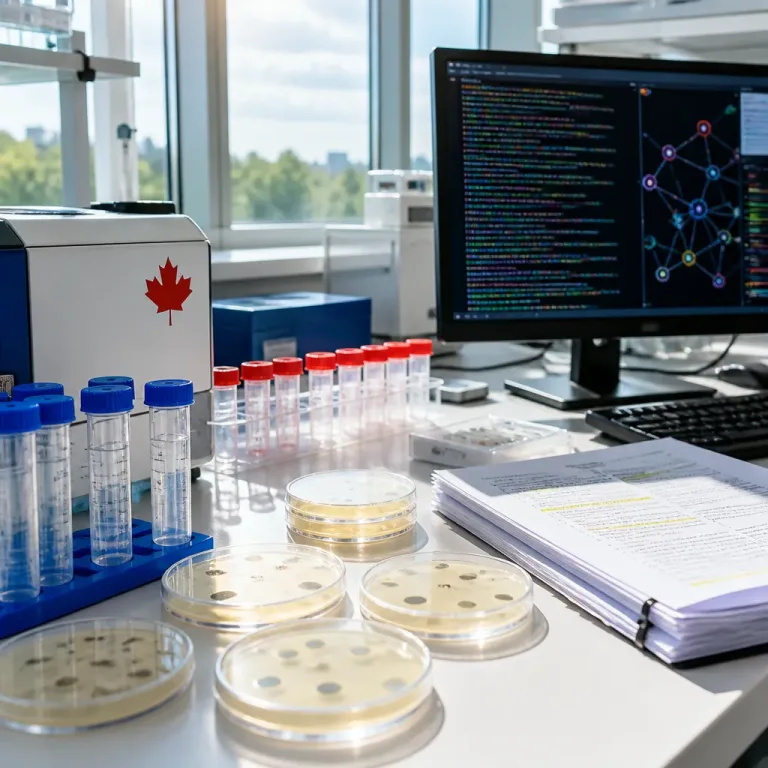
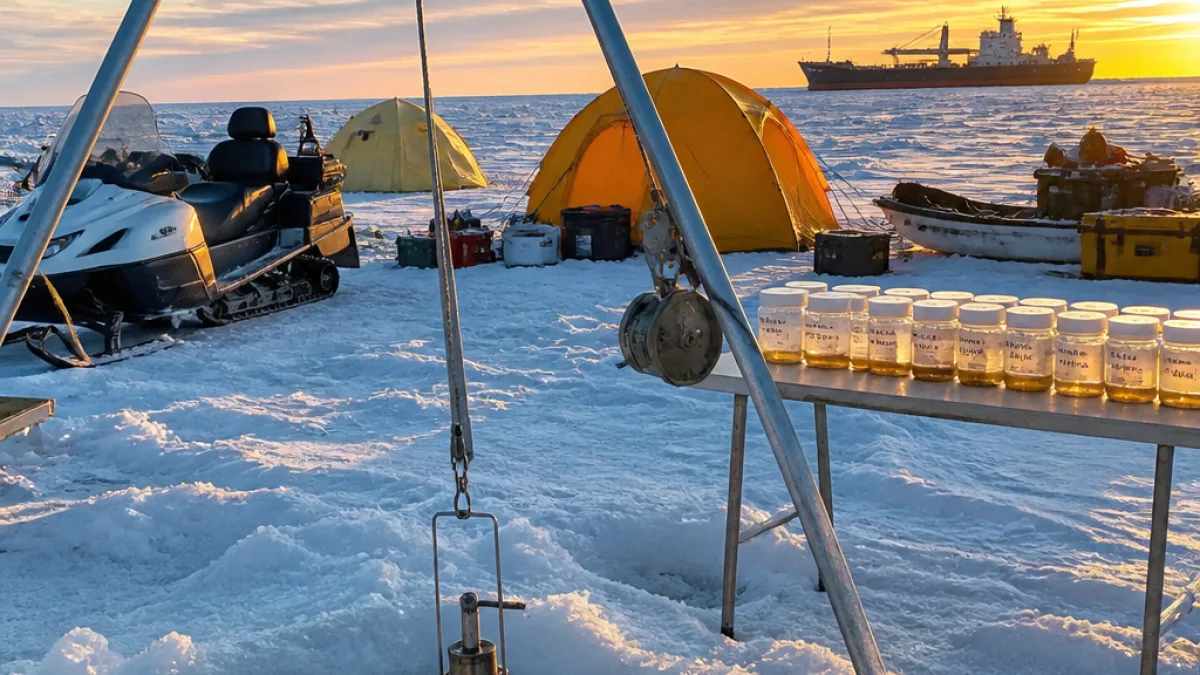
The waters off Chesterfield Inlet are serving as a living laboratory for a joint Inuit and southern research team studying microbes that naturally break down oil. The project, known as Genice II, is run from the Centre for Observation Science at the University of Manitoba in Winnipeg and has been active since 2022.
Why microbes matter here
Researchers say microbial communities form the foundation of the marine food chain and play a role both in sustaining traditional country foods and in keeping water clean. In Nunavut, microbial activity also supports traditional fermentation practices — supplying nutrients and vitamins important to kiviaq (fermented seabirds) and mikigaq (fermented whale).
But microbes are not only beneficial. Some varieties can produce harmful algal blooms that harm aquatic life. Scientists on the Genice II team are focused on establishing a baseline map of microbial life beneath the ice so any future changes can be identified and investigated.
Combining Inuit knowledge and western science
Genice II blends scientific sampling with Inuit Qaujimajatuqangit, or traditional Inuit knowledge. The study builds on earlier work conducted in Winnipeg and at the University of Calgary in 2015 and 2020. Samples collected from beneath the ice will act as reference points for future monitoring.
Monitoring these microbial communities gives researchers a tool for detecting oil contamination. Microbes that consume hydrocarbons behave as biological indicators: if an oil spill occurs, shorelines and water columns often show changes in the abundance of oil‑degrading species.
"If there were a spill, we would see indicator species that eat the oil," Collins said.
Local context and spill risk
The team reports no sign so far of disturbances that would point to a recent oil spill in the Chesterfield Inlet area. A small 50‑litre spill near Baker Lake, about 300 kilometres upstream, is not expected to affect the study findings, the researchers said.
But the research is being done against a backdrop of increasing marine traffic and a history of near‑catastrophe. In 2012, the MV Nanny ran aground in Chesterfield Inlet while carrying almost 3 million litres of fuel. That incident remains an important reminder of the stakes when ships move through Nunavut waters.
Cold changes everything
One clear finding from the research is that Arctic microbes act differently than their counterparts in warmer waters. Low temperatures slow metabolic activity — Arctic microbes can take roughly a month to consume the same amount of oil that temperate microbes would process in a much shorter period. That slower pace affects how quickly ecosystems recover from contamination and how long oil traces can persist in northern systems.
- Baseline mapping: Samples beneath sea ice to identify present microbial communities.
- Early detection: Tracking oil‑degrading species to flag potential spills.
- Food security link: Understanding impacts on the food web and traditional fermentation.
What this means for communities
For hunters and harvesters who rely on country food, the health of marine ecosystems is directly tied to well‑being. Microbial shifts can cascade up the food chain, affecting organisms consumed by people. By creating a baseline now, the Genice II team aims to give communities and governments better tools to respond if contamination is detected in future.
The presence of microbes that naturally degrade pollutants is reassuring, but researchers caution that this biological clean‑up is slower in Arctic conditions. Increased shipping raises the probability of accidents, and even smaller spills can have prolonged effects when cold water limits microbial activity and slows natural breakdown.
Project timeline and context
| Year | Event |
|---|---|
| 2012 | MV Nanny grounded near Chesterfield Inlet carrying ~3 million L of fuel |
| 2015 | Earlier microbial studies at the University of Calgary |
| 2020 | Follow‑up research in Calgary/WINNIPEG data continued |
| 2022 | Genice II project launched from the University of Manitoba |
Establishing this long‑term record is especially important in the Far North, where environmental conditions are changing rapidly. The Genice II team intends that the data will serve not only scientists but also communities and decision‑makers who must weigh the benefits and risks of increased marine activity.
As shipping through Hudson Bay and adjacent waterways grows, so too does the need for robust monitoring systems that reflect northern ecosystems and northern knowledge. By rooting its work in both scientific methods and Inuit Qaujimajatuqangit, Genice II aims to provide that kind of useful, place‑based information.
For residents along Chesterfield Inlet and other coastal hamlets, that information could make the difference between a fast, informed response to contamination and a slow, damaging one.