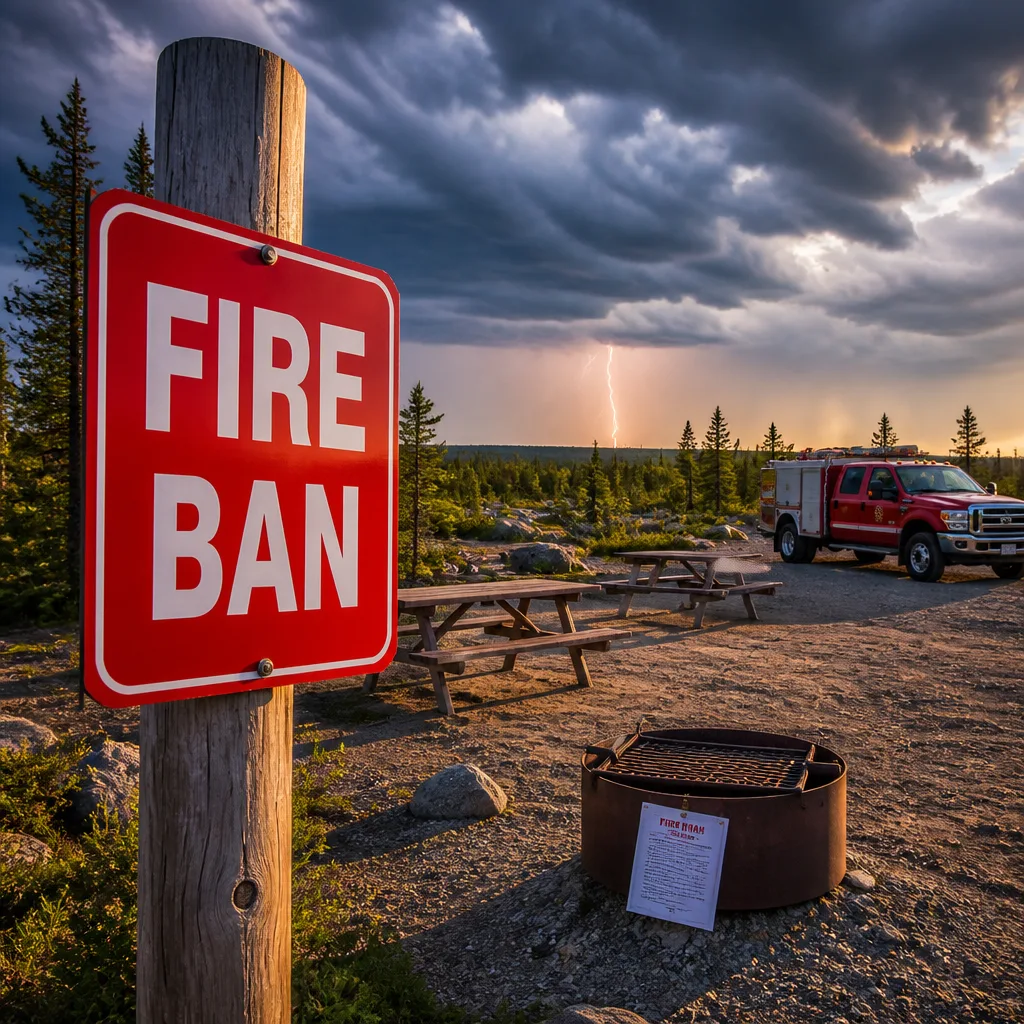
The Government of the Northwest Territories has announced a comprehensive fire ban covering all public and private lands in the North Slave region, effective immediately and scheduled to remain in place until July 28.
What the order does — and why
The Department of Environment and Climate Change and N.W.T. Fire said the extraordinary weather and extreme fire danger prompted the measure. Officials said the restriction is intended to reduce the risk of human-caused fires and to preserve limited firefighting resources for existing and potential wildfire activity.
“to protect communities and protect wildfire fighting resources.”
N.W.T. Fire's daily update had warned of “widespread thunderstorms, some of which could be strong to severe with gusty winds, possible hail, heavy rain, and frequent lightning,” a combination that can both spark new fires and complicate suppression efforts.
What is prohibited
The order cancels burn permits and bans a range of activities judged to raise ignition risk. The major prohibitions include:
- Starting, tending to or using open fires outdoors, including in open fire pits or burn barrels
- Use of fireworks, firecrackers and sky lanterns
- Discharging firearms using incendiary or tracer ammunition
- Shooting or detonating exploding targets
- Igniting signal flare devices or pyrotechnic bear bangers except in emergencies
- Storing flare devices, bear bangers or other pyrotechnic items that could ignite
Residents should treat the ban as comprehensive. Burn permits issued for household or camp use are temporarily cancelled while the order remains active.
Scope and context
This is the second sweeping fire ban of the summer for parts of the territory. A similar restriction was imposed in June, though that earlier measure also covered parts of the South Slave. In addition, a separate ban is already in place for multiple territorial parks across the North Slave, South Slave and Dehcho regions.
| Area | Restriction | Effective / Notes |
|---|---|---|
| North Slave | Ban on open fires, fireworks, certain ammunition; burn permits cancelled | Until July 28 |
| Multiple territorial parks (North Slave, South Slave, Dehcho) | Fire restrictions in place | Currently active (varies by park) |
N.W.T. officials said the decision to implement broad bans is not taken lightly. The goal is to avoid additional human-caused ignitions while crews remain focused on active fires and while forecast conditions could produce new starts — particularly from lightning, which is the territory’s most common natural fire-starter.
Practical implications for residents and visitors
People living in, travelling to or recreating in the North Slave should assume the ban applies to any activity that involves open flame or pyrotechnic devices. That includes backyard fire pits, campfires at seasonal campsites, and recreational use of fireworks or explosive targets. Smokers should take extra care when discarding materials, and boaters should not carry or use pyrotechnic flare devices unless for emergency signalling.
Anyone uncertain about whether a specific activity is allowed should contact local officials or N.W.T. Fire for clarification. The territorial government will reassess conditions as forecasts and fire behaviour evolve.
The order underscores a heightened wildfire season in the Northwest Territories and the continued need for caution while weather conditions remain volatile.