AI-powered threat detection systems are moving quickly from demonstrations to real-world deployments in U.S. K-12 schools, promising the ability to detect dangers as they unfold rather than only record them after the fact. But early rollouts have produced a mix of clear successes and stark failures, prompting questions about training, placement, human verification and the speed of adoption compared with the pace of regulation.
Mixed outcomes in early pilots
Vendors and some school officials point to successful interventions: in one district an AI system identified six real firearms. Yet other deployments have generated disruptive false alarms — including one instance in which a system misidentified a bag of chips as a weapon, triggering a police response with drawn firearms. Those contrasting episodes illustrate both the potential and the pitfalls of automating surveillance decisions in schools.
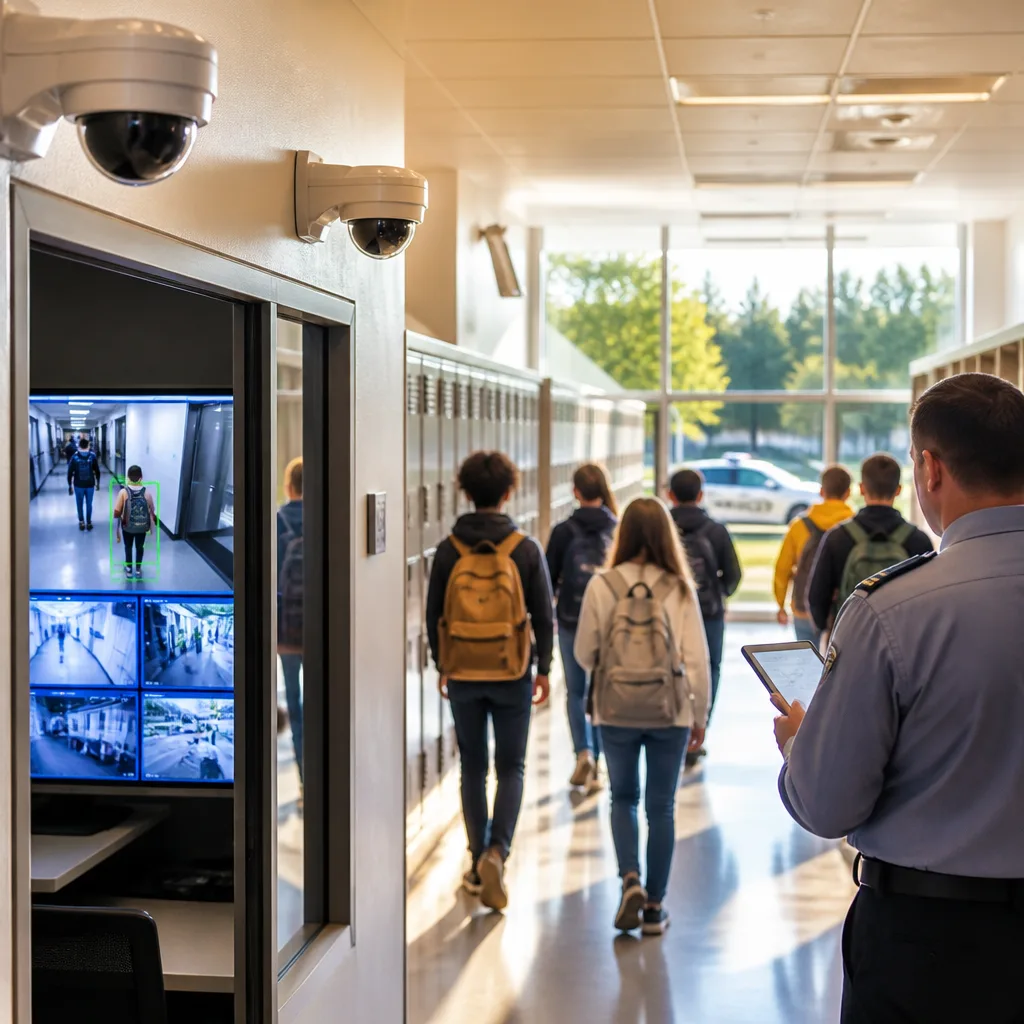
Industry estimates and reporting suggest a rapid shift in how districts think about cameras. According to sources cited in coverage of the issue, roughly 93 percent of U.S. schools already have security cameras, and about a quarter of districts have now adopted AI tools that aim to detect threats in real time. That move transforms cameras from passive recorders into active sensors that can prompt immediate responses.
| Metric | Reported figure |
|---|---|
| Schools with security cameras | 93% |
| Districts adopting AI detection tools (approx.) | ~25% |
Human factors and the limits of technology
Experts and practitioners emphasise that the technology alone does not determine outcomes. Success depends heavily on camera placement, staff training, quality assurance, and robust protocols for human verification and response. Systems may flag a potential threat, but how staff, security teams and police interpret and act on that alert shapes whether the result is an averting of harm or an unnecessary escalation.
- Proper positioning and calibration of sensors is critical to reduce false positives and missed detections.
- Staff training and clear verification steps matter more as automated alerts become more common.
- Standards and governance lag deployment; industry groups are working on guidance, but many districts move faster than rule-making.
“The next day, a 16-year-old brought a gun into Thomas S. Wootton High School… and shot a classmate.”
That sentence, used in coverage of a Montgomery County, Maryland trial, highlights the cruelly capricious timing that can accompany adoption debates. A short pilot of an AI weapons-detection product at three high schools in that district preceded a shooting at a fourth, non-pilot school. The proximity in time raised hard questions for families and officials about whether widespread deployment would have mattered, even when the timing was ultimately coincidental.
Governance, standards and broader uses
Standards organisations such as ASIS and the Security Industry Association are working on guidance for these tools, but governance frequently trails adoption. Beyond weapons detection, schools are starting to deploy AI for other operational functions — data security, air quality monitoring and vaping detection among them — widening the debate about surveillance, privacy and the acceptable scope of automated monitoring in education settings.
The early evidence suggests a pragmatic conclusion: AI can be a force multiplier for safety when integrated into a system with trained personnel, clear verification steps and accountability mechanisms. But it is no panacea. When algorithmic alerts materially affect human safety decisions, the cost of errors can be high, and the stakes demand careful policies and transparent oversight before systems are rolled out at scale.
Policymakers, school boards and procurement officials face immediate choices: accelerate adoption in the belief that imperfect detection is better than none, or pause to insist on stricter testing, staff training, public reporting and independent evaluation. The experience so far shows those choices are not merely technical; they are moral and practical, affecting how schools balance the promise of new technology against the risk of harm from mistakes.