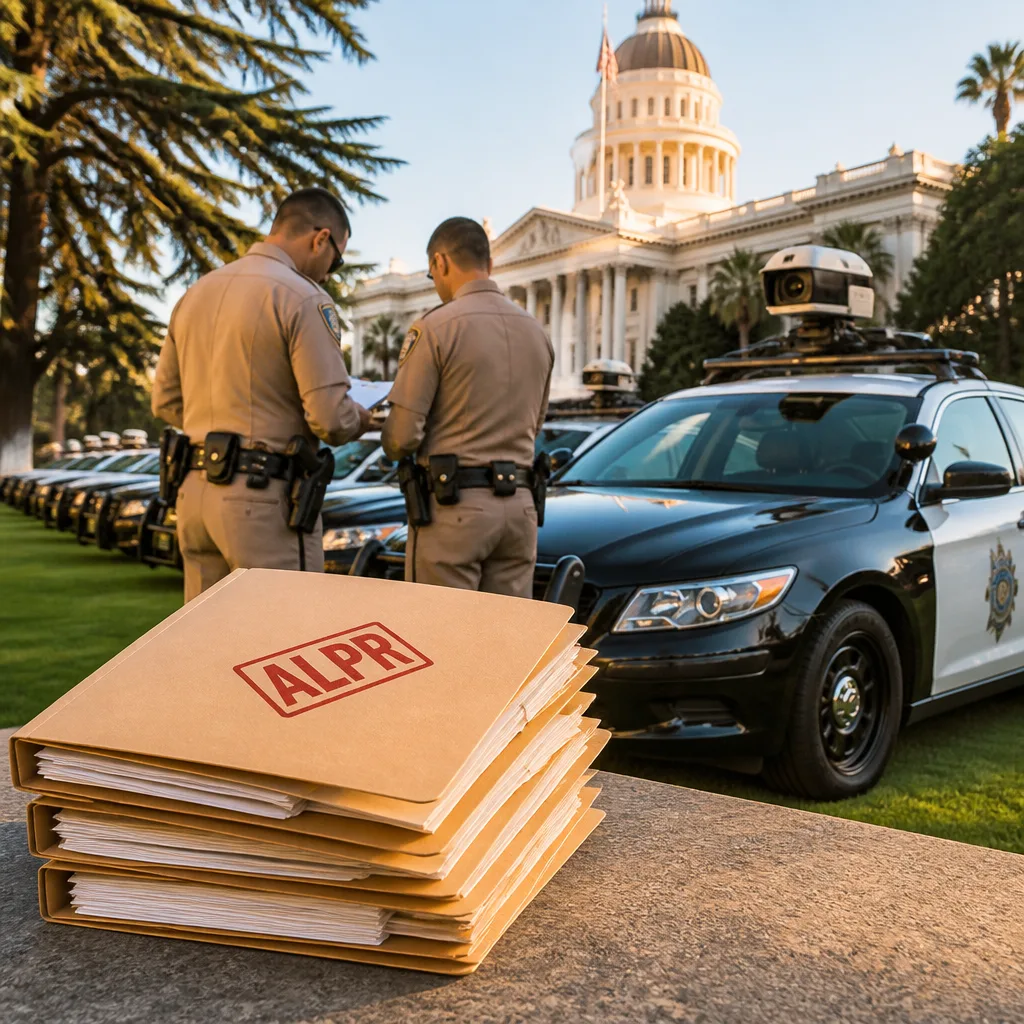
California lawmakers are renewing a bid to tighten controls on automated license plate readers (ALPRs) — the camera systems mounted on patrol cars and along roadways that capture and cross-reference licence-plate numbers against law enforcement databases in real time. The move follows high-profile cases that underscored both the systems’ investigative value and growing concerns about privacy and misuse.
What the bill would change
The proposed legislation, carried this year by Riverside Democratic Sen. Sabrina Cervantes, would add limits on how long police can retain plate-read data, how they access it and with whom they share it. The measure is similar to a bill that Gov. Gavin Newsom vetoed last year. Police agencies and officers’ unions across the state oppose the latest proposal.
“This bill is about one simple principle: Protecting the privacy and safety of Californians while ensuring law enforcement tools are used responsibly before it’s too late,”
Cervantes made the remark while addressing an Assembly privacy committee; she did not respond to a request for an interview from CalMatters.
Spread and scrutiny
At least 230 police and sheriff’s departments in California operate ALPR cameras, which law enforcement credits with recent successes — locating stolen cars, helping to arrest suspects in violent crimes and identifying people involved in hit-and-run incidents. Yet the same systems have drawn sustained criticism from privacy advocates across the political spectrum.
Critics point to documented instances of misuse: CalMatters has reported repeated violations of an existing law that bans sharing plate data with federal authorities and others outside the state; other outlets have described out-of-state searches of national license-plate databases by officers. Separate episodes include an incident in Monterey County in which police said a suspect used a pickup truck to tear down three roadside readers.
Why the debate matters beyond California
The California controversy mirrors a national discussion about the scale and governance of surveillance technologies deployed by police. Advocates of ALPRs emphasise public-safety benefits; opponents warn that unregulated data collection enables stalking, profiling and cross-jurisdictional data sharing that can undermine civil liberties.
Key policy questions at the centre of the debate include:
- How long should agencies keep plate-read records?
- Who may query the data and under what legal standards?
- Should state laws prohibit sharing with federal or out-of-state entities?
California already has a legal framework that touches on those issues: reporting has highlighted an 11-year-old state law that forbids certain forms of data sharing, but enforcement and compliance have been problematic, according to recent investigations.
| Fact | Detail |
|---|---|
| Departments using ALPRs | 230+ police and sheriff’s agencies |
| Existing legal concern | Alleged violations of an 11-year-old data-sharing prohibition |
| Recent legislative history | Similar bill vetoed last year by the governor |
Consequences and implementation challenges
Any new law would force police agencies to change data-retention and access policies and, likely, update technical systems that log plate reads. Opponents in law enforcement argue that stricter limits could impede investigations by removing a readily searchable trail of vehicle movement. Supporters of the bill counter that without tighter rules, ALPR networks constitute a persistent mass surveillance capability with limited oversight.
Implementation would also raise practical questions about auditing, compliance and cross-jurisdictional coordination. Enforcement mechanisms would need to be specified to prevent repeat violations of the sort already reported.
The debate in California will be watched by jurisdictions across North America that face similar trade-offs between crime-fighting effectiveness and civil-liberties protections. For now, the legislature’s next steps will test whether lawmakers can reconcile those aims without undercutting useful investigative tools — or extending an intrusive surveillance infrastructure with inadequate safeguards.
Reporting for this story relied on material originally published by CalMatters and related accounts documenting law enforcement use and alleged misuse of license-plate reader data.