The Government of the Northwest Territories has formalized an agreement with the NWT Art Centre Initiative to advance plans for a non‑commercial public art gallery for the territory, confirming the long‑debated project will move into a preparatory phase focused on consultations, environmental work and land‑use processes.
Preferred site named, but land transfer not pledged
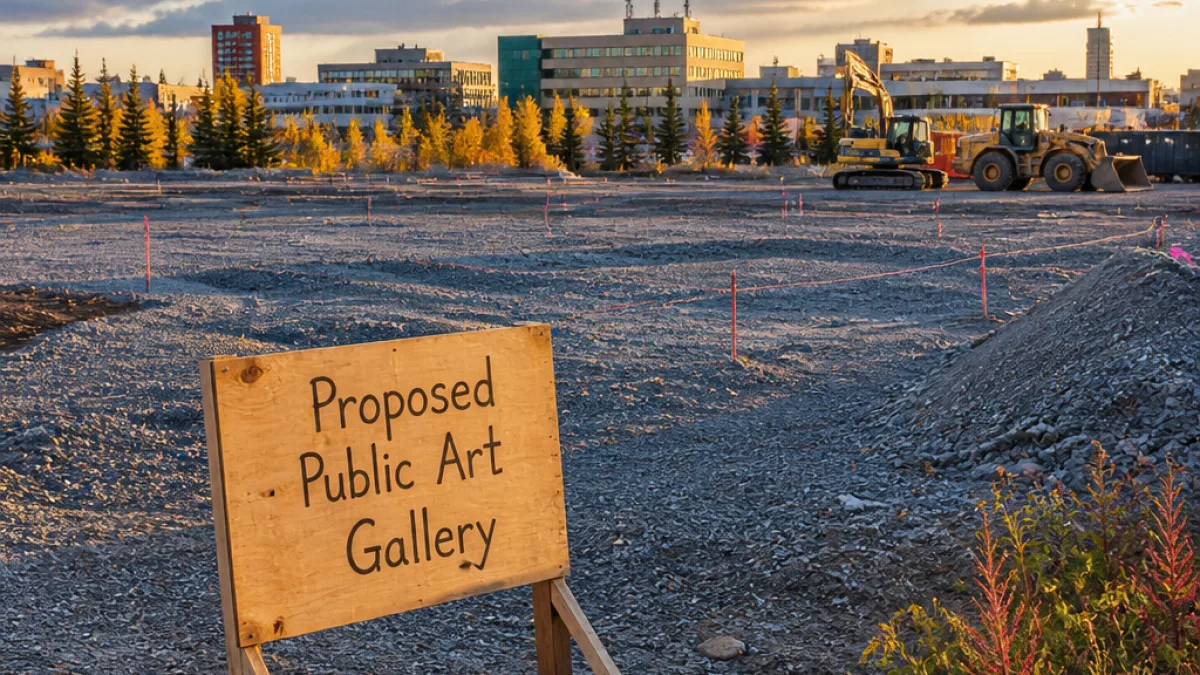
In a memorandum of understanding announced July 27, the territorial government identified the Yellowknife location of the former Akaitcho Hall — a site central to earlier calls for a public gallery — as the project’s preferred location. Akaitcho Hall once served as a residence for northern students attending Sir John Franklin High School; the building has since been demolished.
The GNWT explicitly stopped short of committing to transfer or sell the land to the initiative. The memorandum sets out a sequence of preparatory actions the parties will undertake before any transfer could be contemplated.
"to support the development of a non-commercial art gallery for the Northwest Territories."
Stakeholders and engagement
The GNWT says it has engaged a range of local partners about the idea. The YK1 school district has expressed support. The territory has also involved the Tłı̨chǫ Government, the North Slave Métis Alliance and the Yellowknives Dene First Nation in discussions, reflecting the project’s cultural and community dimensions.
Proponents have argued for years the NWT lacks a public art gallery to exhibit work, host programming and preserve artistic heritage. The memorandum frames a gallery as a venue that would support local artists’ careers, provide community programming and include a resource library, permanent collection and space for learning about the history and impacts of residential schools in the territory.
Next steps outlined in the memorandum
According to the GNWT, the MOU identifies the initial tasks necessary to prepare the site and move the project forward. Those tasks include:
- Completing consultations with affected communities and stakeholders.
- Finishing environmental assessments of the preferred site and addressing any liabilities.
- Completing surveying, rezoning, subdivision and land title work.
- Requiring the NWT Art Centre Initiative to fund the costs of preparing the land for transfer.
The territory’s statement did not specify any direct GNWT funding for building the gallery or for ongoing operating costs, instead making the initiative responsible for land‑preparation expenses under the agreement.
| Action | Purpose |
|---|---|
| Consultations | Gather community and Indigenous input; assess public support and cultural considerations |
| Environmental assessments | Identify and address contamination or other site liabilities |
| Surveying & rezoning | Enable subdivision and potential change of land use |
| Land preparation funding | Costs borne by the NWT Art Centre Initiative per the MOU |
What this means for artists and the public
For artists across the territory, proponents say a territorial gallery would provide critical exhibition space and programming that is presently limited. The proposed gallery offers the potential for a permanent collection, a public resource library and interpretive space addressing residential‑school history — elements that could strengthen cultural preservation and public education.
However, several practical and procedural hurdles remain. Environmental and land‑use work can be time‑consuming. The GNWT’s statement makes clear the territory is not yet transferring or selling the YK site, and the initiative will need to secure funds and complete preparatory tasks before a land transfer would be considered.
Broader context
The Northwest Territories is the only Canadian jurisdiction without a territorial public art gallery, a fact the initiative and the GNWT have both noted. Debate over where and how to establish such a gallery has been active for years. Naming the former Akaitcho Hall site as the preferred location brings renewed attention to a central Yellowknife parcel with historical associations and nearby educational institutions.
Officials did not announce a timeline for completing the listed steps. Community members, Indigenous governments and artists will closely watch the consultation and assessment phases to see how the project develops and whether provincial funding, federal support or private fundraising will follow.
The memorandum marks a procedural advance but not a final decision. For now, the gallery remains a project in development — one that could reshape cultural infrastructure in the territory if the parties successfully complete the preparatory work and secure the necessary funding.
Nathan Erasmus, NEXO RADAR