Manitoba Premier Wab Kinew announced a provincewide fitness challenge for students on Tuesday, urging schools and pupils to set measurable activity goals for the school year. The program is designed to encourage greater daily movement — from trying new sports to increasing step counts — with a financial incentive for schools that demonstrate improvement.
What the challenge involves
The initiative asks students to identify personal objectives they can track over the academic year, be that becoming faster, stronger or simply walking more often. Schools where students collectively show progress will receive a gym banner and a substantial funding award.
Key figures announced:
- $1 million in funding for schools that improve student activity levels
- $10 million is being invested in a gym and track at École Secondaire Kelvin High School, where the premier made the announcement
Context and connection to provincial policy
The fitness challenge follows a provincial move to strengthen physical education: a pilot program was launched just before school started that aims to make in-person physical education mandatory for all students from kindergarten through Grade 12. The new challenge is framed as a companion measure to that policy, focusing on student-led goals and measurable improvement over the school year.
Officials say the objective is to help students finish the year more active than they began, contributing to a longer-term push for healthier outcomes across Manitoba communities.
Announcement setting and local impact
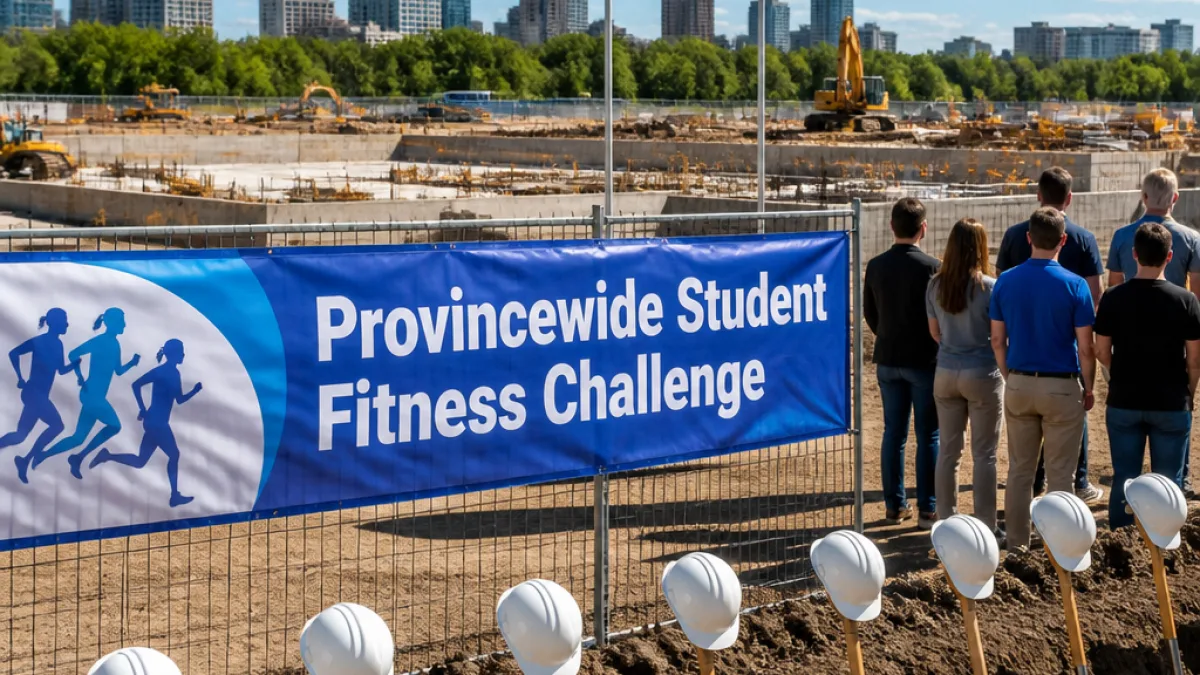
The premier unveiled the plan at the groundbreaking for a major school sports facility in Winnipeg. The project at École Secondaire Kelvin High School is set to include a new gym and track and carries a price tag of $10 million. The facility is intended to provide students with upgraded space for physical education and extracurricular sport.
For schools, the incentive is both symbolic and practical: a gym banner celebrates collective achievement, while the funding can be used to support equipment, programming or other needs that sustain physical activity.
Practical implications for schools and families
School administrators will be tasked with tracking students' progress and reporting improvements. The program emphasises achievable, personal targets so students at all skill and fitness levels can participate. Suggested examples cited by officials include taking up a new sport, adding steps to daily routines or working to increase endurance.
Families may see changes in school timetables, extra-curricular offerings and the availability of new programming if their school secures funding. The province's pilot to make physical education mandatory could also alter daily schedules by increasing in-person PE sessions for younger pupils.
| Item | Detail |
|---|---|
| Provincial prize for schools | $1 million and a gym banner |
| Facility announced | New gym and track at École Secondaire Kelvin High School — $10 million |
| Policy linked | Pilot program to make in-person physical education mandatory K–12 |
The province has framed the funding as an investment in long-term health, pointing to the benefits of regular activity for physical and mental well-being. How the dollars will be distributed, and what measures will be used to determine which schools qualify, has not been detailed in the announcement.
Parents and educators will be watching for guidance on tracking and reporting student progress, and for clarity on how the prize funding may be allocated within winning schools.
The challenge adds to a growing emphasis in Manitoba on structured, in-person physical education and community-level supports for healthy living. By linking visible recognition with tangible funding, the government is seeking both to motivate students and to provide resources for sustained programming at the school level.
Further details on the timeline for the challenge, evaluation criteria and the distribution of the prize funding have not yet been released.