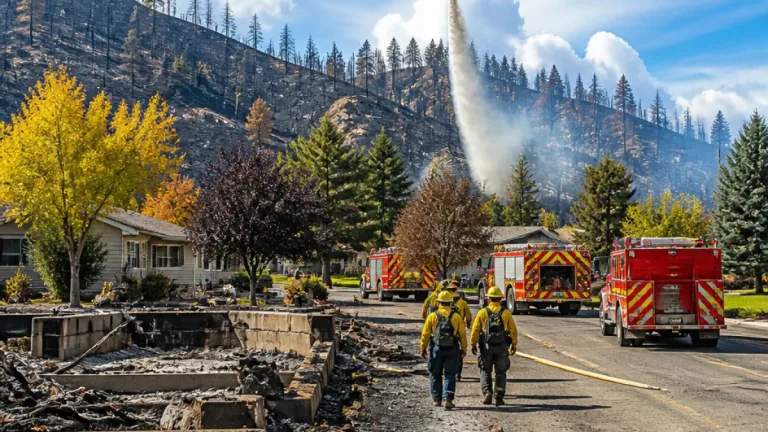
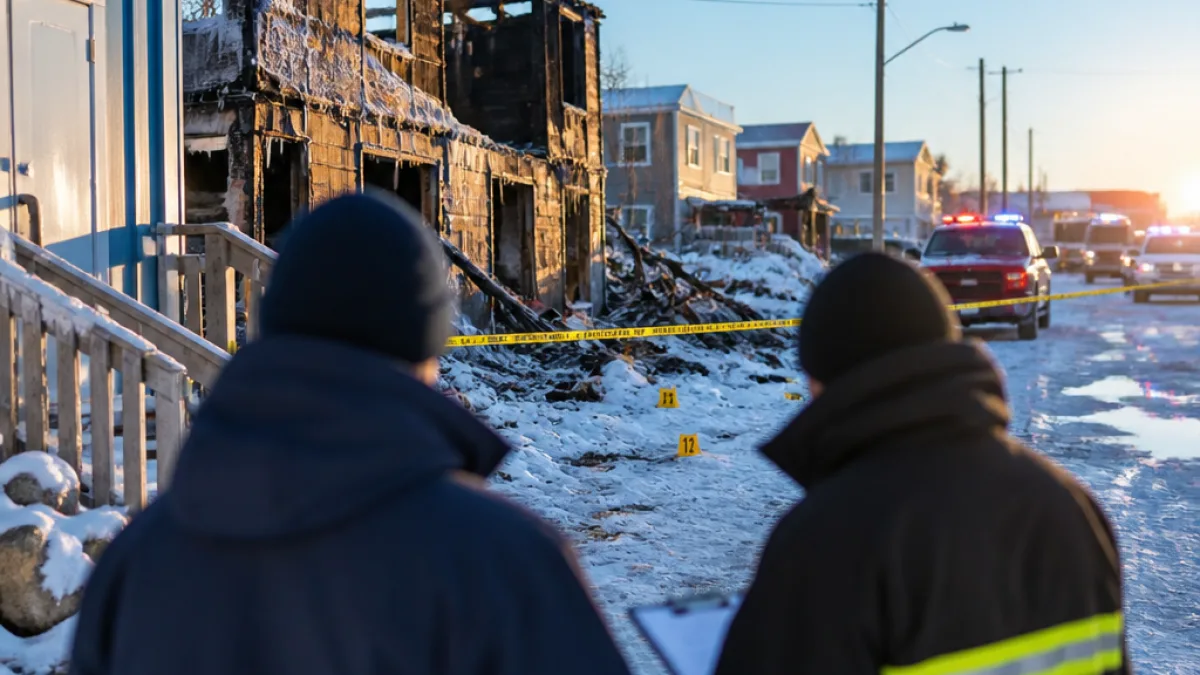
The majority of fires examined in Nunavut in recent years have been left without an official cause, according to the territory’s most recent fire marshal report, raising questions about capacity, procedures and the impact of Arctic conditions on investigations.
Numbers underline a growing problem
In 2024 there were 127 fires recorded across Nunavut. Of those, 96 — roughly three in four — were classified as undetermined, meaning investigators concluded there was “insufficient information” to establish a cause. The remainder were listed as 26 accidental and 5 arson.
| Year | Total fires | Undetermined | Accidental | Arson |
|---|---|---|---|---|
| 2024 | 127 | 96 | 26 | 5 |
Arctic conditions complicate investigations
Private investigator Brad Sampson, whose Alberta-based company conducts fire scene work across the North, said the cold and ice unique to Arctic winters make a thorough scene examination difficult. He described how water used to suppress flames can freeze over debris, concealing origin points and other evidence.
“Winter time is significantly more difficult because during suppression the water freezes and then basically your whole scene is covered in thick ice and snow,”
Sampson said proper examinations often require heating, hoarding and melting the scene to sift through debris and reach the origin area — steps that are time-consuming, costly and logistically difficult in remote communities.
Staff turnover and internal turmoil
Alongside environmental hurdles, the territory’s fire marshal’s office has faced internal turmoil and an unusually high turnover rate. The territory’s former fire marshal has publicly criticised the government, saying it is “failing” residents — a stark assessment that underscores tension between frontline needs and administrative capacity.
High staff turnover can interrupt institutional knowledge and delay investigations, sources say. When experienced investigators leave, new staff require training and time to build expertise in complex fire-scene work, particularly in an environment as challenging as Nunavut.
Local impact and public safety questions
Undetermined classifications carry consequences beyond statistics. For families who lose homes or community members who face displacement after a blaze, not knowing what caused a fire can limit accountability and slow the adoption of preventive measures. Insurance claims and community planning may be affected when official causes are not established.
- Communities: Residents may lack clear guidance on preventing similar incidents.
- Investigators: Face logistical hurdles like freezing scenes and limited resources.
- Government: Must address staffing, training and equipment challenges.
Practical considerations for residents
While formal investigations contend with environmental and administrative obstacles, basic fire safety steps remain essential for Nunavummiut. Ensuring working smoke detectors, safe heating practices, and clear escape routes can reduce risk regardless of investigative capacity. Community-level education and local fire prevention efforts may provide the most immediate mitigation.
What’s next
The fire marshal’s report highlights a need for policy attention to investigative resourcing and Arctic-specific protocols. If scene preservation requires heating and other specialist measures, governments will need to budget and plan for rapid-response capability in remote settlements. Training local responders, pre-positioning equipment and building sustained staffing at the fire marshal’s office are potential, though costly, steps.
For now, the large share of undetermined fires in Nunavut serves as a prompt: the territory’s unique environment and governance challenges combine to make fire investigations harder than in southern jurisdictions. That reality has implications for community safety and for how the territory prioritizes emergency services in the years ahead.