Construction of the Ridley Island Energy Export Facility (REEF), a propane and butane export terminal outside Prince Rupert, has been hampered by harsh maritime conditions that forced AltaGas Ltd. to revise its cost estimate and acknowledge lost work days during the most complex phase of the build.
In-water work takes a beating from the Pacific
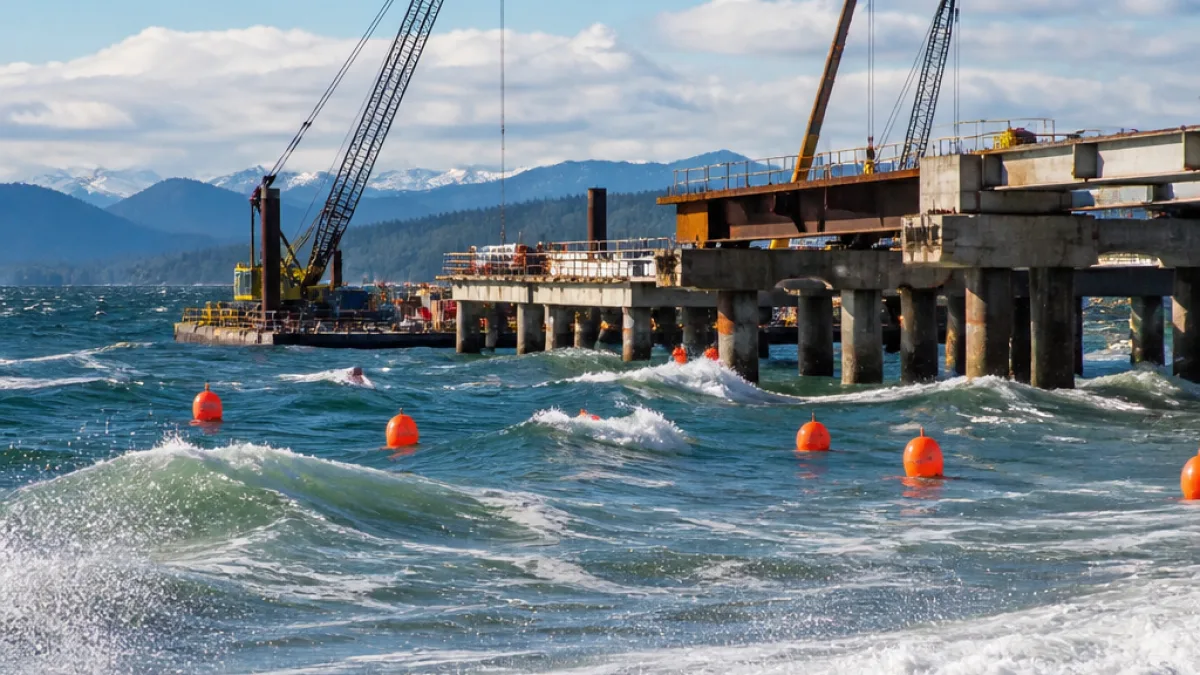
The company reported the project is approximately 85 per cent complete and remains on track to start operations before the end of March 2027. But executives warned that in-water construction — the jetty and loading platform — encountered substantial delays because of severe ocean conditions and marine mammal activity.
"Since we started in-water construction at REEF in the fall of 2024, we have lost over 450 rig days due to extreme weather, extreme ocean swells and marine mammal activity. These lost rig days significantly exceeded any normal contingency plan,"
The jetty and loading platform are reported to be about 80 per cent complete, with AltaGas saying most remaining in-water work is scheduled to finish over the next six weeks.
Cost pressures and revised estimate
AltaGas has increased the capital cost estimate for REEF by roughly 12 per cent, bringing the projected total to around $1.5 billion. Management said that while onshore activities have progressed ahead of plan, the setbacks at sea meant onshore efficiencies would not be sufficient to fully absorb the higher in-water expenses.
In its second-quarter financial results released Thursday, the company defended the project's overall trajectory but acknowledged the in-water phase was the most challenging element of the work.
How the delay shows up in company results
AltaGas recorded stronger underlying earnings in the quarter. Net income applicable to common shares reached $288 million, up from $175 million a year earlier. On a per-share basis, profit equalled 92 cents per diluted share for the quarter ended June 30, compared with 58 cents a year earlier. Revenue rose to $3.8 billion from $2.84 billion in the same quarter of 2025.
The company also adjusted its short-term guidance, raising planned capital spending for 2026 to $1.8 billion from a previously stated $1.7 billion, and issuing a new range for normalized earnings per share of $2.35 to $2.60, an increase of about six per cent.
| Metric | Value |
|---|---|
| Project completion (overall) | 85% |
| Jetty/loading platform | 80% |
| Revised capital estimate | ~$1.5 billion (+12%) |
| Lost in-water rig days | >450 days |
Local and industry impacts
The REEF terminal is a significant infrastructure project for British Columbia's north coast. Delays in the in-water phase could affect the timing of export capacity coming online, with knock-on effects for supply chains and regional employment tied to the project. AltaGas indicated most of the remaining marine work should be completed shortly, which would allow the company to pursue the revised schedule and cost plan.
- Primary cause of delay: extreme weather and ocean swells.
- Additional disruption: marine mammal activity interfering with marine construction operations.
- Company response: revised capital estimate and increased 2026 capital spending guidance.
While AltaGas expressed confidence that the remaining in-water phase — described as the most technically demanding portion of REEF — is nearing completion, the company did not provide a further update on potential environmental mitigation measures tied to marine mammal encounters or on how the extra time has affected local contractors and schedules beyond the aggregate rig-day figure.
What to watch next
Stakeholders and observers will be watching whether the in-water work is wrapped up within the company’s stated timeline and how closely the final costs hew to the revised estimate. AltaGas’s broader earnings guidance and elevated capital spending for 2026 will also be monitored for signs of how much the REEF adjustments influence the company’s portfolio and its ability to meet export commitments.
For Prince Rupert, the completion of the jetty and loading facilities is a critical milestone — locally it promises more export capacity for liquefied petroleum products, but it also raises questions about operating windows in a region where weather and marine conditions can be severe and unpredictable.
This report is based on AltaGas’s second-quarter results and the company’s statements to analysts.