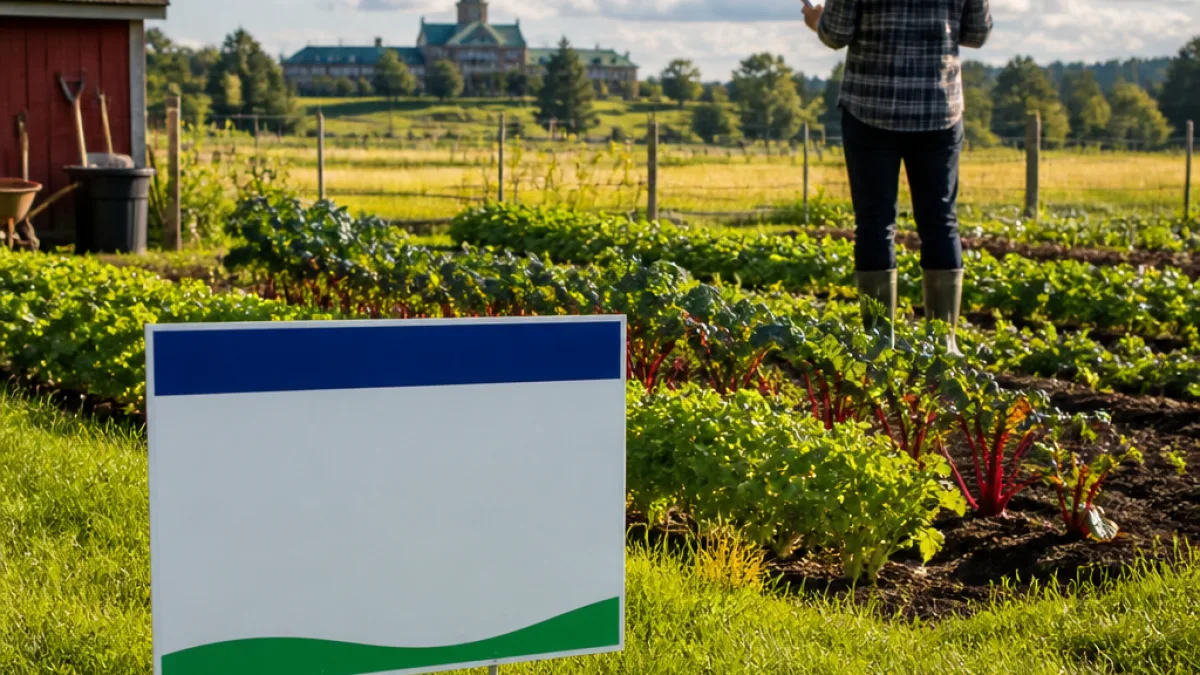
Central Saanich’s farmland figures prominently in the municipality’s identity and economy, and a new council candidate is betting that experience on the land should be represented at the council table. Kathleen Zimmerman, a retired agrologist and master gardener who now lives in Central Saanich, has launched a campaign for a council seat this fall, saying municipal decisions must better reflect the needs of farmers and the agricultural community.
From family farm to municipal halls
Zimmerman traces her agricultural roots to a small family farm north of Kamloops where she was raised by Swiss immigrant parents. She pursued agriculture studies at the University of Guelph and University of British Columbia, then spent a career advising farmers and municipal governments across British Columbia.
In the latter part of her professional life, she worked as a regional agrologist, consulting with jurisdictions including Richmond, Delta, Surrey and Metro Vancouver on agricultural committees. That work convinced her that how bylaws and official community plans are drafted can have direct consequences for farms.
“Farmers are deeply impacted by the way bylaws are written, the way official community plans are written, the way ALR applications are reviewed,” she said.
After retiring in Metchosin and later moving to Central Saanich, Zimmerman began attending council meetings. Those municipal sessions, she said, revealed gaps in public participation and transparency that helped prompt her to run for office. She completed a five-week campaigning course last fall with Equal Voice, the non-profit that promotes women in politics, and subsequently entered the race.
Platform priorities: agriculture, transparency, citizen input
Zimmerman listed several priorities in her campaign launch. Foremost is ensuring farmers have a strong voice on council as councilors revisit bylaws, review applications affecting the Agricultural Land Reserve (ALR) and update official community plans. She also singled out transparency and public participation as areas in need of improvement.
- Agricultural representation: bring ag expertise to council deliberations and decisions;
- Open government: challenge the frequency and scope of in-camera meetings to allow greater public visibility;
- Reviving advisory committees: tap into the local retirement community’s knowledge by re-establishing citizen advisory bodies.
On closed-door meetings, Zimmerman questioned whether the municipality relies too heavily on in-camera sessions and urged councillors to reconsider what truly needs privacy. She argued that reinvigorating advisory committees would harness volunteer expertise — particularly from retirees — to inform policy outside of council chambers.
Local context and implications
Central Saanich sits among municipalities on southern Vancouver Island where agriculture, particularly small farms and the ALR, is an important local feature. Decisions made by municipal councils on zoning, bylaws and development applications can have immediate and lasting effects on farm operations, land values and the broader rural landscape.
Zimmerman’s campaign highlights an ongoing tension in municipalities across the region: balancing development pressures and housing needs with preserving productive farmland and supporting local food systems. Her background advising municipal agricultural committees in the Lower Mainland gives her a perspective on how local governments’ regulatory choices ripple through farming communities.
| Profile | Detail |
|---|---|
| Occupation | Retired agrologist, master gardener |
| Education | University of Guelph, University of British Columbia |
| Past roles | Regional agrologist advising Richmond, Delta, Surrey, Metro Vancouver |
For Saanich-area residents, Zimmerman’s campaign will be one to watch during the municipal election cycle. Her emphasis on agricultural know-how, open government and community-based advisory structures speaks directly to neighbourhoods where farms, greenbelt and suburban growth meet.
As the election approaches, Central Saanich voters will weigh whether expertise in agriculture and a push for more transparent local governance is the combination they want guiding council decisions that will shape farmland protection, land-use bylaws and community consultation practices.
Zimmerman’s entry underscores a broader trend: professionals with sector-specific experience moving into municipal politics to influence how communities manage competing priorities. How successful that approach will be in Central Saanich will become clearer as candidates outline more detailed platforms and voters engage in the fall campaign.