Two Delta Air Lines aircraft carrying roughly 300 passengers combined had a near‑miss late Monday at Hartsfield‑Jackson Atlanta International Airport, prompting an FAA investigation and fresh scrutiny of runway and approach procedures that matter to travellers out of the Lower Mainland.
What happened
Delta flight 2472, an Airbus A321 bound for Rochester, N.Y., departed Atlanta about 11 p.m. when it crossed in front of incoming Delta flight 1568, a Boeing 737‑900 from Pittsburgh. Each flight carried about 150 passengers and six crew members, a Delta spokesperson confirmed.
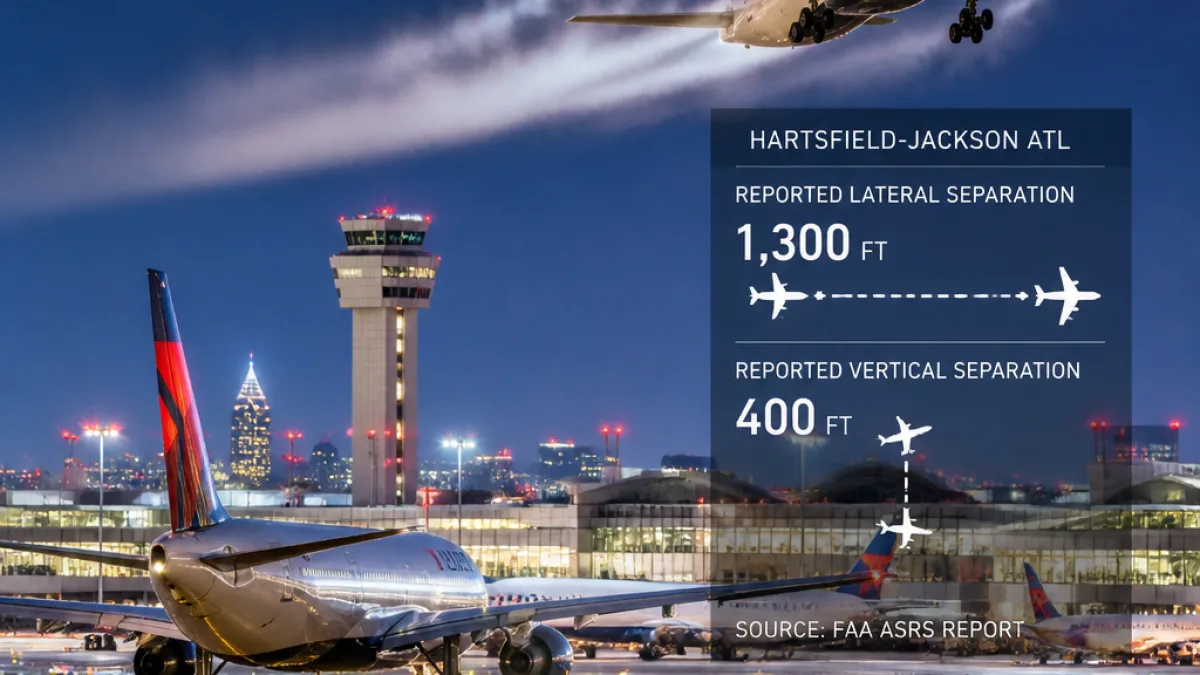
The aircraft were separated by 1,230 feet laterally and 550 feet vertically at their closest point, according to flight tracking data shared with news organisations.
"As it approached the Atlanta airport, the pilot decided to go around because another aircraft was slow to exit the same runway,"
the Federal Aviation Administration said in its initial account. The incoming jet executed a go‑around — a standard procedure in which an aircraft aborts a landing and re‑circles — and the two aircraft completed evasive manoeuvres to maintain separation. The FAA has opened an investigation into the event.
Why this matters to Delta residents
Though the incident occurred in Atlanta, its implications ripple to residents of Delta, B.C. who routinely use major U.S. hubs for travel. Near‑misses prompt airlines and regulators to re‑examine procedures, communications and runway occupancy protocols that can affect flight schedules, routings and passenger confidence.
Locally, travellers departing from Vancouver International Airport (YVR) or connecting through U.S. airports could see changes if the FAA issues new guidance or if airlines adjust operational procedures. While Transport Canada and NAV CANADA operate under different jurisdictions and standards, multinational carriers such as Delta coordinate responses across their networks.
- Flights involved: Delta 2472 (A321) to Rochester; Delta 1568 (737‑900) from Pittsburgh.
- Passengers: about 150 per flight; six crew on each aircraft.
- Closest separation: 1,230 feet lateral, 550 feet vertical.
Investigations and industry response
The FAA’s probe will examine cockpit voice and flight data, air traffic control recordings and radar tracks to determine the chain of events. Delta said safety remains its priority and that crews followed established procedures to ensure passenger safety. Investigations like this can take weeks or months, depending on whether the agency refers the matter for further review.
| Item | Detail |
|---|---|
| Airport | Hartsfield‑Jackson Atlanta International Airport (ATL) |
| Aircraft types | Airbus A321; Boeing 737‑900 |
| Reported separation | 1,230 ft lateral; 550 ft vertical |
| Passengers and crew | ~150 passengers and 6 crew on each flight |
For travellers, the immediate takeaway is practical: follow airline guidance, allow extra time when connecting through busy hubs, and monitor flight status. For authorities and carriers, the incident is a reminder of the constant need to audit runway occupancy procedures and air traffic sequencing, especially at high‑volume airports such as Atlanta.
Delta residents who frequently travel internationally or through U.S. hubs may expect media updates as the FAA releases findings. Meanwhile, the airline has said passengers landed safely and normal operations resumed on the affected flights after the event.
As the FAA investigation proceeds, questions about air traffic controller workload, runway exit times and pilot decision‑making will be central. Any recommendations that emerge could affect airline operations beyond the United States, including how North American carriers coordinate at shared points of congestion.
This near‑miss will be watched closely by regulators and passengers alike — not least here in the Metro Vancouver region, where a growing travel market keeps aviation safety squarely in the public eye.