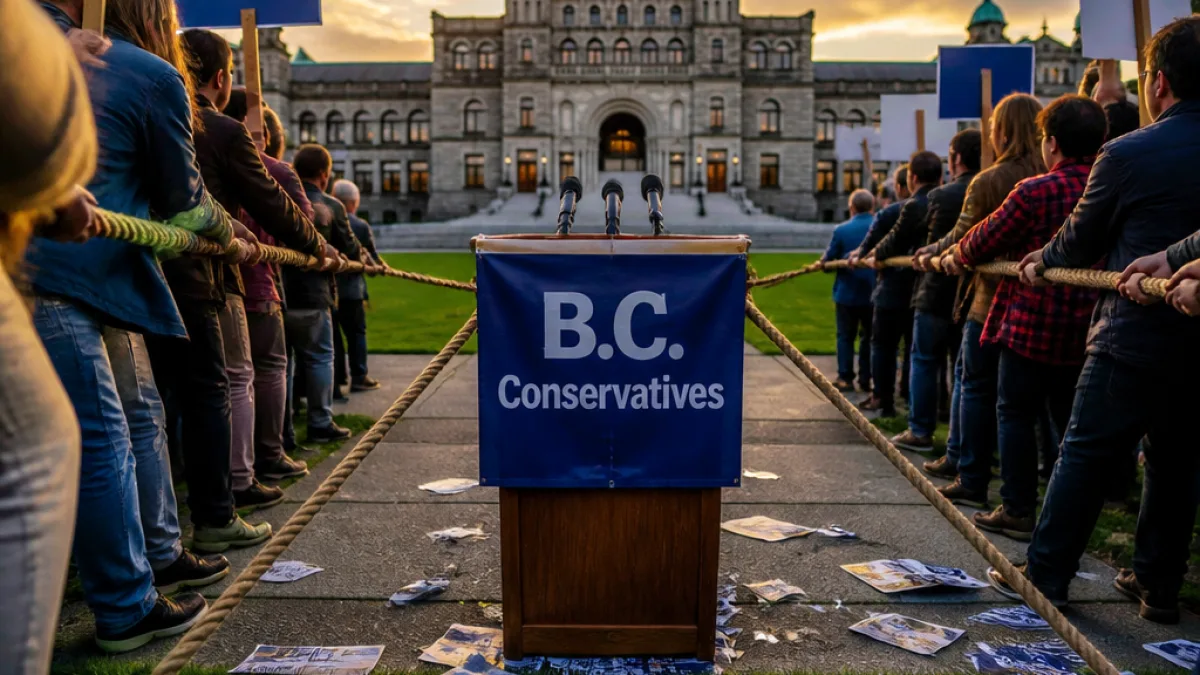
Vancouver — As British Columbia barrels toward a surprise Oct. 24 election, the B.C. Conservatives are being pulled in opposing directions by political rivals and by voices within their own ranks seeking to redefine the party following a divisive leadership episode.
Leadership collapse and rapid repositioning
Kerry-Lynne Findlay resigned after a leadership stint of less than four months that left the official Opposition scrambling to contain fallout. The NDP seized on that instability, with Leader David Eby saying the snap campaign is necessary to erect a “firewall” against what he described as “Trump-style politics.”
Within hours of the election call, interim Conservative leader Lorne Doerkson sought to blunt that line of attack, distancing the party from former U.S. president Donald Trump and labelling him “the bully south of the border.”strong
Doerkson’s comments came as a small wave of former CentreBC members formally rejoined the Conservative fold, signalling an attempt to shift the party’s image away from the hard-right posture that critics say characterised Findlay’s brief leadership.
Return of former CentreBC members
Prominent among those rejoining was Peter Milobar, who had left the party in protest over Findlay’s direction. Milobar framed his return as a recommitment to what he called “progressive-ideas, conservative-values.” A’a:liya Warbus, one of the few Indigenous MLAs in the legislature and another former CentreBC member, said Findlay’s departure creates an opening for a “responsible, progressive-conservative approach.”
“Progressive-ideas, conservative-values.”
Those reentries are as much strategic message work as membership changes: they offer a counter-narrative to the NDP claim that the Conservatives are veering toward U.S.-style populism, and they may help shore up moderate voters the party lost under Findlay.
How Findlay’s tactics shaped perceptions
Findlay’s short term as leader was notable for a deliberate avoidance of mainstream media appearances, favouring instead conservative influencers and non-traditional outlets. She also released a highly stylized AI video that painted Eby as a Stalin-like figure engaged in a cultural battle with British Columbians — a move that alarmed critics and contributed to internal dissent.
Her attempt to frame the party around the themes of “faith, family and freedom” did not stabilise the caucus and precipitated defections and public criticism. The swift changes in leadership and personnel have left the party with a compressed timeframe to clarify its platform before voters head to the polls.
What this means for the Oct. 24 election
The contest will now feature a Conservative party hastily trying to recalibrate while the NDP and other rivals seek to brand it as susceptible to extreme right influences. That messaging battle will play out in a campaign period that is barely more than a month long — a sprint that places a premium on quick, disciplined communication and candidate cohesion.
For voters, the central question will be whether the party’s recent departures and the public re-entry of moderate voices translate into a genuinely new direction or are largely cosmetic changes aimed at damage control.
Quick timeline
| Event | Date / duration |
|---|---|
| Findlay’s leadership tenure | Less than four months |
| Election called | Sept. 22, 2026 |
| Provincial election date | Oct. 24, 2026 |
Where the parties stand now
- NDP: Framing the election as a defence against extreme-right influence and Trump-style politics.
- B.C. Conservatives: Attempting to shed the image of hard-right populism by promoting a centrist, values-driven message and welcoming back moderate members.
- CentreBC returnees: Seeking to influence the party toward pragmatic conservatism and to reassure voters worried by recent controversies.
The coming weeks will reveal whether the Conservatives can successfully reposition themselves before voters decide. For now, the party’s identity has become a central battleground in a tightly timed campaign — one where every statement and return of a member could change how voters see the options on Oct. 24.
Reporting from Vancouver, this coverage reflects the fast-moving contest inside B.C.’s official Opposition as it faces both internal realignment and external pressure to define who it is to voters across the province.