A regulatory green light for construction
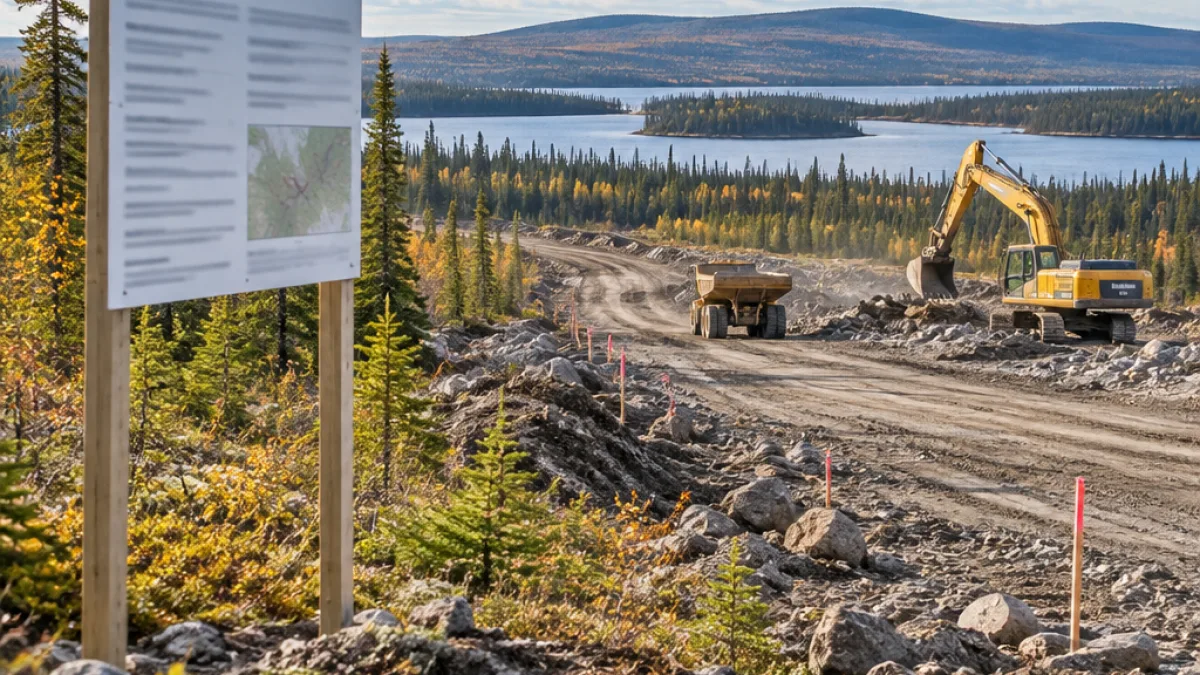
Quebec has issued the certificate of authorization required for construction of Gold Fields’ Windfall mining project in Eeyou Istchee Baie-James, marking a major step toward development of one of the country’s most closely watched new gold projects.
The authorization was granted by the provincial environment ministry and confirms that Windfall Mining Group, a wholly owned subsidiary of Gold Fields Limited, has completed the environmental and social impact assessment and review process required under Title II of Quebec’s Environment Quality Act. The certificate permits construction to begin, subject to the conditions, commitments and regulatory requirements attached to the project.
For the company, the decision brings together two developments it says are essential to the project’s next phase: the provincial environmental approval and the Uukiimau Agreement, an impact and benefit agreement signed in June 2026 with the Cree First Nation of Waswanipi, the Cree Nation Government and the Grand Council of the Crees.
“Receiving the Certificate of Authorization for Windfall …” — Mike Fraser, Gold Fields chief executive officer
The company did not provide the remainder of Fraser’s statement in the material released. Gold Fields said the agreement with the Cree and the provincial certificate together provide the regulatory and partnership foundation for moving ahead with Windfall.
Years of assessment and public review
The authorization follows several years of environmental and social studies, technical work, discussions with communities and collaboration with government authorities. The project was reviewed by the Environmental and Social Impact Review Committee, known as COMEX, as part of the process applying to development in the region.
That review included public hearings held in Lebel-sur-Quévillon and Waswanipi during the spring of 2026. Those hearings gave the process a public dimension in communities connected to the proposed mine and to the people who could be affected by its construction and operation.
The certificate does not remove the project from regulatory oversight. Instead, it authorizes construction within the framework of the conditions and commitments established through the review. Future work must therefore proceed in accordance with the applicable requirements set by Quebec authorities and the commitments made during the assessment process.
A project with a substantial production target
Windfall is expected to produce approximately 300,000 ounces of gold annually once it reaches full production, according to Gold Fields. The company also describes the deposit as one of the highest-grade gold projects in Canada and says it has growth potential along the deposit’s strike and at depth.
The production estimate gives the authorization significance beyond the immediate construction decision. If the project advances as planned, it would establish a sizeable gold operation in the Eeyou Istchee Baie-James region. At the same time, the source material does not provide a construction timetable, a projected opening date, the number of jobs expected or the project’s capital cost.
| Project detail | Information released |
|---|---|
| Location | Eeyou Istchee Baie-James |
| Regulatory step | Certificate of authorization for construction |
| Expected annual output | About 300,000 ounces of gold once ramped up |
| Cree agreement | Uukiimau Agreement, signed in June 2026 |
Indigenous partnership at the centre of the next phase
The Uukiimau Agreement is presented by Gold Fields as an impact and benefit agreement rather than simply a procedural milestone. It involves the Cree First Nation of Waswanipi, the Cree Nation Government and the Grand Council of the Crees, placing those institutions within the framework for the project’s development.
The company’s announcement characterizes the agreement as a key part of the relationship needed to proceed. The provincial approval and the Cree agreement are separate measures, but Gold Fields says their timing creates a combined foundation for the construction phase.
For communities in the region, the practical importance of the next stage will depend on how the project’s conditions and commitments are implemented. The source material does not specify the agreement’s financial terms, employment provisions, procurement targets or monitoring arrangements, so those details cannot be assessed from the announcement alone.
What the decision does — and does not — establish
The certificate is a clear authorization to begin construction activities, but it is not evidence that the mine is already operating or producing gold. Windfall remains a project moving from review into development, with construction required before the company can reach its stated production objective.
The approval also does not provide a final answer on the project’s economic impact. Gold Fields has identified a substantial expected production level and points to further growth prospects, but no figures were released in the announcement for regional employment, government revenues or the value of contracts with local and Indigenous businesses.
The immediate public-interest question is therefore how the company will translate the approval and the Cree agreement into on-the-ground activity while meeting the environmental conditions attached to the authorization. The regulatory review, public hearings and negotiated partnership have established the framework. The construction phase will test how that framework works in practice.
- Quebec has authorized construction of the Windfall mining project.
- The approval follows COMEX review and public hearings in Lebel-sur-Quévillon and Waswanipi.
- Gold Fields expects the mine to produce about 300,000 ounces of gold annually once fully ramped up.