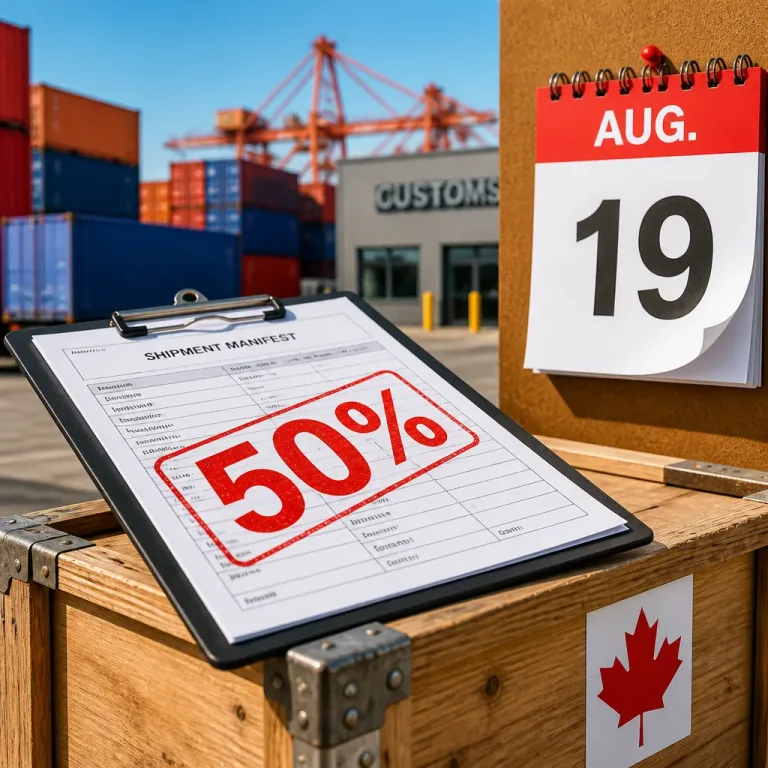
Thunder Bay companies that ship goods across the border are confronting renewed uncertainty after the United States imposed 50 per cent tariffs on a range of Canadian products following collapsed talks between the two countries.
Local firms face immediate questions
James Foulds, owner of Border Giant, a Thunder Bay parcel service and customs brokerage, said the reaction among his clients has been one of frustration and confusion. The firm helps local manufacturers and individuals import and export goods between Canada and the United States; many of its clients rely on predictable tariff and customs rules to price products and maintain supply chains.
“The reaction was, I'd say frustration, of course, and that's kind of been the theme for the last year and a half, and a little bit of confusion as well,” Foulds told CBC.
Canada walked away from the most recent negotiations, citing U.S. demands arriving late in talks over culture, autos and sovereignty. In response, Washington announced 50 per cent tariffs on various Canadian goods. Ottawa has said it will introduce retaliatory tariffs after Labour Day. Separately, U.S. President Donald Trump posted on social media that tariffs on Canadian cars, trucks, auto parts and steel would rise to 50 per cent on Jan. 1.
What Thunder Bay exporters and shippers are watching
Local companies that manufacture or assemble goods in Thunder Bay and ship them across the border are already reviewing contracts and costs to determine their next steps. Border Giant and similar service providers are focused on clarifying which items are covered, whether any exemptions or alternative classifications apply, and how to adjust logistics to limit immediate damage to customers.
- Immediate concerns include increased costs for cross‑border shipments and revised pricing for customers.
- Manufacturers must reassess sourcing and pricing if components or finished goods become significantly more expensive to export.
- Customs brokers and carriers are fielding questions about duty classifications and potential workarounds, where legal.
Foulds said Border Giant is going through the tariff details to identify what is covered and whether there are lawful alternatives for clients, but acknowledged the situation is evolving and that many businesses must determine their next steps this week.
Regional economic ripple effects
Thunder Bay's economy includes a mix of manufacturers, resource sector businesses and logistics services that depend on cross‑border trade. While the precise local exposure to the newly announced duties will vary by sector and product, the abrupt rise in tariffs threatens to raise costs for firms that source inputs from the U.S. or sell south of the border.
With Ottawa signalling retaliatory duties after Labour Day, businesses and local planners face a period of two‑way uncertainty that could affect contracting, inventory decisions and hiring over the coming months.
| Announced or referenced measures | Items mentioned |
|---|---|
| U.S. tariffs of 50% | Various Canadian goods (broadly referenced) |
| U.S. statement (social media) | Cars, trucks, auto parts and steel — 50% on Jan. 1 |
| Canada’s planned response | Retaliatory tariffs to be introduced after Labour Day |
Local chambers of commerce and business associations typically respond to trade shocks by seeking clarification from federal officials and lobbying for measures that limit harm to regional employers. In the immediate term, customs brokers like Border Giant are a key point of contact for companies needing to understand classification, valuation and transit options.
For many Thunder Bay exporters and small manufacturers, the coming days will determine whether they can absorb higher duties, renegotiate contracts, shift supply chains or pass costs to customers. The long‑term local impact will depend on which goods are specifically targeted, how Ottawa’s retaliation is structured, and whether further negotiation between the two countries resumes.
Residents and business owners with questions about specific shipments should contact their brokerage or customs agent for guidance and monitor federal announcements for definitive lists of affected products and any available exemptions.