
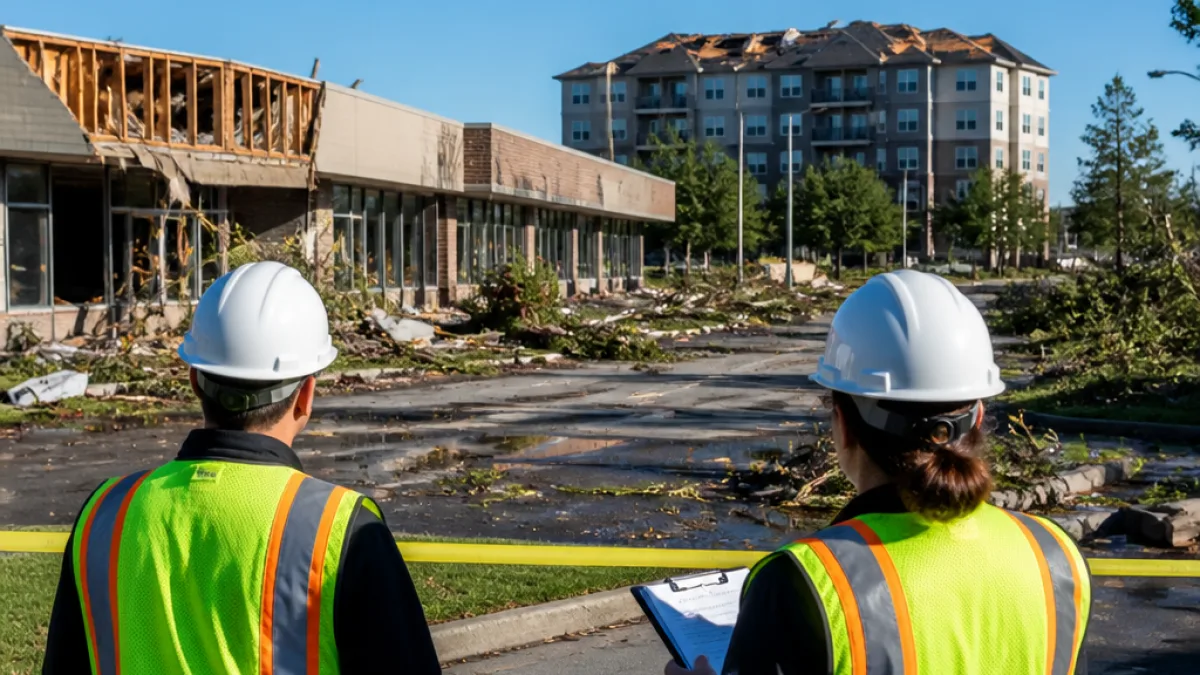
Researchers have confirmed that a storm which damaged trees and buildings in Repentigny on Aug. 2 was a tornado, the Northern Tornadoes Project at Western University said Friday. The event caused visible property damage in parts of the city but, according to the study, resulted in no reported injuries.
What the survey found
The Northern Tornadoes Project used a combination of drone footage and ground surveys to document the damage. Their assessment put the tornado's maximum estimated wind speed at 130 km/h, with a track length of one kilometre and a maximum path width of 100 metres. Damage included panels torn from a strip mall and shingle loss on an apartment building, along with fallen trees.
- Time of touchdown: around 2 p.m. on Aug. 2
- Maximum wind speed: 130 km/h
- Track length: 1 kilometre
- Maximum path width: 100 metres
- Injuries: none reported
“The tornado touched down in Repentigny, Que. at around 2 p.m. and caused some damage to buildings and other structures.”
Those findings were published as part of the Northern Tornadoes Project’s regular documentation of convective events across Ontario and Quebec. The group has produced similar confirmations in recent weeks after events elsewhere in southern Quebec.
Local consequences and context
For residents of Repentigny, the event is notable because confirmed tornado touchdowns remain relatively uncommon in the immediate Montreal region. While the recorded wind speeds — roughly equivalent to a strong severe thunderstorm rather than a high-end tornado on the Enhanced Fujita scale — were sufficient to damage building exteriors, there were no reports of injuries from the scene, according to the project’s assessment.
Municipal and provincial emergency services routinely advise caution around storm-damaged areas: unstable roof elements, loose siding or panels, and fallen trees can create hazards long after the storm has passed. Building owners whose properties sustained damage — for example, the strip mall with panels torn off and the apartment building with shingle loss noted by the survey — will need to assess repairs and insurance claims. Residents should document damage with photographs and contact their insurers and the city for guidance on safe cleanup and temporary repairs.
How this fits into recent regional activity
The Northern Tornadoes Project also recently confirmed two other Quebec tornado touchdowns: July 21 events in St-Donat, in the Lanaudière region, and Harrington, in the Laurentians. The cluster of confirmations indicates a period of active convective weather in southern Quebec in late July and early August.
| Metric | Value |
|---|---|
| Estimated maximum wind speed | 130 km/h |
| Track length | 1 km |
| Maximum path width | 100 m |
| Reported injuries | None |
Local authorities and researchers emphasise that confirming a tornado requires careful post-storm analysis. Visual evidence of rotated debris paths, structural failure patterns and aerial imagery all contribute to a final classification. The use of drones allows investigators to survey damage corridors quickly and safely, especially in areas where debris or unstable structures might pose risks to ground crews.
Residents with questions about storm damage or who observed the event are encouraged to contact municipal offices for information about reporting damage, safety guidance and resources for recovery. The confirmation from the Northern Tornadoes Project provides an initial scientific record of the Aug. 2 event, which may inform future planning for severe-weather readiness in Repentigny and neighbouring communities.