The City of Burnaby will launch a free lifeguard certification pilot with the Burnaby school district this fall, aiming to build a local pipeline of aquatic staff for two large community centres scheduled to open in 2028.
Hands-on route from school to city employment
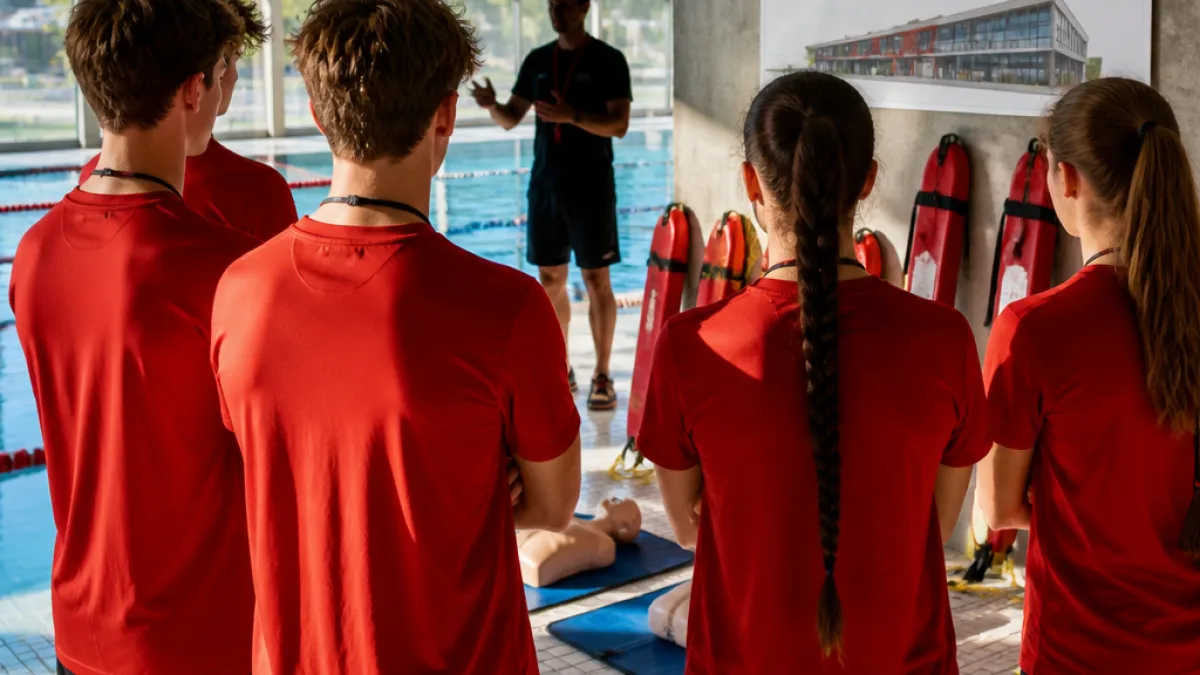
The pilot, approved in a report to council on Tuesday, will select 24 students from Alpha and Burnaby North secondary schools to participate during the 2026–2027 school year. Participants will train outside of regular school hours, earn graduation credits and receive Lifesaving Society certification on completion.
City staff framed the program as an intentional step to recruit and retain workers needed to operate the new Burnaby Lake Recreation Complex and Cameron Community Centre and Library, both of which the report says include significant aquatic amenities and are expected to open in 2028.
“This investment in early talent development contributes to a sustainable talent pipeline and forms part of the city’s broader efforts to meet the operational and service delivery requirements of new and expanded facilities through the development of a qualified aquatic workforce,” the report states.
“We have an overwhelming level of interest already,” manager of recreation services Carol Chard told council.
The city will cover the cost of the pilot, at $15,000 per cohort of 12 students. Parks, Recreation and Culture staff describe the expenditure as a strategic investment in aquatic leadership training and a direct route to employment with the city.
Program design and local implications
While the pilot runs outside the regular school day, the Parks, Recreation and Culture Department hopes it will form the basis of a formally credited course within the school district in future. Advertising and recruitment initiatives are slated to begin at the start of the 2026–2027 school year.
- Participants: 24 students (from Alpha and Burnaby North secondary schools)
- Certification: Lifesaving Society certification plus graduation credits
- Cost to city: $15,000 per 12-student cohort
- Timing: Pilot during 2026–2027 school year; facilities open in 2028
The pilot reflects broader workforce planning as the city prepares to staff major new facilities. Burnaby’s recreation network has for years relied on a mix of student and part-time lifeguards; the new program aims to formalize and expand that pipeline by bringing certification and school credit together.
| Facility | Expected opening | Noted feature |
|---|---|---|
| Burnaby Lake Recreation Complex | 2028 | Significant aquatic amenities |
| Cameron Community Centre and Library | 2028 | Significant aquatic amenities |
City officials framed the program as a recruitment tool for municipal employment, offering students a clear pathway from certification to potential work at city-owned facilities. For teenagers seeking summer and part-time work, a Lifesaving Society certification is commonly recognised and often required by employers operating pools and aquatic programs.
Burnaby’s approach mirrors strategies used elsewhere to address persistent staffing gaps in recreation services: invest early in training, connect certification to academic recognition, and create tangible links to local jobs. The pilot’s success will likely be judged on how many participants move into lifeguard roles and whether the model can be scaled into district-wide curricular offerings.
Council documents indicate the city views the outlay as a long-term investment: initial cohorts are small but meant to demonstrate feasibility and community interest. If uptake remains strong and the program produces qualified hires, the city and school district could pursue a credited course that would expand access beyond the two participating schools.
Recruitment and advertising for the pilot will begin with the 2026–2027 school year. The Parks, Recreation and Culture Department did not provide an estimate, in the report, of how many of the new lifeguards will be needed immediately when the two facilities open in 2028.
As Burnaby prepares to open two major aquatic facilities, the pilot offers a locally rooted pathway for young people to gain skills, credits and employment with the municipality — while helping the city address the practical challenge of staffing expanded recreation services.