City seeks provincial support to make swimming a standard school skill
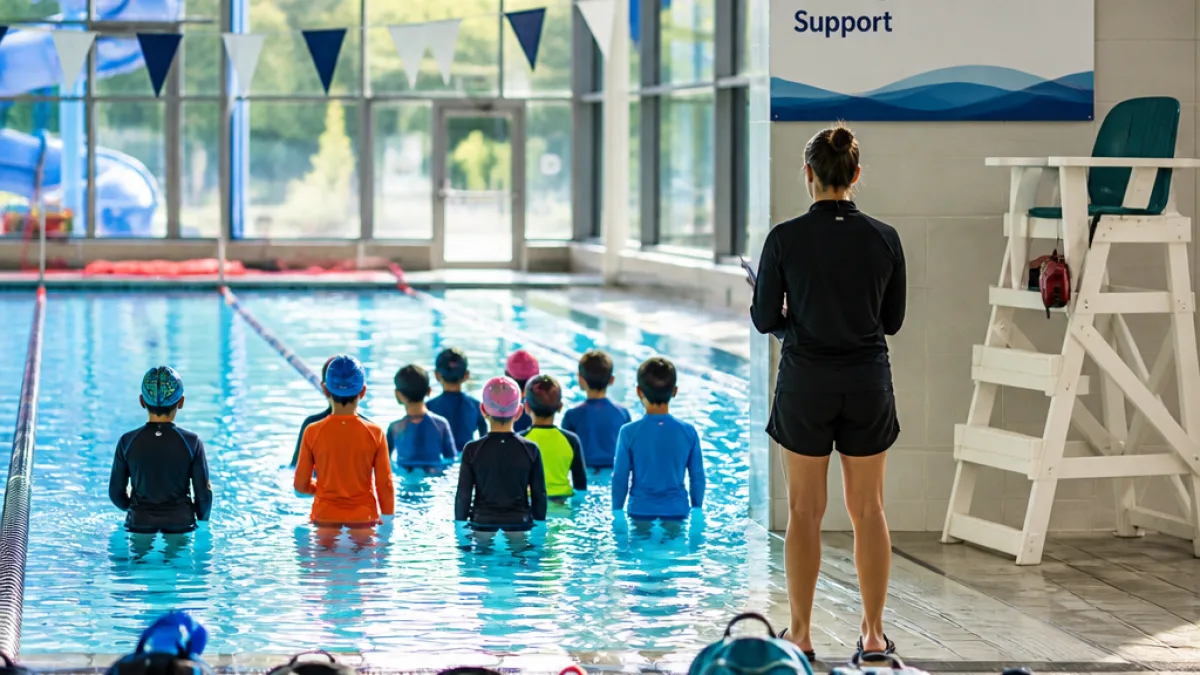
Burnaby councillors are preparing to ask the provincial government for funding to sustain and expand a school-based learn-to-swim pilot designed to teach water safety to Grade 5 students across the district. The initiative — conceived in early 2023 and launched in winter 2025 — aims to provide essential aquatic skills to children who otherwise would likely never receive formal lessons.
City council has slated the program as a topic for the Union of B.C. Municipalities convention in September, where councillors will meet with ministers to press for grant support. So far the pilot has delivered eight 30-minute lessons over four weeks to 248 Grade 5 students from four schools, with five additional schools expected to join in the fall.
"We have arranged meetings with ministers … to pitch the importance of a swim program, not just in Burnaby but across B.C., and hoping that this could be the model for them," said Coun. Daniel Tetrault.
Costs, constraints and next budget decision
The city allocated $206,000 in 2025 and $412,000 in 2026 to cover staff, programming, materials and transportation for students who need it. The report to council noted several operational challenges during the pilot, including availability of lifeguards and instructors, conflicts with school lunch and dismissal times, and limited pool availability on busy evenings.
| Year | City funding |
|---|---|
| 2025 | $206,000 |
| 2026 | $412,000 |
The city report says the program’s continuation beyond 2026 will be considered during the 2027 budget process. Councillors hope provincial grants could reduce the city’s share and allow the model to be adopted more widely across B.C.
Who has taken part and operational headaches
During the pilot phase, participants have included a notable number of children who had never had swim lessons before, a point councillors cited as a highlight. Still, staff reported logistical headaches that could limit scale-up without additional funding or operational adjustments.
- Participants: 248 Grade 5 students from four schools; five more schools expected in fall.
- Format: Eight lessons, each 30 minutes, delivered over four weeks.
- Barriers: Lifeguard/instructor shortages, school schedule conflicts, limited pool time.
For Burnaby families, the program represents a push to make water safety an accessible part of the school experience rather than an extracurricular expense. For the municipality, it is a test of whether targeted city investment and a provincial partnership can close gaps in basic safety education.
City councillors will take the case to Victoria in September, seeking grant support that could determine whether the program becomes a permanent feature in Burnaby schools and a possible model for other districts in the province.