
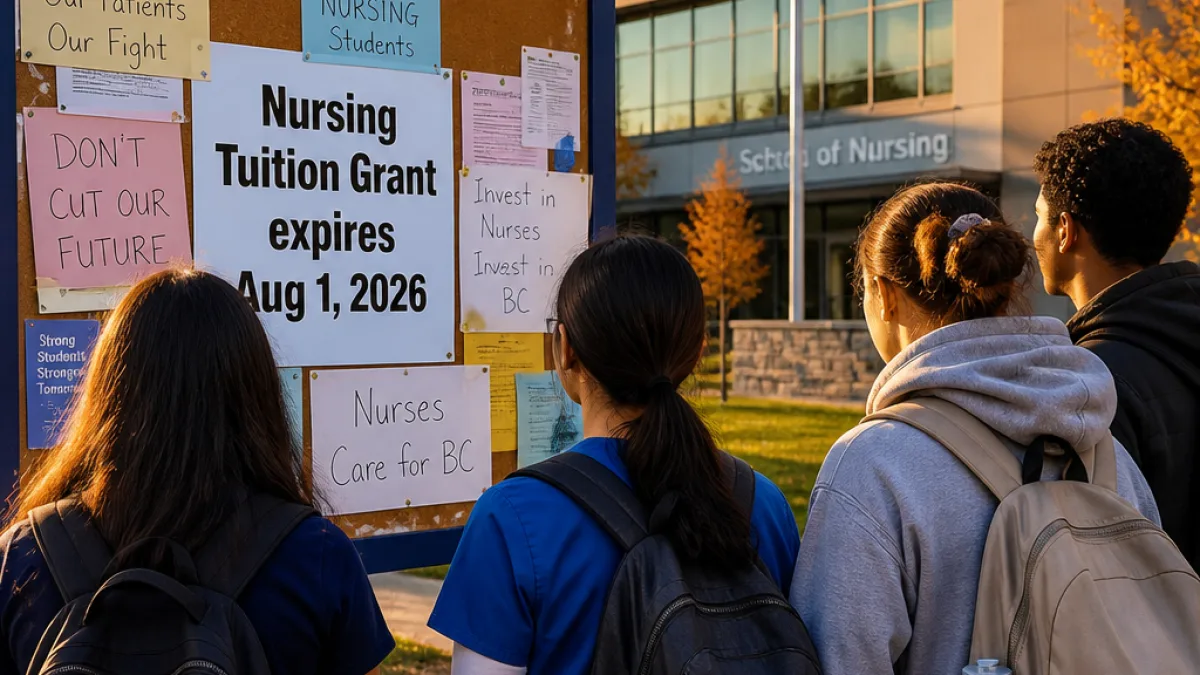
The provincial Nursing Tuition Grant that provided $2,000 per year to eligible nursing students in British Columbia will expire on Aug. 1, 2026, leaving some trainees scrambling to cover rising education costs as they near graduation.
Students say end of grant feels like a betrayal
Andreas Kamp, a fourth-year nursing student who began his program in 2023 — the same year the grant was introduced — said the decision to let the program lapse has been a blow to morale.
“It’s like a shot in the back,” Kamp said. “We’re dedicating our lives to the people of British Columbia and then we’re getting this in return.”
Kamp said he received the grant in each of his first three years but learned while budgeting for the upcoming year that the funding would not be available. He described the removal of the grant as signalling the government’s priorities and as diminishing an expression of support to students entering a strained health‑care system.
What the grant covered
The Nursing Tuition Grant, introduced in 2023, targeted Canadian citizens and permanent residents enrolled in eligible programs at public post‑secondary institutions in B.C. Eligible pathways included practical nursing, bachelor of science in nursing, bachelor of science in psychiatric nursing and bachelor of psychiatric nursing programs. The award was delivered annually at a rate of $2,000 per student per year.
| Item | Detail |
|---|---|
| Annual amount | $2,000 |
| Introduced | 2023 |
| Expiry | Aug. 1, 2026 |
| Eligible students | Canadian citizens and permanent residents in eligible nursing programs at B.C. public institutions |
Financial pressure on students
Kamp noted that total tuition last year for his program was about $9,000, including roughly $4,000 for a summer practicum — costs he said are being met increasingly through part‑time work and other personal sacrifices. With the grant ending, some students expect to seek additional employment, defer other expenses or accumulate more debt.
Students and supporters argue the timing is problematic: the province is still facing a nurse shortage, and many cohorts who began studies while the grant existed will now complete their training without that support.
Why the expiry matters for the health system
Backers of the grant framed it as both a financial relief and a signal of support designed to encourage enrolment and retention in nursing programs. Advocates say removing the program could hamper recruitment and worsen existing workforce gaps, particularly in rural and remote communities where staffing challenges are most acute.
- Students lose predictable annual support of $2,000.
- Those who began under the program may face a funding cliff before entering the workforce.
- Universities and colleges may see altered budgeting for students relying on the grant.
The province set the grant’s expiry date when it launched the program in 2023. Government officials have framed the initiative as a temporary measure but have not released public plans in this reporting for replacement funding or an extension.
Where students go from here
Several students said they first noticed the grant would not be available for their final year while planning finances for practicum and tuition. For some, that means seeking additional paid work during studies; for others, it could mean rearranging living costs or tapping into other financial aid sources such as student loans and bursaries.
Student voices highlight broader questions about how the province balances short‑term incentives with long‑term workforce planning. If the grant is not renewed or replaced, nursing programs may need to rely more heavily on targeted recruitment, clinical placements and other supports to keep enrolment and completion rates steady.
As cohorts that began their education during the grant period finish their programs, unions, schools and student groups are expected to press the provincial government for clarity on whether alternative funding or supports will be offered.
For now, students like Kamp are left weighing the immediate financial impact as they prepare to enter a health‑care system that continues to call for more nurses.