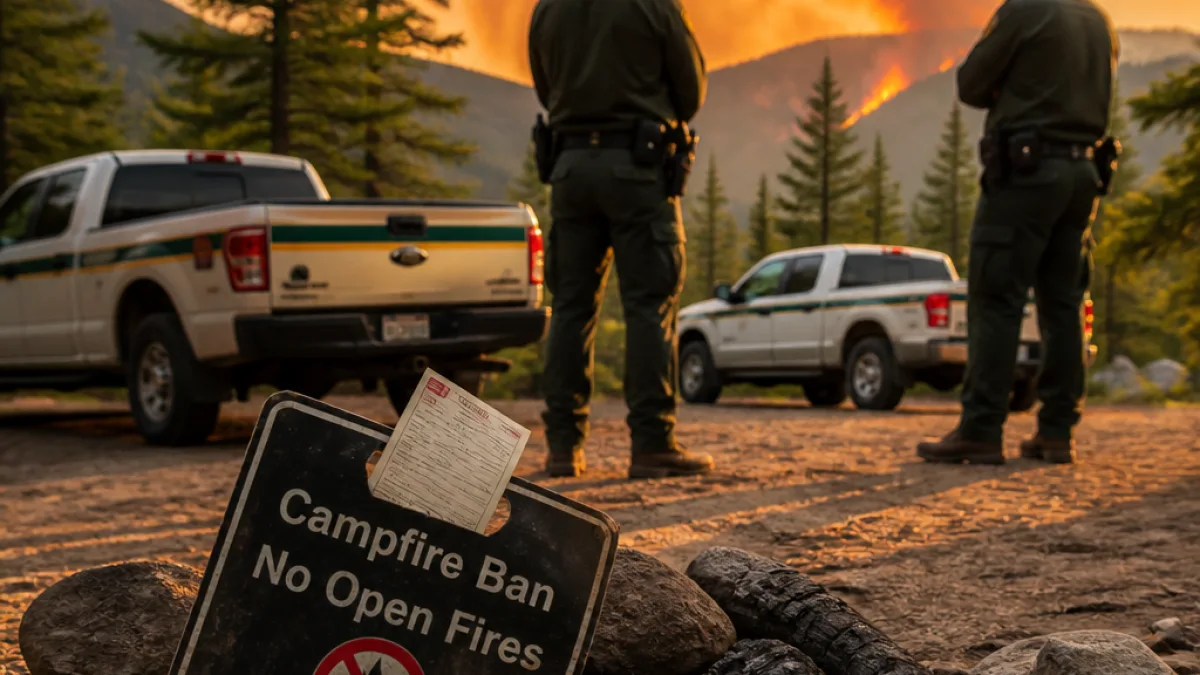
Conservation officers in British Columbia issued a wave of tickets over the weekend after discovering numerous illegal campfires while wildfire crews laboured to contain multiple out-of-control fires across the province.
Enforcement expands as fires threaten communities
The BC Conservation Officer Service said it handed out 19 violation tickets totalling close to $22,000. Officers conducted spot checks at campsites and recreation areas where open-fire restrictions are in force, aiming to reduce human-caused ignitions as wildfire conditions worsen.
“Claiming you didn’t know about the campfire ban is not an acceptable excuse.”
The statement underscores the province’s message that bans are widely publicized and remain in effect in key regions. Current prohibitions include campfire bans specifically in the Cariboo, Kamloops and Southeast fire centres and parts of coastal B.C., while larger open-fire bans apply to most other areas.
Penalties and potential consequences
Authorities warn that consequences for breaching the open-fire measures can be severe. Options available to enforcement officers and courts include administrative penalties and criminal sanctions depending on the offence and circumstances.
| Action | Possible penalty |
|---|---|
| Issuing a ticket | $1,150 |
| Administrative penalty | $10,000 |
| Court conviction | Up to $100,000 fine and/or up to one year jail |
While the weekend tickets amount to thousands of dollars, the B.C. Conservation Officer Service stresses that penalties are intended to deter behaviour that could spark new fires during an already volatile season.
Public safety and local impacts
Wildfire crews are stretched across the province responding to hundreds of active incidents, including many that are classified as out of control. In some communities, residents have already been forced from their homes and assessment teams are now inspecting damage. The delicate balance between managing recreation access and protecting at-risk communities is shaping enforcement activity in provincial parks, backcountry sites and informal campsites.
For the public, that means being aware of and respecting local fire centre restrictions before lighting any flames. Officials have repeatedly advised that even small actions can carry large consequences during peak fire weather.
How to stay informed and avoid penalties
Campers and outdoor users should check fire centre orders before travelling or lighting any fire. Key sources of current information include provincial government pages for fire bans and local wildfire service updates. Practically, visitors should:
- Confirm whether a campfire ban is in effect for their destination.
- Use designated campsites and follow posted restrictions.
- Extinguish any flame completely and verify cold-to-the-touch before leaving.
- Carry alternative cooking methods that do not involve open flame where bans apply.
Enforcement in the coming days is likely to continue while weather and fuel conditions remain conducive to fire spread. Conservation officers have signalled zero tolerance for breaches that could endanger lives or force additional evacuations.
As wildfire crews work to contain major blazes, the province’s message to recreational users is clear: awareness and compliance are critical. Even a single illegal campfire has the potential to produce a new ignition that distracts and diverts limited firefighting resources.
Local residents and visitors should monitor updates from the BC Wildfire Service and the BC Conservation Officer Service for daily changes to bans and closures.