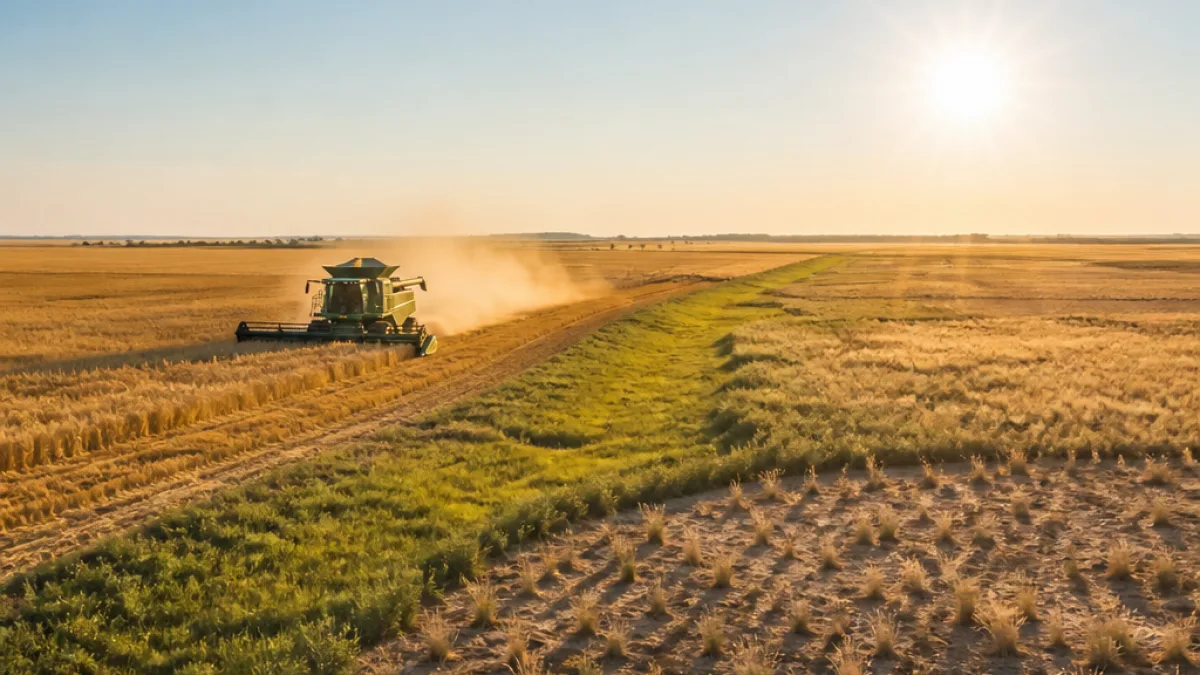
The Saskatchewan weekly crop report for the seven days ending Aug. 3 shows crops advancing quickly under warm, dry conditions, with early-seeded fields in some regions approaching maturity and harvest already in progress on winter cereals.
Rapid progress — and uneven conditions
Provincial agronomists said that while many crops are developing at or ahead of their normal stages, rainfall patterns were uneven and would be of limited benefit to fields that are already maturing. The report noted that precipitation in other parts of the province would still help later-seeded crops.
Harvest operations were under way for winter cereals. The report lists the following progress:
- Winter wheat: 7% harvested
- Fall rye: 21% harvested
- Spring wheat: 1% harvested
- Barley: 1% harvested
- Oats: 2% harvested
- Triticale: 37% harvested
Development stages and moisture status
Across the province, an estimated 71% of spring cereals were at their normal stage of development, with 7% ahead and 22% behind. Oilseeds were reported as 65% normal, with 6% ahead and 29% behind. Pulses were 77% normal, 10% ahead and 13% behind.
Topsoil moisture on cropland was described as 56% adequate, 33% short and 9% very short. Pasture conditions were mixed: most were in decent shape, but about 8% of pastures were rated poor to very poor owing to limited precipitation in some areas. Overall, 59% of Saskatchewan pastures were assessed as being in good to excellent condition.
Damage reports and pest pressure
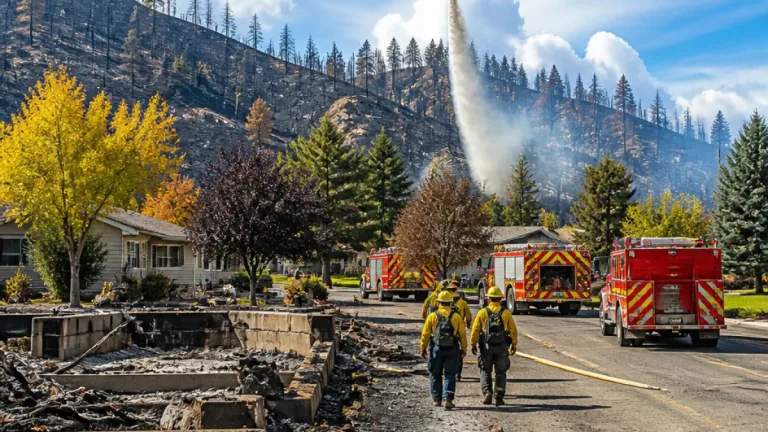
The report recorded crop damage in areas experiencing high temperatures combined with dry conditions. In addition to heat and drought stress, agronomists reported several sources of crop loss across limited areas:
- Wind damage
- Grasshopper feeding
- Bertha armyworm pressure
These problems were described as causing minor to moderate damage in the affected areas.
What this means for producers and markets
Rapid advancement of early-seeded crops shortens the window for late-season rainfall to improve yields in those fields. For later-seeded crops and pastureland, timely precipitation could still help — but the report indicates that moisture is unevenly distributed. That combination can complicate harvest planning, storage decisions and marketing timelines for producers across the province.
| Crop | Harvest progress |
|---|---|
| Winter wheat | 7% |
| Fall rye | 21% |
| Spring wheat | 1% |
| Barley | 1% |
| Oats | 2% |
| Triticale | 37% |
Practical considerations for farmers
Producers making decisions this week will be weighing several realities reflected in the report. Key considerations include:
- Fields nearing maturity: rain is less likely to boost yield for early-seeded crops once grain fill is complete.
- Spotty moisture: areas reporting short or very short topsoil will need follow-up precipitation to support later-seeded crops and pasture recovery.
- Pest monitoring: grasshoppers and bertha armyworm were reported and can increase pressure quickly, so continued scouting remains important.
Local agronomists and commodity specialists typically advise producers to keep close watch on crop staging and weather forecasts, and to prioritise harvest on fields most at risk of shattering or quality loss. For producers managing livestock, pasture condition ratings underscore the need to track forage availability heading into late summer.
The Western Producer’s Markets Desk provides daily market updates and is a resource for those tracking how crop development and harvest progress may influence local and international markets.
For many Saskatchewan producers the next few weeks will be decisive: where rain falls it can still bolster late crops and pastures, but in drying areas rapid crop maturity will shift focus firmly to harvest and protecting grain quality.