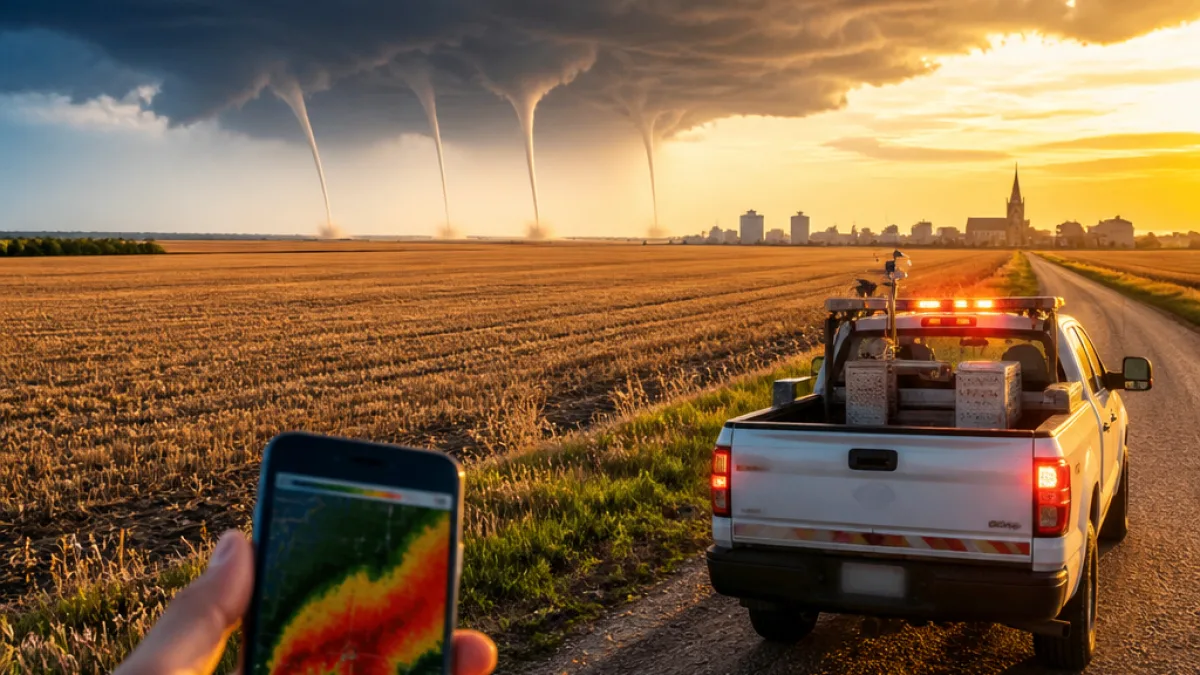
Saskatchewan has seen an unusually large number of tornadoes so far this year, Environment Canada data show, prompting meteorologists to remind residents to be ready for severe weather and to have a shelter plan.
Numbers well above long-term average
To date, the province has recorded 30 tornadoes — a tally markedly higher than the roughly 13 to 14 tornadoes Saskatchewan typically documents in an average year, based on the last 35 years of records. The figure represents a notable rise even after accounting for improved detection and reporting in recent years.
Environment and Climate Change Canada meteorologist Janelle Gergely said the majority of this year’s confirmed events were lower-intensity phenomena and that increased public reporting and targeted surveys have played a role in the higher totals.
“In an ideal scenario, you would already have a watch to know to be looking out and have your phones on you so you can get the alert,”
Gergely explained the difference between the alerts residents should expect: a watch indicates conditions are favourable for tornado development, while a warning means a specific storm is producing a tornado or there is strong evidence a tornado is imminent.
Many incidents were landspouts
Of the 30 recorded tornadoes, 20 have been rated EF0. Meteorologists say these are often landspout tornadoes — typically smaller in scale and structurally different from the more damaging supercell tornadoes that produce higher-end EF ratings.
Even though EF0 events generally cause less destruction than stronger twisters, experts caution that they still pose risks to people and property, especially when they occur suddenly or over populated areas.
Context and recent years
Saskatchewan documented 23 tornadoes in 2025 and 19 in 2024, making this year’s total a clear uptick in reported activity. Forecasters note that a combination of better observational tools, such as widespread smartphone use and dedicated field surveys by programs like the Northern Tornadoes Project, has helped identify tornadoes that might have gone unnoticed in earlier decades.
| Year | Reported tornadoes |
|---|---|
| 2024 | 19 |
| 2025 | 23 |
| 2026 (to date) | 30 |
How to prepare and respond
Meteorologists reiterated standard safety advice for tornado-prone situations and emphasised the need for a pre-planned response. Key steps recommended for residents include:
- Know the difference between a watch and a warning — a watch means conditions could produce tornadoes; a warning means a tornado is occurring or imminent.
- Identify the safest internal location in your home, ideally a basement or an interior room away from windows.
- Avoid sheltering in vehicles, campers or other mobile structures during a tornado.
- Ensure phones are set to receive alerts and develop a household plan so actions are automatic if a warning is issued.
Gergely urged people not to wait until a warning is announced before preparing, saying situational awareness can make a meaningful difference in safety when severe storms move in quickly.
Ongoing monitoring as heat and storms persist
Environment Canada continues to monitor the Prairies for severe convective storms. The same atmospheric setups that bring strong thunderstorms and tornadoes are often linked with prolonged warm periods and higher humidity, conditions the agency says will remain a focus for forecasters through the season.
Residents should keep current with local alerts, review emergency plans and ensure that radios, phones and other communication tools are charged and able to receive notifications when storms threaten.
Local emergency management offices and municipal governments typically publish additional preparedness advice tailored to communities; check your local municipality’s website for details on shelters and official guidance.
With the season far from over, meteorologists say the province should expect more storm activity and encourage household preparedness rather than alarm.