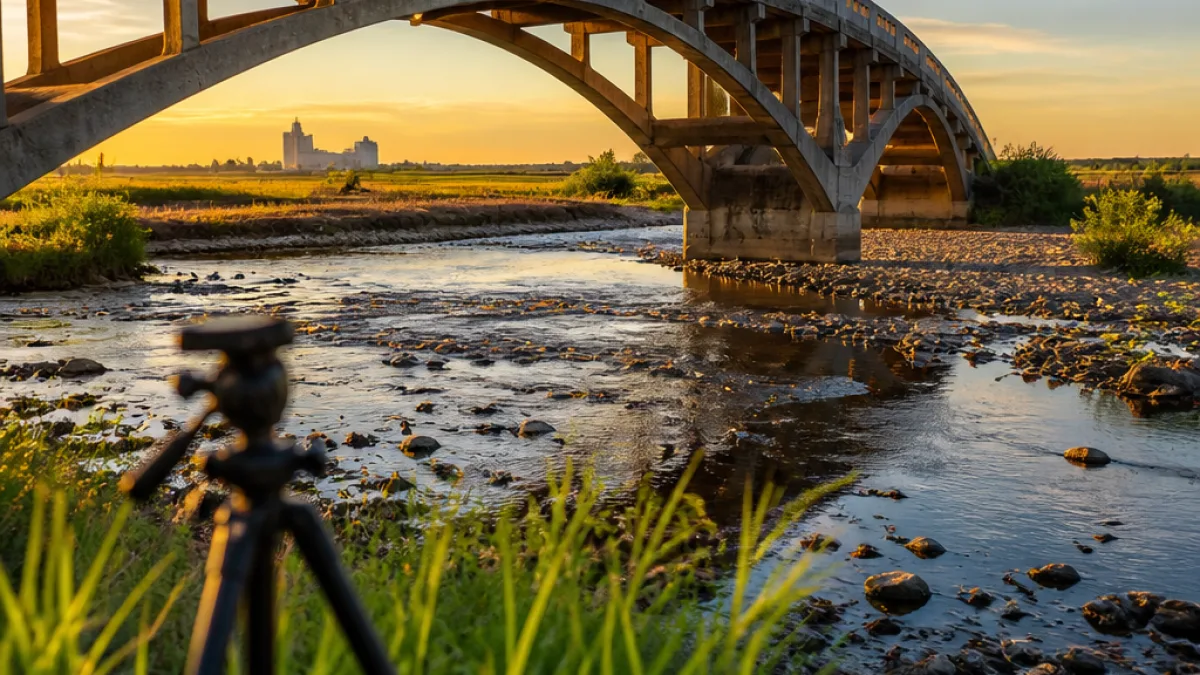
SASKATCHEWAN — A filmmaker has spent thousands of kilometres across the province recording the remaining concrete bowstring arch bridges in a push to preserve their story before more are lost.
Roadside icons slipping from the landscape
The project, produced by Crosscut Films, was inspired by the disappearance of another Prairie icon: the grain elevator. Once considered permanent markers on the horizon, those wooden sentinels largely vanished from Saskatchewan’s towns and railway lines. The filmmaker behind the bowstring project fears the bridges are following a similar path.
Of the 97 bowstring bridges originally built across the province, just 18 still carry traffic. Another 19 remain standing but no longer serve roadways — they have been bypassed or isolated by realignments. The remainder have been demolished.
| Original total | Still carrying traffic | Standing but bypassed | Demolished |
|---|---|---|---|
| 97 | 18 | 19 | 60 |
The bridges once reached across much of the province — from the Carlyle area in the southeast to Turtleford in the northwest, and from Maple Creek and Piapot in the southwest to Tisdale in the northeast. Their geographic spread underlines their historic role in connecting communities across wide Prairie distances.
Three-part film and months of fieldwork
The filmmaker, identified in the project materials as Woroniuk, has travelled more than 3,600 kilometres to film every surviving bowstring bridge, creating a visual record intended for public release later this year. The documentary will be published on YouTube in three parts:
- The first instalment examines why these bridges were built, where they were located and the methods used to construct them.
- The second addresses the factors behind the disappearance of many examples.
- The third focuses on the historic Borden Bridge over the North Saskatchewan River, once noted as the longest concrete bowstring arch bridge in North America.
Woroniuk says the project grew beyond technical documentation as people began sharing memories tied to the bridges — family visits, road trips and the landmarks that signalled a traveller was nearing home. His aim is to provide a resource so future generations will not be left wishing someone had recorded the structures while they were still standing.
“It’s not just a piece of engineering. It’s got some grace and some style to it,”
The quote reflects the view that these spans are not purely utilitarian; they carry aesthetic and cultural value as part of Prairie heritage.
Challenges finding historical records
As part of the research, Woroniuk sought historic photographs, with particular interest in images taken during construction. Despite extensive searching, including work at the Provincial Archives in Regina, such photographs proved difficult to locate. The scarcity of archival construction photos makes the filmmaker’s contemporary fieldwork all the more important as a record.
The documentary’s combination of technical history and personal recollections highlights two related issues: the physical loss of infrastructure and the loss of everyday cultural touchstones that frame residents’ sense of place. For towns whose landscapes have changed dramatically over decades, a bridge can be shorthand for stories and memories now at risk of fading.
Local impact and what to watch for
For residents and municipalities, the film offers a prompt to consider preservation options and local interpretation. Where bridges are decommissioned but remain standing, communities sometimes repurpose spans for trails or viewpoints; where demolition is necessary, documentation and salvage of elements can preserve a piece of the structure’s history.
The documentary’s release on YouTube this fall will make the material widely accessible. Viewers interested in Prairie heritage and engineering history will find the first part’s focus on construction and siting useful, while the later episodes will place individual bridges in a wider context of transportation planning and community memory.
Woroniuk’s work adds to ongoing discussions about how Saskatchewan remembers and protects its built heritage. Whether the province’s bowstrings will survive the coming decades remains uncertain, but the film ensures an organised, visual record exists for those who wish to study, celebrate or advocate for these distinctive structures.