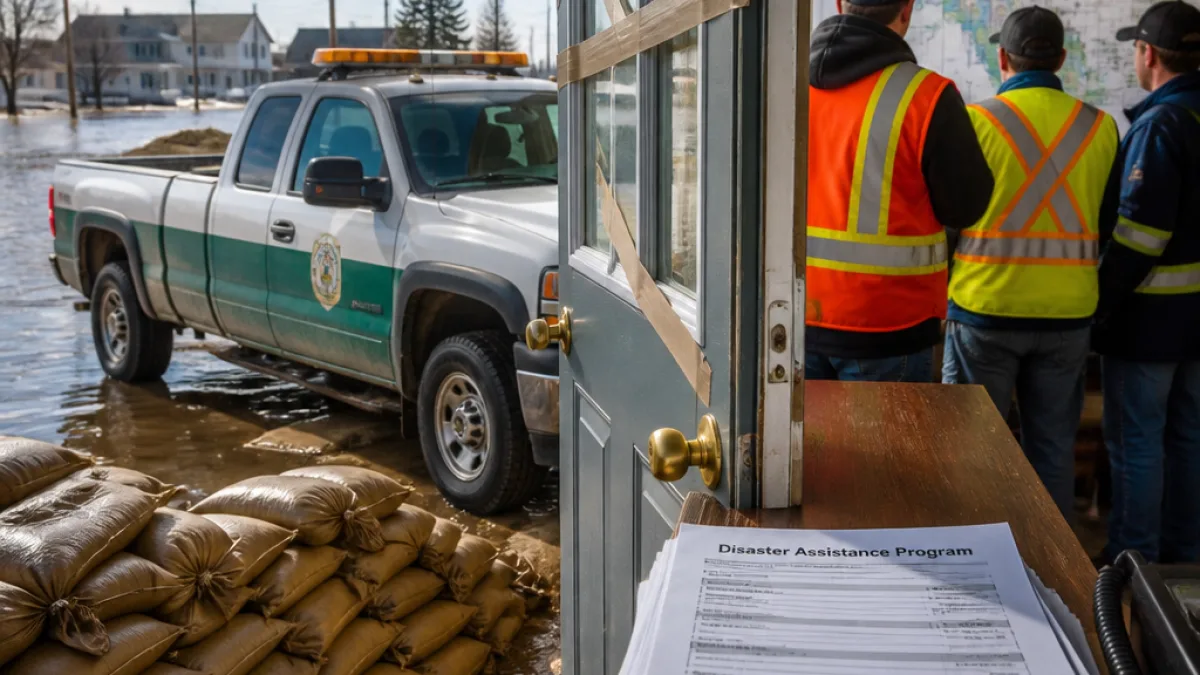
The Saskatchewan Association of Rural Municipalities is welcoming amendments to the Provincial Disaster Assistance Program that increase financial support and broaden eligibility for communities hit by natural disasters this year.
Higher limits and replacement-value payments
The updated rules raise the maximum assistance available to individuals to $500,000 and to small businesses to $3 million. Compensation for eligible damage will now be based on standard replacement value rather than on depreciated value, a change SARM says will help households and businesses more fully rebuild.
“SARM has been hearing from councils across the province about the challenges they are facing after this year’s flooding,” SARM president Bill Huber said in a statement accompanying the announcement.
“Supporting proactive measures will help reduce future disaster impacts and strengthen our communities.”
Municipal access and incentives
The province has also streamlined municipal access to disaster funds. Municipalities will be able to reduce their deductible if they meet certain emergency management and preparedness requirements, and the province can now designate affected areas during widespread disasters without waiting for formal requests from local authorities.
SARM said those changes could speed assistance to rural municipalities, which have reported significant damage to roads, bridges and other local infrastructure from flooding this year. The group also pointed to mounting pressure on municipal budgets where repair costs have been rising.
Focus on risk reduction and rebuilding to current standards
The program now allows eligible repairs to include upgrades necessary to meet current standards. In addition, projects designed to reduce future risk may be eligible for an extra funding top-up of up to 25 per cent of an approved claim.
SARM framed those elements as a move toward more proactive disaster management — supporting municipalities to rebuild in ways that lower long-term vulnerability rather than simply restoring pre-disaster conditions.
What’s changing at a glance
- Individual maximum: increased to $500,000
- Small business maximum: increased to $3 million
- Compensation method: replacement value, not depreciated value
- Municipal deductible: can be reduced through preparedness measures
- Extra funding: up to 25% for risk-reduction projects
- Designation power: province can declare affected areas in large-scale disasters
| Category | Previous | Now |
|---|---|---|
| Individuals — maximum assistance | (Not specified in release) | $500,000 |
| Small businesses — maximum assistance | (Not specified in release) | $3,000,000 |
| Compensation basis | Depreciated value | Standard replacement value |
| Risk-reduction top-up | Not previously available | Up to 25% of approved claim |
Why the changes matter locally
Rural municipalities in Saskatchewan have faced a difficult season of flooding that left roads washed out, culverts compromised and municipal budgets strained. Smaller towns and agricultural service centres often lack the reserve funds to cover sudden, large repair bills, and getting federal-provincial assistance on a timely basis can be crucial to maintaining essential services.
By aligning provincial rules more closely with the federal Disaster Financial Assistance Arrangements, the changes aim to make program eligibility and payouts more predictable. For residents and local business owners, the shift to replacement-value payments could mean more realistic settlements when they need to repair or replace damaged property.
What municipal councils should consider
SARM’s statement highlights that municipalities can lower their deductible by meeting preparedness requirements. Councils will need to evaluate local emergency plans, infrastructure asset management and mitigation measures to determine how they can qualify for deductible reductions and for the additional funding available for risk-reduction projects.
Those steps might include updating emergency response plans, investing in flood-proofing infrastructure, or reviewing development policies in vulnerable areas. While the province’s program changes provide more tools, the onus will still be on local governments to take preparatory actions to access certain benefits.
The province has not provided a timeline for implementation in the materials released with SARM’s response. Local officials and residents should watch for further guidance from Saskatchewan Public Safety and their rural municipality offices on how to apply for the revised assistance and the documentation required.
For many rural communities recovering from this year’s floods, the amended rules could bring both faster relief after an event and more support for rebuilding in ways that reduce future risk.