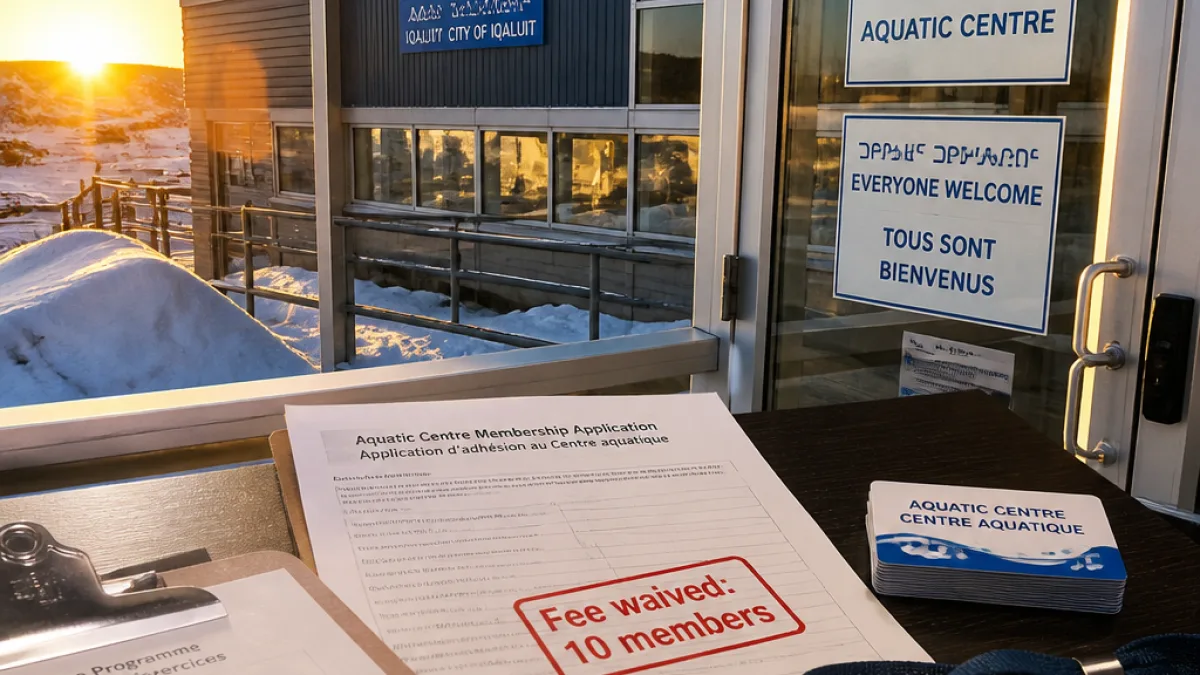
IQALUIT — The City of Iqaluit and Qikiqtani General Hospital have launched a locally funded exercise initiative for cancer patients after councillors unanimously approved waiving fees for participants, a move hospital physicians say may be the first public-health partnership of its kind anywhere.
The programme stems from research published in the June 2025 edition of the New England Journal of Medicine, a multi-centre randomized trial conducted between 2009 and 2024 at 55 health centres worldwide and funded by the Canadian Cancer Society. The study followed nearly 900 people treated for colorectal cancer and compared outcomes for those assigned to a supervised, structured exercise regimen with those given educational materials for self-directed activity.
Evidence behind the local effort
The international trial found participants in structured exercise had a 37 per cent lower risk of death and a 28 per cent lower risk of recurrence or of developing another cancer. Researchers calculated that for every 14 people enrolled in the supervised programme, one death from cancer was prevented.
| Metric | Structured exercise group vs control |
|---|---|
| Lower risk of death | 37% |
| Lower risk of recurrence or new cancer | 28% |
| Number needed to treat to prevent one death | 14 |
Doctors at Qikiqtani General Hospital say they are adapting the study’s approach beyond colorectal cancer to offer supervised exercise to patients with other cancer types, making the programme open to people across the territory.
“Exercise may be as effective in some instances in preventing recurrences of cancer as some of the other treatments that we currently use,”
said Dr. Alexandra Borwein, who works at Qikiqtani General Hospital and is involved in the local project.
How the Iqaluit programme will work
At a July 28 council meeting, Dr. Matthew Kwon presented the case to municipal councillors, asking the city to waive the Aquatic Centre’s membership fees for a pilot group. Council agreed to waive the usual $800 membership charge for 10 participating cancer patients, allowing them access to guided training and the centre’s facilities at no cost.
- Municipal fee waived: $800 membership for each of 10 patients
- Facilities: Iqaluit Aquatic Centre
- Clinical leads: Dr. Matthew Kwon and Dr. Alexandra Borwein at Qikiqtani General Hospital
- Evidence base: NEJM multi-centre trial (2009–2024), funded by the Canadian Cancer Society
Dr. Chris Booth, one of the co-authors of the NEJM article and a Kingston, Ont., physician, welcomed the local programme. He said the Nunavut initiative may be the first publicly funded, territory-wide exercise service for cancer patients.
“The programme in Nunavut, to my knowledge, will be the first to be funded by the public system and available to all people,”
Booth said in an interview.
Local context and next steps
Councillors voiced personal and community reasons for supporting the pilot. “I’m pretty sure everybody in this room has been touched by cancer,” Coun. Kyle Sheppard said after Kwon’s presentation.
Physicians involved in the project emphasise that the local scheme is a pilot and relies on existing municipal facilities and staff time. It aims to provide supervised, structured exercise comparable to the protocol used in the trial, rather than simply advising patients to be more active. The hospital team will be responsible for participant recruitment, clinical oversight and tailoring exercise to individual needs.
Public-health experts have increasingly recognised exercise as a component of cancer survivorship care. While the NEJM trial specifically followed patients with colorectal cancer, the local clinicians told council they plan to broaden eligibility to people living with other cancers, mirroring the idea that physical activity supports recovery and long-term health across diagnoses.
For patients and families in Nunavut, the programme brings practical benefits — access to supervised training, a supportive environment and removal of a financial barrier to using a municipal facility. For the territory it may also signal a shift toward integrating rehabilitation and wellness services more deliberately into cancer care.
As the pilot unfolds, hospital and city officials said they will monitor outcomes and report back to council. If the initial 10-person group shows positive results, officials may consider ways to sustain and expand the service, including exploring further funding models and partnerships.
For now, the partnership between Iqaluit and Qikiqtani General Hospital offers a modest but concrete step to apply international evidence to local care — a practical effort rooted in the Arctic community’s needs and the global research that inspired it.