Community hunt planned off Iqaluit as elders and youth call time on food preparation
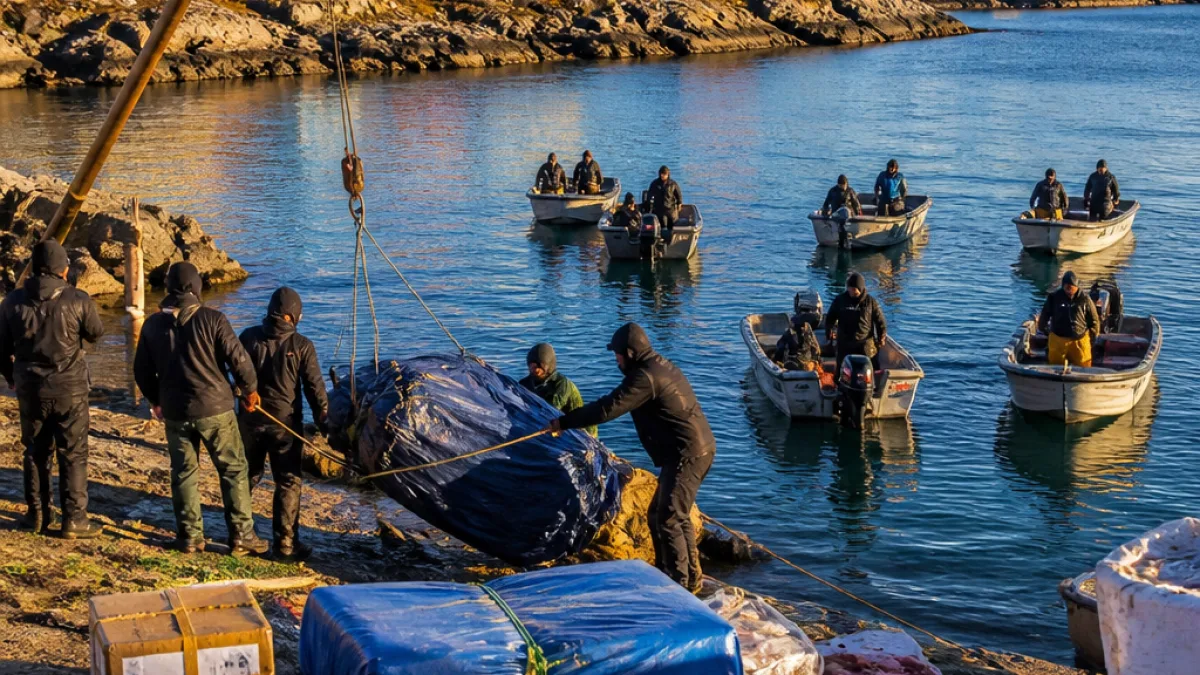
Twenty-four hunters from Iqaluit are scheduled to head out from the city on Aug. 14 as part of a bowhead-whale hunt coordinated by the Amaruq Hunters and Trappers Association. The group plans to use six boats, each crewed by four people, in what association organisers say is an opportunity for intergenerational participation and community food sharing.
Bowhead hunts in Canadian Arctic waters are regulated by the Department of Fisheries and Oceans, and the Iqaluit hunt will follow those rules. Organisers say they are not necessarily seeking a large animal — a smaller whale would be quicker to butcher and easier for the crews to manage.
- Date: Aug. 14
- Crew size: 24 hunters across six boats
- Funding: estimated total cost of $120,000
An organiser involved in the hunt’s planning committee highlighted the number of younger people taking part. In describing the involvement, he said:
“We have lots of people involved — a lot of young people.”
The association’s planning committee emphasised safety and selection. Hunters will examine a whale before striking to evaluate its temperament and to avoid animals officials deem aggressive. As organisers put it, that is a measure to protect boats and crews on the water.
Where the whale would be processed and who benefits
If the hunt is successful, hunters plan to haul the whale ashore at the breakwater near downtown Iqaluit. Organisers expect the meat and skin — traditionally known as maktaaq — to be cut up and shared widely across the community and with other settlements in the Qikiqtaaluk region.
“It can feed a lot of people,” one organiser said, noting that every part of a bowhead is edible. The association described plans for distribution to families and other communities, continuing a long tradition of sharing large marine mammals in the Arctic.
Costs, grants and regional support
Organisers estimate the hunt will cost about $120,000. That sum covers equipment, crew payment, food and fuel. The City of Iqaluit granted the association $10,000 last week to help with the expenditure and the subsequent distribution of food.
The remainder of the estimated cost was covered by donations from regional organisations: Nunavut Tunngavik Inc., the Qikiqtani Inuit Association and the Baffin Fisheries Coalition provided funds to meet the association’s budget, organisers said.
| Expense category | Covered by |
|---|---|
| Hunt equipment, crew, food and fuel | Estimated $120,000 (funded by regional donations and city grant) |
| City grant | $10,000 from the City of Iqaluit |
Bowhead hunts are significant undertakings for communities in the eastern Arctic. Beyond providing large quantities of traditional food, they are occasions for knowledge transfer between elders and younger hunters. The organisers pointed out that previous hunts near Iqaluit occurred in 2018 and 2022, and that preparations involve both logistical coordination and cultural practice.
Residents can expect increased activity around the downtown breakwater if the hunt is successful, with distribution of maktaaq and whale meat to follow. Organisers said they will share the catch with households and other communities in the Qikiqtaaluk region.
The Amaruq association and its planning committee continue to prepare for the departure. Weather, sea conditions and the behaviour of marine mammals will all play a part in how the operation proceeds on Aug. 14.
This hunt highlights how subsistence harvesting remains central to life in Iqaluit — supporting food security, cultural continuity and community bonds in the heart of the Arctic.