The provincial government is directing more than $9 million into municipal capital projects across Newfoundland and Labrador to shore up roads, water and wastewater systems, Transportation Minister Barry Petten announced Monday in St. Mary’s.
Local projects, provincial reach
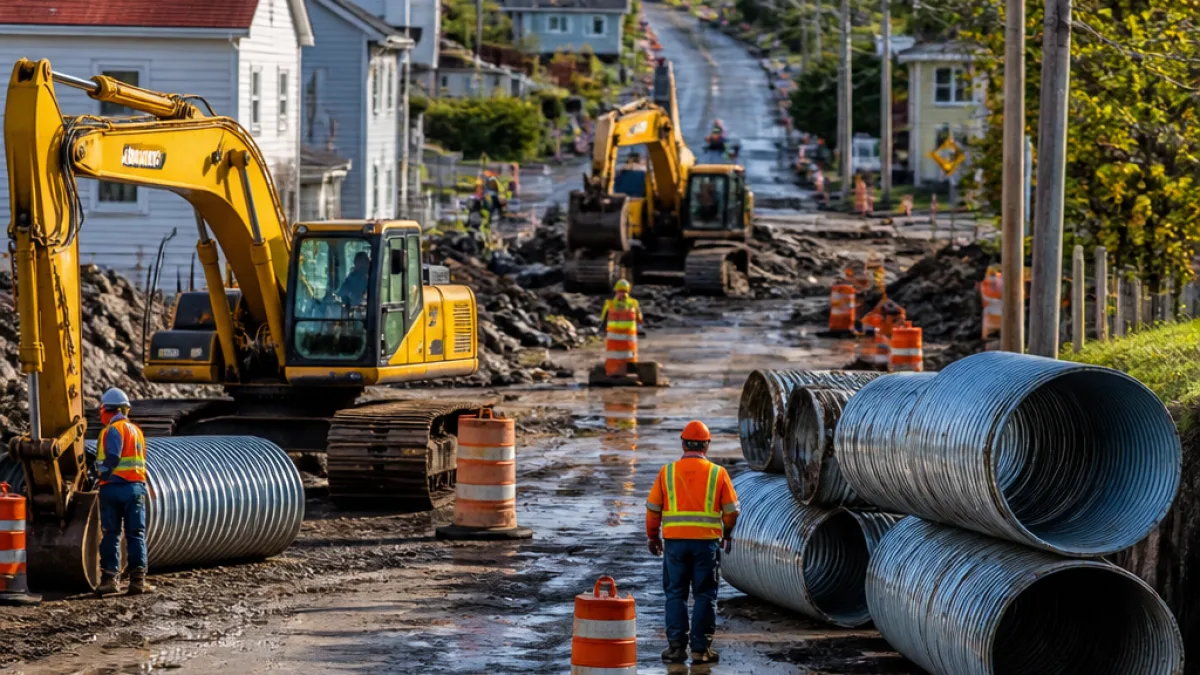
The money comes from the community stream of the Build Communities Strong Fund and will support a variety of infrastructure improvements designed to keep services reliable and protect public health, officials said. In St. Mary’s, the funding includes just over $656,000 to begin a second phase of culvert replacements intended to improve stormwater management.
Those culvert works will involve the removal and replacement of about 34 culverts, followed by reinstatement of the road surface when the work is complete. Municipal leaders have said the upgrades are aimed at preventing localized flooding and reducing long-term road damage.
Projects listed across the province
The provincial announcement included a list of municipal capital works projects and corresponding funding for dozens of communities. Projects range from watermain replacements and feasibility studies to road resurfacing and storm infrastructure upgrades.
Examples highlighted in the material provided by government include:
- Bishop’s Falls: resurfacing of 500 metres of Main Street to improve road conditions and safety.
- Burin: a feasibility study aimed at improving the Big Pond water supply.
- Chance Cove: replacement of approximately 480 metres of watermain, including 17 services and one flush hydrant.
- Kippens: replacement of an existing water storage tank.
| Community | Project | Project total |
|---|---|---|
| Bishop’s Falls | Main Street resurfacing (500 m) | $370,289.88 |
| Burin | Big Pond water supply feasibility study | $90,000.00 |
| Chance Cove | Watermain replacement (480 m) | $688,772.46 |
Why it matters
For many small towns, municipal infrastructure is aging and vulnerable to extreme weather events. Funding streams such as this one help offset the high cost of upgrades that municipalities would otherwise struggle to afford on their own. Replacing culverts, repairing roads and upgrading water systems reduces the likelihood of service interruptions and costly emergency repairs down the road.
Municipal officials have routinely described investments like these as essential for protecting residents’ health and safety, preserving local economies and maintaining access for emergency services, school buses and commercial traffic.
Funding and cost-share
Projects announced under the Provincial-Territorial Infrastructure Funding framework typically involve a cost-share model. The information released lists project totals alongside rebate, PTIF cost-share and municipal contributions for a number of entries. That approach is intended to leverage provincial and federal supports while requiring municipalities to invest alongside higher levels of government.
For smaller towns, the provincial contribution can make the difference between proceeding with a needed upgrade this year or delaying until more funds are secured.
Next steps and timelines
Specific timelines for the various projects will depend on municipal procurement, seasonal constraints and contractor availability. Roads and water infrastructure work generally proceeds through public tendering, and many of the towns named in the announcement will begin planning and tendering phases in the weeks ahead.
Residents in affected communities should expect municipal notices regarding detours, temporary service disruptions or staging areas once contractors are engaged. Municipal councils will have the most current details for their respective projects.
The Build Communities Strong Fund is one of several provincial programs intended to channel infrastructure funding to municipalities. For towns coping with aging systems and the rising costs of maintenance, the injection of federal-provincial money provides breathing room to address pressing needs without passing the full burden onto local taxpayers.
As work begins in communities across the province, the visible signs — new culverts, smoother stretches of asphalt and upgraded water mains — should be welcome reminders that infrastructure investments can yield practical, everyday benefits for residents.