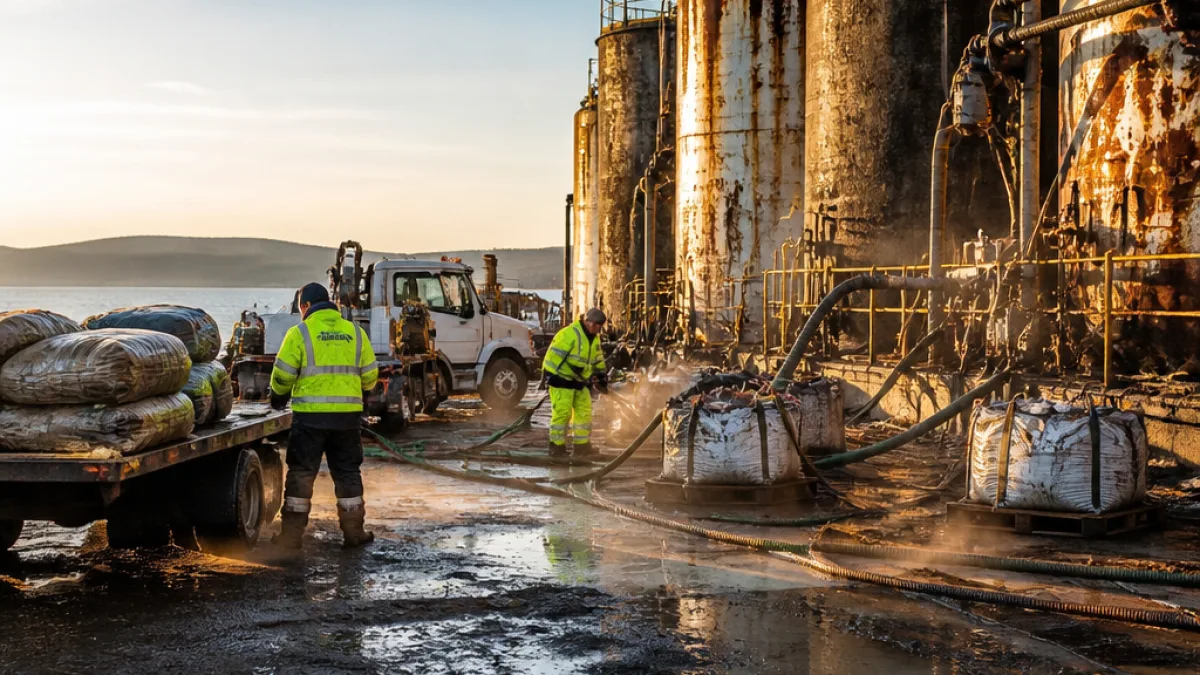
After years of dispute, stench and stalled responsibility, crews have begun removing long-fermented fish sauce from an abandoned processing plant in St. Mary's, a small town on Newfoundland’s east coast. Municipal officials say the work, funded by the provincial government, aims to end a problem that has plagued residents for decades.
Decades of rancid odour and legal wrangling
The Atlantic Seafood Sauce Company opened the plant in 1990 but left it in the early 2000s after protracted legal and regulatory battles. When the operation was abandoned it left behind a maze of storage tanks and equipment — including 110 tanks, each holding about 3,000 gallons of now long-fermented fish sauce. The product leaked and pooled into sludge, producing an unpleasant and persistent smell that residents have described as unbearable.
Local officials and homeowners sought remediation for years while different levels of government and responsible parties debated who should pay for and manage the cleanup. That impasse appears to have ended: the provincial government allocated $2 million in its 2025 budget to begin the work.
What crews are doing and the timeline
Crew members officially began work on Tuesday. According to municipal sources, the sauce will be mixed with peat moss to solidify it, making it easier and safer to remove and transport. Officials say the plant holds an estimated 900,000 litres of product, and they expect the operation to continue through the summer with a goal of completion by October.
“I think we're to a point where we're there. We're actually really close to the finish line. Hopefully now we're going to get [it] cleaned up once and for all.”
The mayor of St. Mary’s delivered that comment to reporters at the site, underscoring the relief many locals feel now that active remediation is underway.
Practical steps and local impacts
Crews will first stabilise the material in place by mixing the sauce with peat moss; that step reduces liquid release and odour during removal. Once solidified, the material can be handled by heavy equipment and transported for disposal. Municipal leaders warn there may be short-term disruptions from truck traffic, equipment noise and temporary road closures, though they say those impacts are necessary to finish the job.
Residents who have lived with the smell for years say the nuisance affected daily life and property enjoyment. The start of physical removal is being watched closely by homeowners and regional officials as a test of how quickly and cleanly the site can be returned to safe condition.
Numbers at a glance
| Item | Figure |
|---|---|
| Storage tanks | 110 |
| Volume per tank | 3,000 gallons |
| Estimated total volume | 900,000 litres |
| Provincial allocation | $2 million |
| Expected completion | October |
Why it took so long
The case is an example of how environmental remediation can stall when ownership, responsibility and funding are disputed. For years, the site sat idle as authorities, former operators and regulators debated liability. That delay allowed the material to further degrade, complicating eventual removal.
Municipal officials say the provincial decision to fund the operation was decisive. The $2-million commitment allowed planners to hire contractors, mobilise equipment and draw up a removal strategy that prioritises safety and minimises further contamination.
What to watch for next
- Progress reports from the town and provincial authorities on removal milestones and any changes to the timeline.
- Information about disposal destination and environmental monitoring to ensure surrounding land and water are protected.
- Local notices about traffic, road access and any temporary restrictions connected to the operation.
This cleanup will be closely observed by residents and regional officials. For a town that has lived with the smell for decades, the work represents not just a technical operation but a chance to close a long chapter of local frustration. If the project meets its timetable and safeguards, St. Mary's could be rid of the rancid odour and begin a slow return to normalcy.
Reporting from the site indicates crews are prepared for challenges, and municipal leaders say they will adapt as issues arise. For now, the town waits to see whether this long-promised cleanup will finally put an end to a pervasive community nuisance.