The provincial government’s decision to sit out a new regional energy memorandum of understanding (MOU) struck this week between the federal government and three Maritime provinces has drawn sharp criticism from the Opposition, which says Newfoundland and Labrador risks missing a chance to tackle electricity affordability.
Political fallout over missing the table
Opposition Leader John Hogan said Premier Tony Wakeham and his Progressive Conservative government are raising red flags by not joining the MOU, which pledges federal and provincial co-operation on transmission upgrades and measures aimed at making electricity more affordable.
“Now, when there's a regional initiative aimed at addressing exactly that, Premier Wakeham says his government has other priorities,” Hogan wrote in a Monday afternoon statement.
Hogan noted the Tory platform from last year’s election pledged to focus on making life more affordable, and argued that the province should be at the negotiating table for regional energy initiatives that could reduce costs for residents.
Wakeham points to Upper Churchill negotiations
Premier Wakeham told reporters on July 24 the government’s absence from the MOU was deliberate and driven by an ongoing, province-specific agenda: negotiations over a new hydroelectricity agreement on the Churchill River with Quebec.
Wakeham said the province is prioritizing:
- the Upper Churchill opportunities, including a new hydro deal with Quebec;
- the possibility of a transmission line to Labrador West;
- an upgrade for the Maritime Link to explore export capacity.
Energy Minister Lloyd Parrott reiterated the premier’s remarks in a statement to CBC, underscoring the government’s focus on those avenues rather than the regional MOU.
What the MOU covers — and who signed
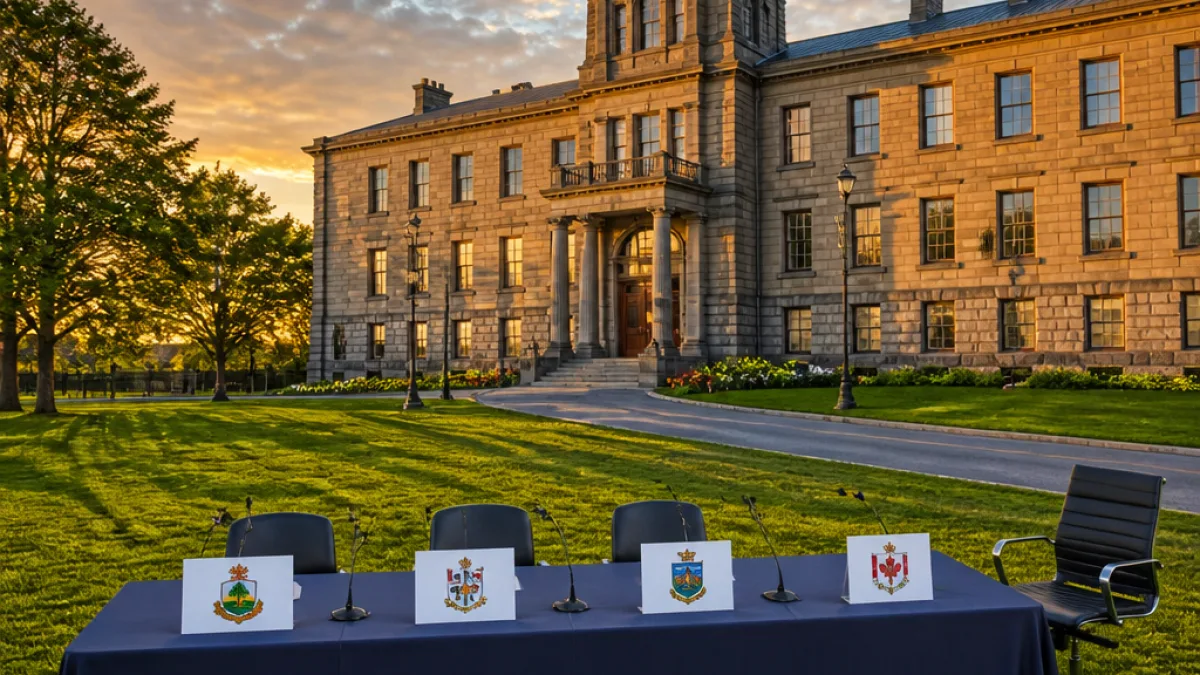
The document announced at the annual summer first ministers’ meeting covers federal and provincial co‑operation to strengthen transmission infrastructure and measures to address electricity affordability across the region. Newfoundland and Labrador was not among the signatories.
| Signatories | Included? |
|---|---|
| Nova Scotia | Yes |
| New Brunswick | Yes |
| Prince Edward Island | Yes |
| Newfoundland and Labrador | No |
| Government of Canada | Yes |
Local stakes and the timing
Electricity pricing and reliable transmission are perennial concerns in Newfoundland and Labrador, particularly as the province balances domestic supply, potential export opportunities and the legacy of past hydro deals. The Wakeham government’s emphasis on a new Upper Churchill arrangement and transmission links to Labrador West and the Maritimes signals a strategy focused on bilateral and infrastructure projects rather than multilateral regional agreements.
For rural and urban consumers alike, the practical question is whether that approach will deliver the same or better affordability and reliability benefits than participation in the regional MOU might have produced. The Opposition says missing the MOU could mean foregoing federal supports and coordinated investments across the region.
What to watch next
- Progress or outcomes of Upper Churchill negotiations with Quebec.
- Any formal proposals or timelines for a transmission line to Labrador West.
- Announcements about upgrades to the Maritime Link and export potential.
As both sides lay out competing priorities, the immediate political theatre will centre on whether Wakeham can demonstrate that the province’s chosen path will produce concrete reductions in electricity costs and stronger transmission links — and whether that evidence appears quickly enough to defuse Opposition criticism.
This developing story touches on energy policy, interprovincial relations and the central promise of affordability that framed last year’s election debate in the province. Residents and municipalities waiting for relief on electricity bills will be watching closely as negotiations and infrastructure plans evolve.