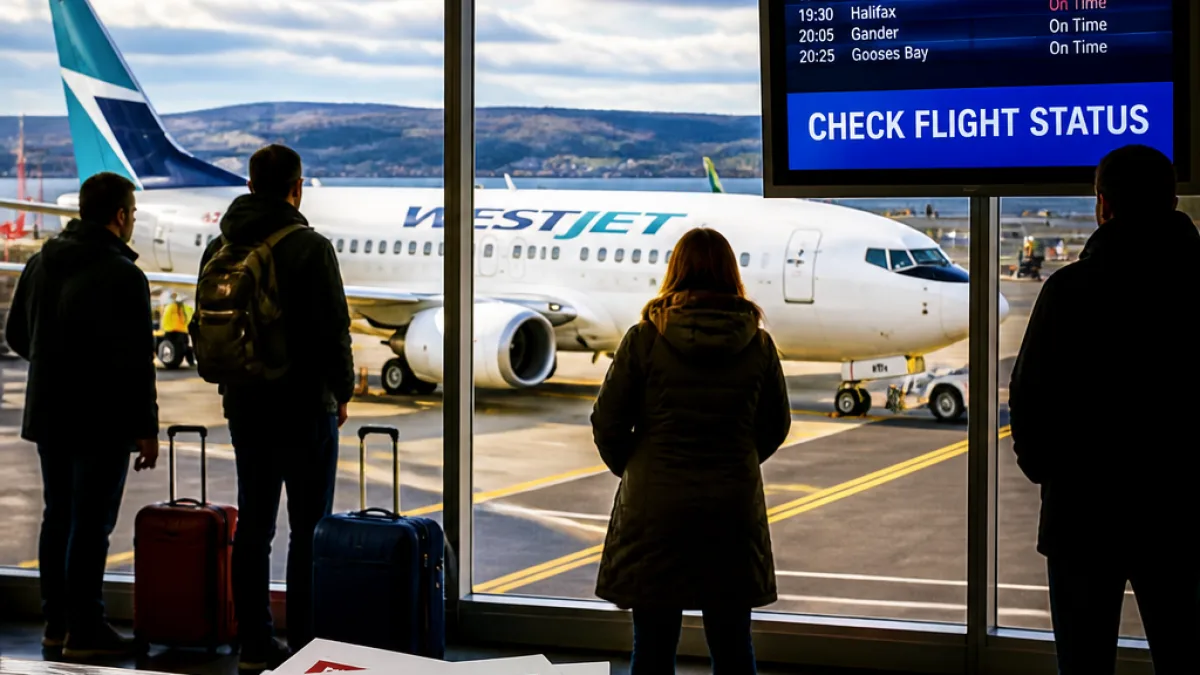
WestJet and the union representing its flight attendants have set a hard 72-hour clock that could see Canada’s second-largest airline ground crew operations and unsettle travel across the country — including here in Newfoundland and Labrador.
What’s at stake
On July 31, both WestJet and the union for its cabin crew served notice that, unless a negotiated agreement is reached, a strike or a lockout could begin when the clock runs out at 12:01 a.m. ET on Aug. 2. The union represents roughly 4,400 flight attendants.
The two sides remain publicly committed to talks but have signalled starkly different priorities. WestJet's chief executive framed the company’s position around sustainability for the airline while saying it wants meaningful improvements for crew. The union has stressed pay, unpaid work and working conditions as core concerns.
“We have been clear about what needs to change,” said Alia Hussain, President of CUPE 8125. “There’s still time to avoid a strike.”
WestJet CEO Alexis von Hoensbroech said the airline wants “to come to an agreement that provides value and meaningful improvements for our Cabin Crew and is sustainable for our company.”
Local implications for Newfoundland and Labrador travellers
Even before any walkout, the prospect of last-minute cancellations or changes is a concern. Many passengers travelling to and from St. John’s and other regional airports rely on WestJet’s domestic network as a link to connecting flights and seasonal destinations.
While the union and company continue bargaining, here are practical steps travellers in Newfoundland and Labrador should consider:
- Check flight status frequently with WestJet and your booking agent.
- Consider flexible tickets or alternative carriers if travel is imminent.
- Look into travel insurance policies that cover labour disruption.
- Contact travel providers in advance about rebooking and refund policies if a strike is announced.
What the issues are — according to the parties
The union’s publicly stated priorities focus on wages, working conditions and what it describes as unpaid work. WestJet has said it wants a deal that delivers improvements for crew while remaining financially sustainable for the airline. Beyond these broad objectives, negotiators have not disclosed detailed, binding offers to the public.
| Party | Public position |
|---|---|
| WestJet | Seek agreement with value and meaningful improvements; sustainability for company |
| CUPE 8125 (flight attendants) | Push for fair wages, better working conditions, address unpaid work |
Broader context
Labour disputes in the aviation sector can ripple widely: cancelled flights cause cascading rebookings, pressure on other carriers, and local economic impacts for airports, hospitality and tourism businesses. For Newfoundland and Labrador — a province that depends significantly on air links for business, medical travel and tourism — any sudden reduction in seat capacity or network reliability would be acutely felt.
At the time of reporting, there was no official list of affected flights or routes should a work stoppage proceed. WestJet and the union continue to negotiate, and both sides have publicly expressed a preference for reaching a deal rather than allowing service interruptions.
What to watch for next
Key moments to monitor over the coming hours include:
- Any joint or separate statements from WestJet and CUPE 8125 indicating a deal or further escalation.
- Official notices to passengers about cancellations, rebookings or contingency plans.
- Airport advisories from St. John’s and other regional airports in Newfoundland and Labrador about expected operational impacts.
For travellers in the province, the sensible play is to stay informed and prepare contingency plans for trips scheduled around the deadline. If history is any guide, late-night developments can emerge quickly; those planning to fly in the next 48 to 72 hours should maintain close contact with their carriers and travel agents.
The bargaining dispute underscores wider tensions in post-pandemic aviation between workers pushing to restore or improve compensation and conditions, and carriers managing costs in a competitive, high-input industry. For now, Newfoundland and Labrador residents will watch and wait — and hope negotiators on both sides find common ground before the flights feel the effects.
Reporting from St. John’s.