British Columbia’s ambitious, largely producer-funded recycling framework is showing signs of stress as Nanaimo and Richmond fall below Recycle B.C.’s cleanliness threshold for curbside loads. The non-profit operator sets a target that 95 per cent of collected recycling loads be free of contaminating materials; loads that miss the mark are sent to landfill.
What’s changing at the curb
The province has long marketed its system as among the most advanced in North America, requiring close co-operation between municipalities, private haulers, producers and residents. But the system depends on accurate sorting at the household level, and the rules for what belongs in which bin have grown increasingly detailed.
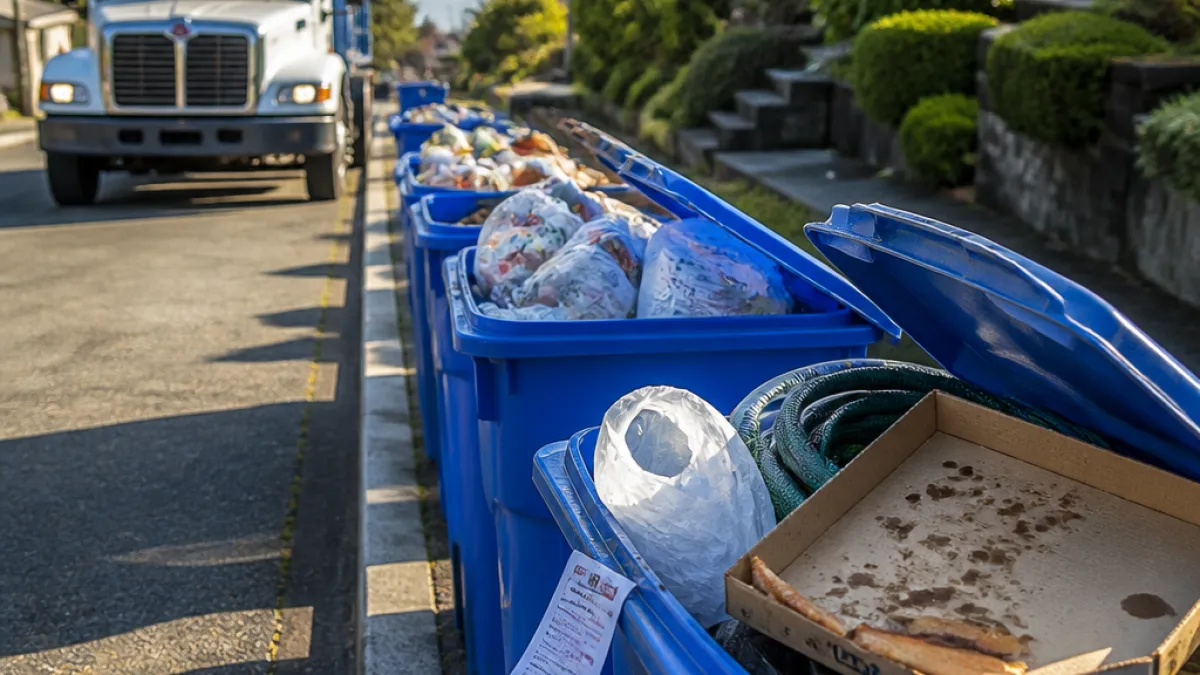
Where contamination becomes common, Recycle B.C. applies an incentive-and-compliance regime to local governments. That can include auditors checking individual bins, warning stickers on offending containers and — in persistent cases — refusal to collect unsorted material. The agency also has the authority to issue monetary penalties to municipalities whose loads repeatedly fall short of the threshold.
"Recycling makes a fun target for conservatives who occasionally want to bash a few hippies, and for a pretty good reason: the value of a recycling effort is only ever as good as the accounting behind it is complete."
The quote above captures a broader truth: recycling’s environmental value depends not just on collection but also on accurate sorting and realistic accounting for the costs and emissions of processing reclaimed material. Contaminated loads can wipe out environmental and financial gains if they must be landfilled.
From 97% to 95% — and rising expectations
Recycle B.C.’s allowable contamination rate was reduced from 97 per cent acceptance to 95 per cent some years ago, reflecting both stricter international market standards for recovered material and more detailed municipal sorting rules. Despite the lowered threshold, some municipalities are finding it hard to keep up as consumer guidance becomes more complex.
| Measure | Value |
|---|---|
| Current target for acceptable recycling loads | 95% |
| Previous threshold | 97% |
Local impacts and municipal response
For residents of Nanaimo and Richmond, the immediate consequence may be more visible enforcement at the curb: auditors opening bins to inspect sorting, placing warning stickers and, in extreme cases, leaving materials uncollected. That process can generate frustration among households that believe they are following the rules and may also increase the administrative burden for municipal staff coordinating with Recycle B.C.
Municipalities that face repeated non-compliance can expect both reputational and financial consequences. The compliance mechanism is designed to shift some responsibility back onto local governments to educate residents and tighten collection practices, while retaining the producer and stewardship responsibility model used in B.C.
Why this matters to residents
There are several practical implications for ordinary households:
- Sorting rules are becoming more detailed — residents must check local guidance carefully before setting out materials.
- Rinsing and preparation of containers may matter more than before; dirty or soiled materials are among common causes of contamination.
- Audits and stickered bins could become part of regular collection in areas with persistent issues.
Those points underline that effective recycling is not just a civic courtesy but a technical requirement to recover material and avoid the costs of landfilling otherwise recyclable goods.
Broader context
B.C. operates a command-and-control model that relies on public buy-in without the universal household-level incentives such as refundable bottle deposits common in other jurisdictions. The province’s system places significant emphasis on stewardship and producer responsibility, but that architecture depends on clear, consistent consumer-level signals — and those signals are getting noisier as lists of acceptable items expand.
As municipalities and Recycle B.C. navigate enforcement and education, residents should expect more communication from their local governments explaining what goes where and how to prepare materials for collection. For now, the most immediate takeaway is simple: when in doubt, check your municipality’s guidance before you set a bin out. Misplaced items could mean a whole load is diverted to landfill.
This developing situation will be one to watch across the province as other communities face similar pressures, and as Recycle B.C. balances stricter contamination standards with the practicalities of public compliance.