VANCOUVER — A British Columbia Supreme Court judge has declared parts of provincial legislation that allow directors of mental health facilities to authorise psychiatric treatment for involuntarily admitted people to be unconstitutional, giving the provincial government six months to bring laws into line with the Charter of Rights and Freedoms.
Judge finds law strips patients of consent safeguards
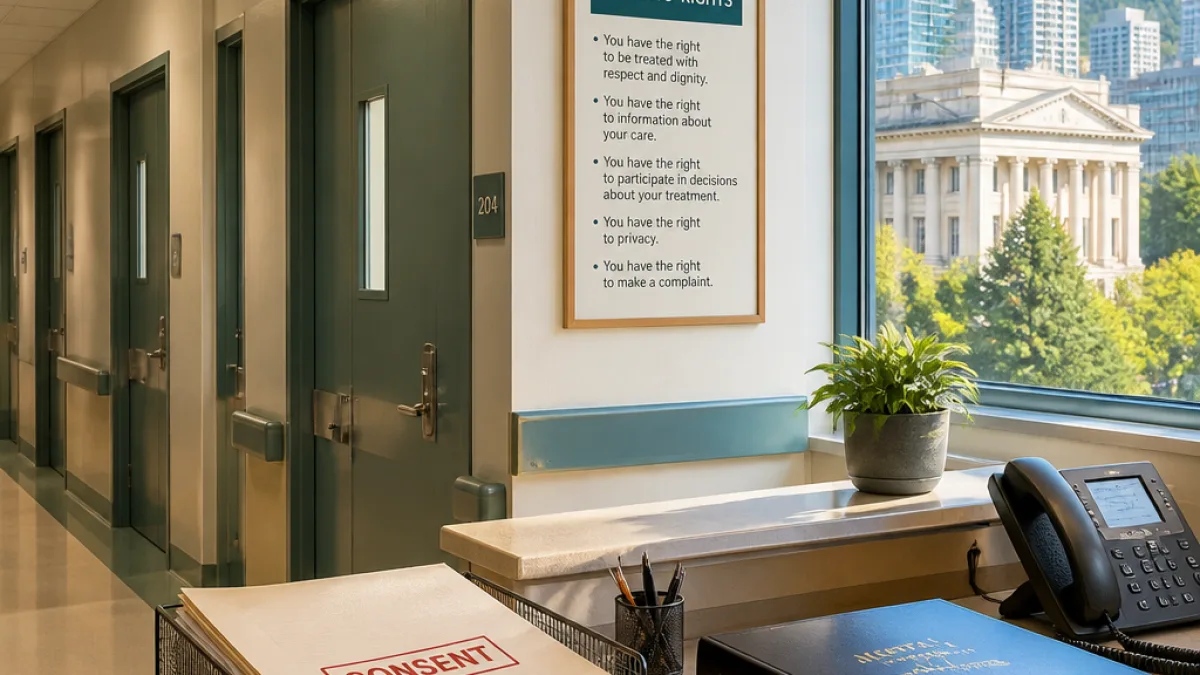
The court concluded that the current statutory framework grants facility directors unilateral authority to approve treatment without a legal requirement to assess whether a patient is capable of making treatment decisions. The decision — released this week — follows a court challenge launched by the Council of Canadians with Disabilities.
The council argued, and the court accepted, that the province’s Consent and Representation Agreement acts operate in a manner that denies involuntarily admitted patients the opportunity to direct their care if they are capable of doing so. The judge found the legislation fosters a stereotype that people with mental disorders generally lack decision-making capacity.
"The treatment of those in our society who struggle with mental illness can generate strong opinions," the ruling says. "The issue before me is not whether B.C. should have an involuntary admission regime for those individuals who are unable to recognize that their mental illness is impeding their ability to appreciate their need for treatment."
While the judgement recognises that protecting people who lack insight into their illness is a pressing and substantial objective, it found B.C.'s approach is more drastic than frameworks used elsewhere in Canada. The ruling notes the province is an "outlier" because it lacks a statutory requirement to assess capacity before a director may consent to treatment on behalf of an involuntarily admitted person.
What the court ordered and what it means
The judge declared specific sections of the Consent Act and the Representation Agreement Act to be Charter-infringing and provided the province with a six-month window to "take whatever steps it sees fit to draft Charter-compliant legislation." That timeline sets a clear clock for government action and signals the need for statutory changes to build in independent safeguards and capacity assessments.
Legal and health-system experts say the decision will require the province to examine:
- How capacity is assessed for involuntarily admitted patients;
- Who may lawfully consent to or refuse psychiatric treatment on a patient’s behalf;
- What independent oversight mechanisms are necessary to protect patients’ rights.
The court acknowledged that involuntary admission regimes serve important public-health and safety goals, but found that other provinces and territories manage consent issues in less intrusive ways. The order does not abolish involuntary treatment; rather it compels the province to design a system that better balances patient autonomy with clinical necessity and public safety.
Questions for government, patients and advocates
The ruling raises immediate questions for the provincial government about how it will proceed. Lawmakers will have to consider drafting amendments that specify when and how capacity assessments are made, what recourse a patient has if deemed capable, and whether independent decision-makers or review processes should be introduced.
Advocacy groups that supported the lawsuit say the decision affirms long-standing concerns that people with mental health disabilities were being denied basic legal protections. Health providers, meanwhile, will face the practical task of implementing any new assessment protocols and ensuring staff training and resources are in place.
Timeline and next steps
| Event | Detail |
|---|---|
| Court ruling | Declaration that parts of the Consent Act and Representation Agreement Act breach the Charter |
| Remedy period | Six months for the province to produce Charter-compliant legislation |
| Potential outcomes | New statutory capacity safeguards, independent oversight, amended consent processes |
Neither the text provided by the court nor responses from the provincial government included immediate details about planned legislative language. The ruling simply places the onus on provincial lawmakers to craft reforms that meet constitutional standards within the set timeframe.
Local impact across B.C.
For health authorities and hospital directors, the decision will likely trigger reviews of current practices for admitting and treating people under involuntary mental health statutes. Families and patients who have been subject to treatment decisions made by facility leaders without assessed capacity may view the ruling as a turning point.
Legal experts say this will also spur litigation and policy discussions in other provinces about best practices for balancing patient rights with public health needs. In the short term, clinicians and administrators must prepare for changes to consent procedures while still meeting the immediate clinical needs of patients.
The coming months will show how the provincial government navigates the court’s directive and whether reforms will satisfy both civil-rights advocates and health-care providers charged with caring for people during psychiatric crises.
— Reporting from the B.C. Supreme Court and legal filings contributed to this report.