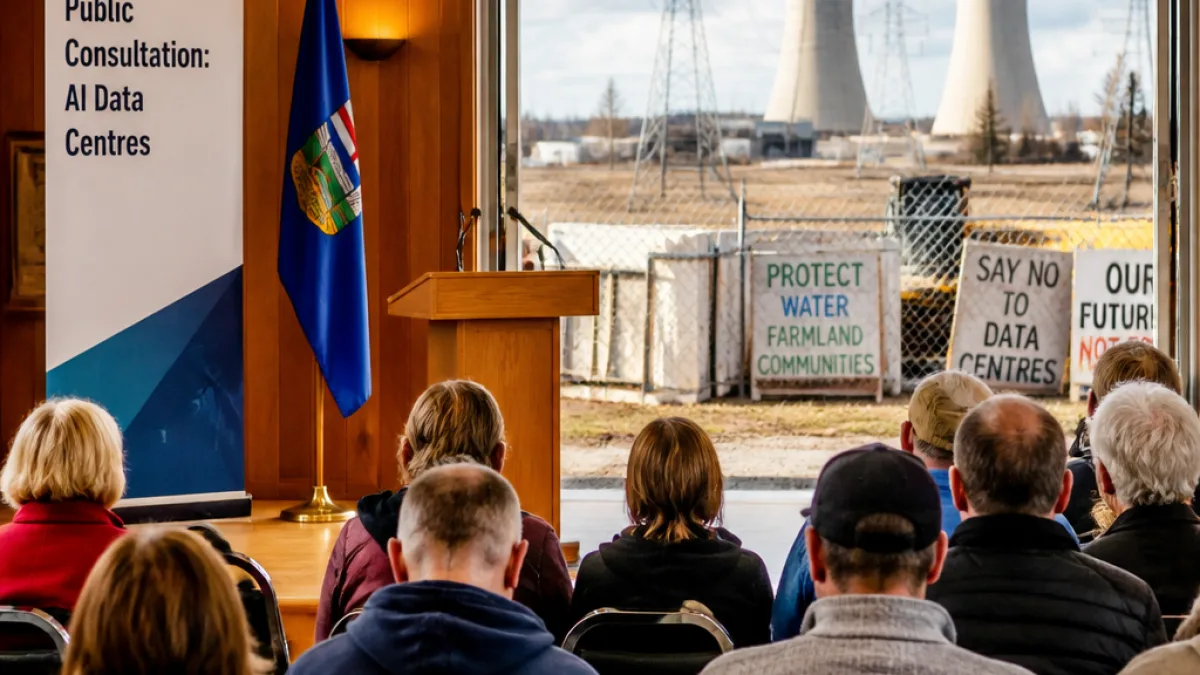
The Alberta government is opening a series of public town halls this week to hear residents’ views on the rapid expansion of artificial intelligence data centres, beginning with a session in Lacombe.
Minister to lead consultations in central Alberta
Technology Minister Nate Glubish is scheduled to host the first in-person meeting in Lacombe as the province seeks to respond to growing public concern about planned data centre developments. Two more in-person events are planned: one in Sturgeon County north of Edmonton and another in Grande Prairie on Sept. 11. Premier Danielle Smith is also set to join a virtual town hall on Aug. 27.
Glubish has spent several years developing an AI strategy and courting investors to build large computing complexes in Alberta. Those facilities require substantial electrical power and, in some cases, significant water supplies. While government officials frame the projects as an economic opportunity, many residents have voiced strong opposition.
Local concerns: water, pollution and electricity bills
Opponents of data-centre projects cite three recurring worries: the amount of water required for cooling and operations, risks of pollution, and potential impacts on household electricity bills. Some local groups have criticised the timing and scope of provincial consultations, saying they followed major approvals and announcements and therefore appear disingenuous to affected communities.
Premier Smith has defended the government’s approach, saying the AI buildout will generate substantial revenues in royalties and taxes, will use limited amounts of water and will help lower transmission costs for electricity. The province points to potential economic benefits while acknowledging the need to respond to community questions.
High-profile projects and local pushback
Several high-profile projects are prompting the consultation push. Sturgeon County is slated to be the site of a $13-billion data-centre complex backed by Meta, the company behind Facebook and Instagram. The provincial plan anticipates using surplus energy from the grid to power Meta’s facility until a new natural gas-fired plant, the Greenlight Electricity Centre, is scheduled to come online in 2030.
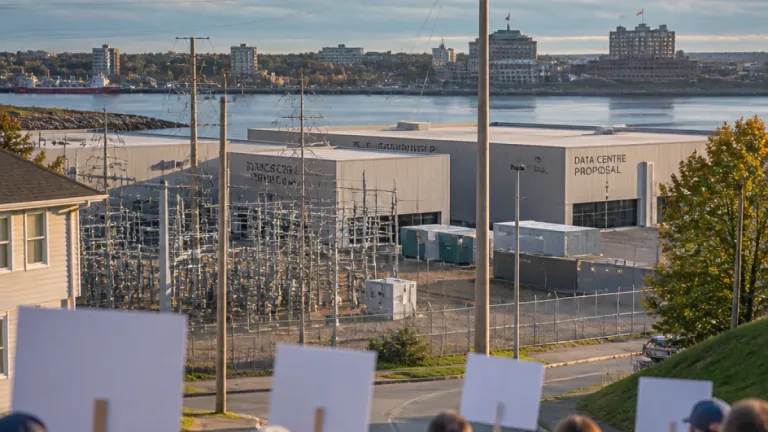
Those plans have drawn public protest: hundreds of people gathered outside Sturgeon County’s offices earlier this month to oppose the Meta project and related energy infrastructure. In the Municipal District of Greenview, near Grande Prairie, a proposed AI industrial park from O’Leary Digital Limited — the company led by investor Kevin O’Leary — has also sparked controversy.
Indigenous and municipal concerns have been raised regarding water diversion and consultation. The Sturgeon Lake Cree Nation has challenged approvals related to a proposed diversion of water for development in the Greenview area and pursued legal avenues to press those concerns.
What the town halls will cover
Officials say the town halls are intended to answer local questions about how data centres will be powered, how much water they will use, what environmental protections are in place, and how communities will be compensated or affected by changes in local infrastructure.
- Lacombe — first in-person town hall (date: this week)
- Sturgeon County — in-person town hall (this Thursday)
- Grande Prairie — in-person town hall (Sept. 11)
- Virtual — Premier Smith and Minister Glubish (Aug. 27)
| Location | Focus | Notable project nearby |
|---|---|---|
| Lacombe | General public consultation | — |
| Sturgeon County | Local impacts, power supply | Meta $13-billion complex |
| Grande Prairie (Greenview area) | Industrial park concerns, water use | Proposed O’Leary Digital AI park |
Why it matters to Albertans
Big data centres promise jobs and tax revenues, but they also carry local costs. Municipalities and residents worry about long-term water availability, potential environmental impacts, and whether electricity ratepayers will bear added costs to support massive power draws. The province’s approach — promoting investment while pledging limited water use and lower transmission costs — is being tested by vocal local opposition and legal challenges tied to consultation and water diversion approvals.
The town halls offer a formal opportunity for residents to press questions directly to provincial officials and for the government to explain regulatory steps and safeguards. For communities near proposed sites, the consultations will likely shape public perception of whether the economic benefits outweigh the local trade-offs.
As the government moves to position Alberta as a destination for AI infrastructure, the outcome of these engagements may determine how — and how fast — the projects proceed, and whether additional safeguards or conditions are required to address community and Indigenous concerns.
Coverage will continue as the town halls proceed and as further details emerge from both government briefings and local groups participating in the consultations.