The Ontario Court of Appeal has ruled that the provincial government may legally remove 19 kilometres of protected bike lanes in Toronto, reversing a lower-court decision from July 2025 that had blocked the province's plan.
What the decision means
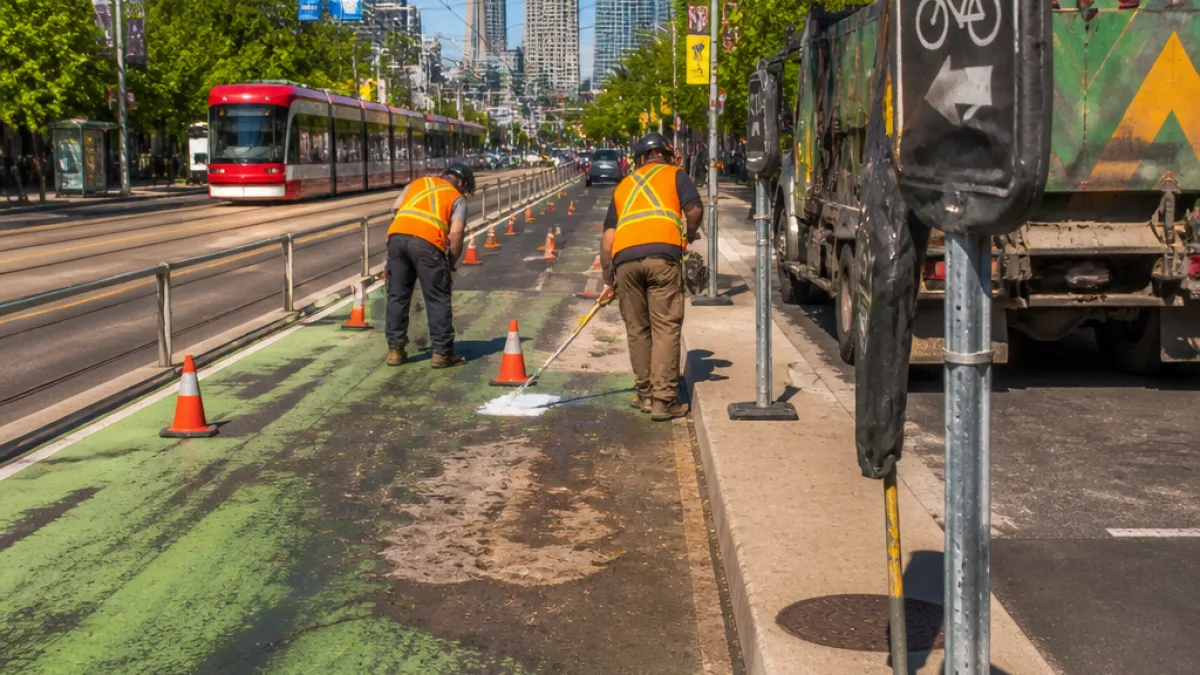
A panel of three appeal court judges concluded Friday that there is no constitutional obligation requiring roads to be configured in any particular way. The ruling clears the way for the Ford government to proceed with removing protected lanes along sections of Bloor Street, Yonge Street and University Avenue, lanes installed and later challenged by advocates and the City of Toronto.
The lanes were the subject of litigation launched by Cycle Toronto and other groups after the provincial legislature passed a law in 2024 empowering the province to eliminate them. In July 2025, a Superior Court judge found that removing the lanes would increase the risk of harm and could engage Charter protections for life and security of the person, effectively blocking their removal pending appeal.
"The legislature is free to legislate to remove a bicycle lane from a road — indeed, it may remove a road entirely — without implicating the Charter,"
The appeal court said the earlier judgment overstated likely harms and that legislative choices about road use do not, in themselves, trigger Charter scrutiny.
Local impact and reactions
The decision is likely to reverberate across Toronto's road network and in municipal politics. Advocates for protected lanes warned for years that the corridors had improved safety for people cycling and walking. Municipal officials and cycling groups have argued the lanes are part of a broader effort to reduce collisions, encourage active transportation and lower greenhouse gas emissions.
Proponents of the province's action, including the premier's office, have framed the removal as a remedy to congestion across the Greater Toronto Area. The government has long said some of the lanes were installed without sufficient consultation with local stakeholders or consideration of traffic flow.
Because the appeal court ruling rests on constitutional law rather than policy merits, it does not require the province to act immediately. Any decision to remove infrastructure still involves municipal processes and operational steps, and may prompt further legal or political responses from advocacy groups and the city.
Practical details
Here are the immediate facts readers should know:
- Length affected: 19 kilometres of protected bike lanes in Toronto.
- Key corridors named in the dispute: Bloor Street, Yonge Street and University Avenue.
- Next steps: The province may choose how and when to remove the lanes; municipal processes and operational planning will determine actual timing and work.
| Item | Detail |
|---|---|
| Total protected bike lanes affected | 19 kilometres |
| Major corridors cited | Bloor Street, Yonge Street, University Avenue |
| Court | Ontario Court of Appeal (three-judge panel) |
Broader legal and civic context
The appeal court's approach underscores a key legal principle: policy choices by a legislature about public infrastructure do not automatically engage Charter protections unless a concrete infringement of protected rights can be demonstrated. That distinction may shape future challenges to other municipal or provincial infrastructure decisions.
For Toronto commuters and residents, the ruling raises questions about how road space will be allocated going forward. Changes to bike lanes can affect commute times, traffic patterns, commercial deliveries and the perceived safety of walking and cycling routes. City staff, councillors and community groups will now need to assess operational plans and any possible mitigations if removals proceed.
The issue has also been politically charged. It sits at the intersection of urban planning, public safety, mode shift incentives, and the relationship between the City of Toronto and Queen's Park. How the province chooses to implement the court's permission may determine whether the matter settles or becomes the subject of renewed activism and municipal pushback.
For now, the Court of Appeal ruling ends the immediate constitutional bar to removal but does not erase the practical, political and safety concerns that prompted the original challenge.
Officials on all sides now face decisions about timelines, consultation and measures to limit disruption if lane removals are carried out. Commuters and residents should monitor municipal and provincial announcements for details about any planned changes to local streets.