Union accepts mediated proposal as job action winds down
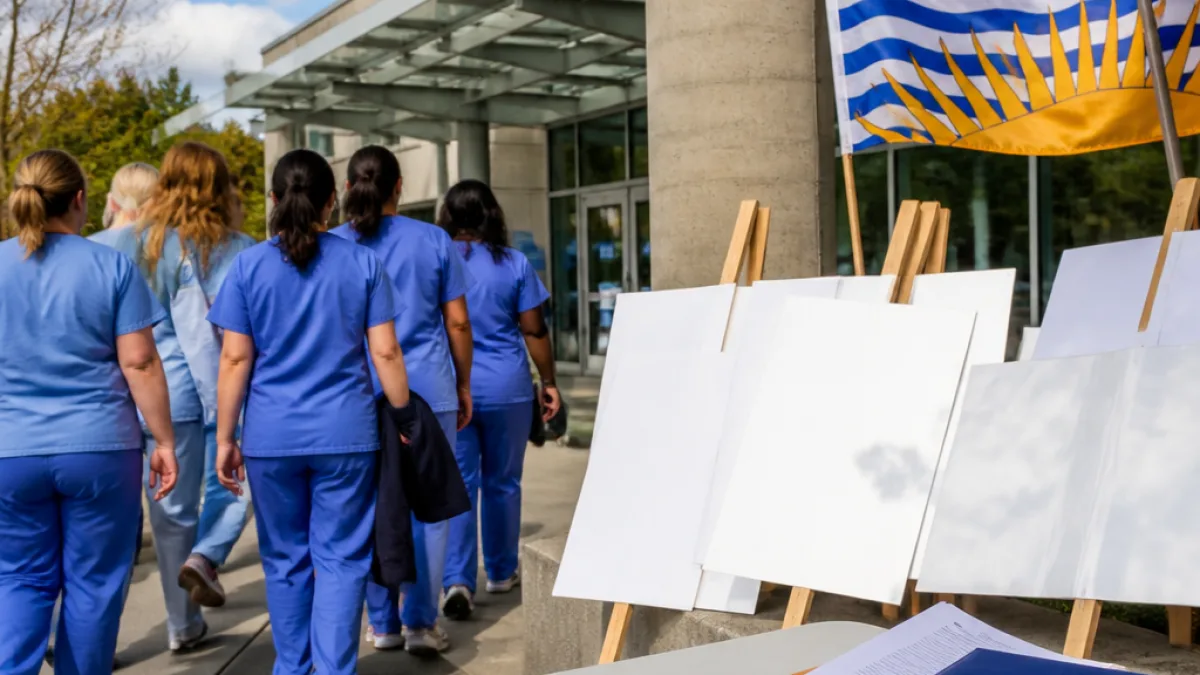
VANCOUVER — The union representing roughly 55,000 nurses in British Columbia says it has accepted a mediated proposal that could bring an end to weeks of job action that disrupted health services across the province.
The BC Nurses' Union (BCNU) said in a statement its bargaining agent accepted recommendations intended to address key concerns that led members to reject the previous deal. While the union and government have not released the detailed recommendations, the BCNU says they confront systemic issues such as workplace violence and the performance of non-nursing duties.
During the job action, essential services were maintained, but many nurses refused overtime and declined to perform duties they considered outside of nursing practice. Union president Adriane Gear has said that stance prompted "thousands of complaints from nurses about intimidation from their employer when taking job action."
"This has been the longest nurses’ strike in B.C.’s history, and it was the collective strength, determination and solidarity of more than 55,000 nurses that brought us to this point," Gear said in the union statement. "Our members changed the conversation by forcing government and health employers to confront the realities of nursing and the challenges facing our public health-care system."
The provincial government issued a statement saying job action is "coming to an end," acknowledging the situation has been "very challenging" for patients, nurses and others working in the health-care sector. Mediators are expected to continue working with both parties between now and the fall to prepare for the arbitration process.
What the mediated recommendations address
The BCNU says the recommendations are non-binding but tackle several of the major issues members raised when they rejected the previous agreement. According to the union, those concerns include:
- increasing protections and supports related to workplace violence;
- clarifying and limiting non-nursing duties assigned to nurses;
- procedures governing job action and related labour-management interactions.
No full list of recommendations or specific language has been made public by either the union or the government. The union described the measures as addressing "some of the major concerns" that prompted members to take job action.
Impact and next steps
Healthcare providers maintained essential services throughout the dispute, but the refusal to work overtime and perform non-nursing duties had tangible effects on operations and morale. The union has said nurses experienced intimidation when they exercised their right to withdraw certain services as part of the job action.
With the bargaining agent's acceptance of the mediated proposals, members will review the recommendations. The statement says mediators will continue to assist the parties ahead of a formal arbitration process planned for the fall. How quickly normal working patterns will resume depends on the timetable set by the union membership and the mediation process.
Numbers at a glance
| Metric | Figure |
|---|---|
| Union members represented | 55,000 |
| Duration | Described as the province's longest nurses' strike |
The government said the exemption from job action will not remove other regulatory steps and that mediators will prepare both sides for arbitration in the months ahead.
What this means for patients and health services
Officials stressed the priority remained patient care, noting the dispute was "very challenging" for those who rely on health services and for staff delivering them. The mediated proposals aim to reduce future disruptions by addressing the workplace conditions and job scope issues that fuelled the job action.
For now, specifics about timelines for full resumption of pre-action duties, or any return-to-work protocols, must await either publication of the recommendations or further direction from the BCNU and mediators. The union framed the developments as a hard-won change in the public conversation around nursing workloads and safety.
As mediators and the two sides continue working toward arbitration, patients and employers will be watching for the next public updates explaining how the recommendations will be implemented and enforced.
— Reporting from Vancouver.