
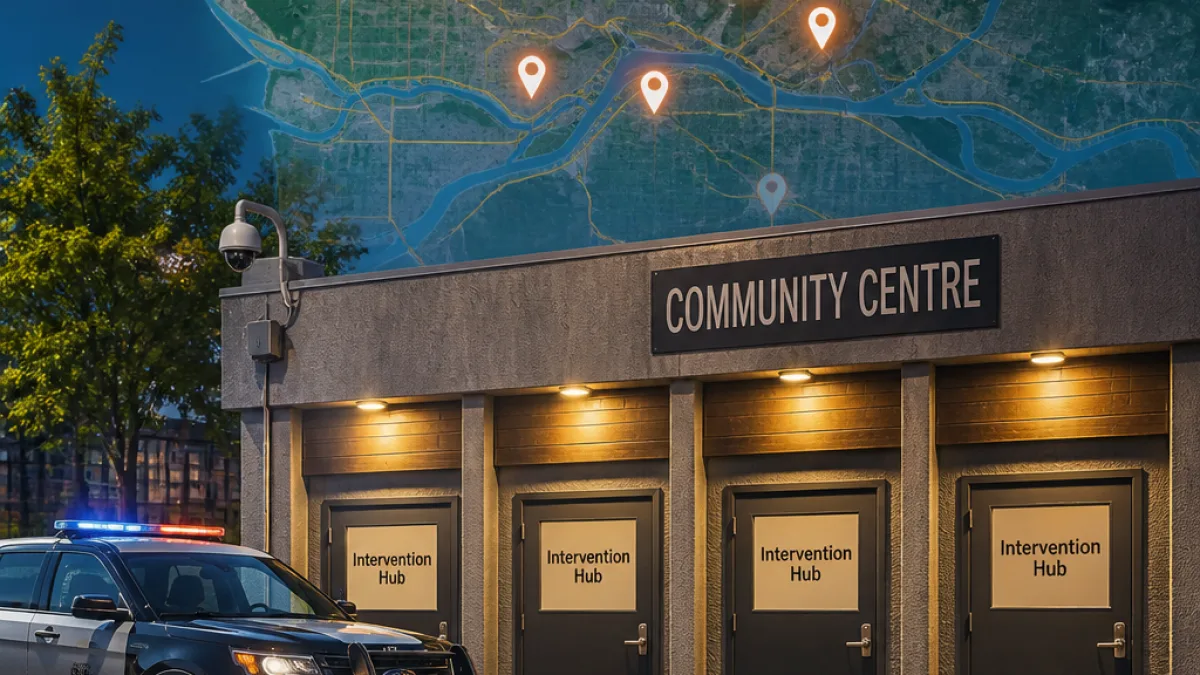
The B.C. government is widening its scrutiny of people who repeatedly offend, announcing the creation of seven new intervention and monitoring hubs in the Lower Mainland as part of a broader effort to curb street disorder and theft affecting businesses and neighbourhoods.
Expanded hub network to focus on property and violent repeat offenders
The Ministry of Public Safety said the province is monitoring up to 865 people under its existing repeat violent offender program and a newly launched initiative aimed at chronic property offenders. Of those, 365 individuals are being tracked in the Lower Mainland, where the total number of hubs will rise to 11.
Vancouver will host the largest share, with four hubs that together manage 80 violent offenders and 80 repeat property offenders. The ministry framed the expansion as a direct response to concerns from residents and business owners about public safety and the rise in shoplifting, theft and vandalism.
“I’ve been touring communities throughout the province to hear directly from business owners and residents, and they’ve been clear they want stronger action,”
The statement from Terry Yung, minister of state for community safety and integrated services, described the new chronic property offender initiative as aiming to identify people who require "enhanced supervision and supports" based on criminal history and assessed risk of reoffending.
Complex needs behind repeat offending
The ministry said many individuals involved in repeat offences have complex needs tied to housing instability, mental health or substance use. The expanded monitoring combines supervision with supports tailored to those factors, the statement said, although it did not provide detail on the specific services or supports to be offered within the hubs.
Officials have not released a breakdown of how hubs will be staffed, the precise locations beyond the city-level count for Vancouver, or the metrics that will be used to evaluate the program’s effectiveness over time. The government says the initiative is being rolled out across the Lower Mainland and will be expanded provincewide.
What local businesses and communities can expect
Provincial officials are pitching the hub model as a targeted approach to reduce repeat property crime and improve public safety for commercial districts and residential areas. The ministry highlighted offences such as theft, shoplifting and disorder as priorities.
For businesses and residents wondering what changes they might see on the street, the hub approach typically involves closer case management of identified repeat offenders, co-ordinated supervision by justice and community services, referrals to housing and health supports where appropriate, and more active monitoring to prevent relapse into criminal activity.
- Number tracked provincewide: up to 865 people
- Number tracked in the Lower Mainland: 365 people
- Total hubs in Lower Mainland after expansion: 11 hubs (7 new)
- Vancouver hubs: 4 hubs handling 80 violent and 80 property repeat offenders
| Program | Focus | People tracked (reported) |
|---|---|---|
| Repeat violent offender initiative | Violent repeat offences | Included in up to 865 |
| Chronic property offender initiative | Theft, shoplifting, vandalism, disorder | Included in up to 865; 365 in Lower Mainland |
Questions remain about implementation and outcomes
While the numbers and hub expansion were released, the ministry did not supply timelines for when the new Lower Mainland hubs will be fully operational or how they will coordinate with municipal police forces, health authorities and community agencies. There is also no public reporting plan attached to the announcement that would allow residents to track whether increased monitoring results in measurable reductions in repeat offending or improvements for affected business areas.
Critics of enforcement-focused approaches often argue that without sufficient housing, mental-health and addiction services, monitoring alone may shift where crime occurs rather than solving the underlying causes. The ministry’s statement acknowledged those complex needs but stopped short of detailing how services will be scaled to match the expanded supervision.
For now, the province is signalling a move toward co-ordinated case management as a tool to address chronic property crime and street disorder. The effectiveness of the hubs will depend on inter-agency co-operation and on whether supports to address housing and health needs are expanded alongside supervision.
Residents and businesses wanting more information on how the program will operate locally are advised to contact their municipal police department or the Ministry of Public Safety for updates as hubs are stood up across the region.
— NEXO RADAR