
Researchers are investigating whether a recently described transmissible melanoma in brown bullhead catfish that was first identified near the Quebec–Vermont border has spread to waterways in New Brunswick.
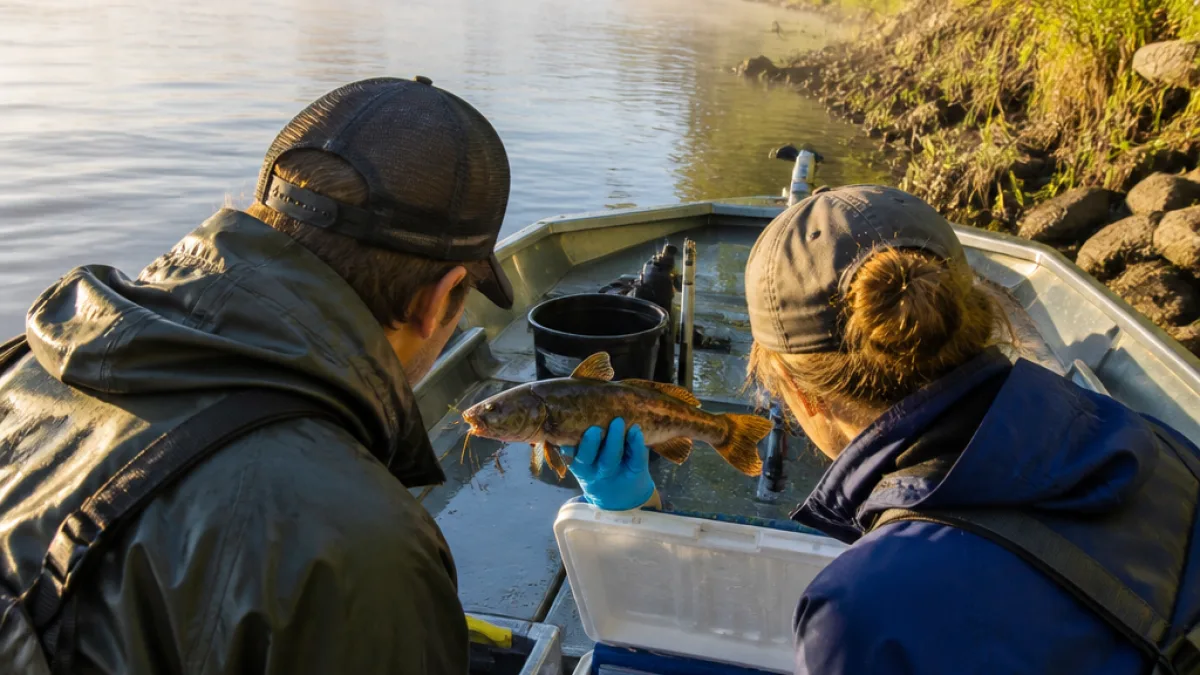
The samples were collected in May when postdoctoral researcher Zoe Clarke of the University of Cambridge joined local angler Scott Young on his boat to examine brown bullhead with the dark skin lesions he has observed over decades. Clarke told reporters the team expects the results of DNA sequencing "in the next few weeks" that will determine whether the New Brunswick fish carry the same clonal cancer lineage previously described by a U.S. research group.
“How the heck did this happen? Why is it here?”
The clonal melanoma was reported in a paper published last month by scientists at the University of Vermont, who traced tumours seen on brown bullhead in Lake Memphremagog — a lake that straddles the Quebec–Vermont border. Genome analysis indicated the tumours were near-identical copies of one another rather than independent mutations, a pattern consistent with transmissible cancers.
Why this matters
Transmissible cancers are exceptionally rare in nature. Before the Vermont study, three distinct naturally occurring transmissible cancer lineages were known: in dogs, Tasmanian devils and an assortment of marine bivalves such as clams and mussels. The catfish melanoma represents a notable addition to that small list and is the first described transmission in a freshwater fish.
Scientists warned the Vermont paper that a contagious melanoma has the “potential to devastate host populations”. If the same clonal tumour is found in New Brunswick populations, it would broaden the known geographic distribution and raise questions about transmission pathways between watersheds.
Local observations and next steps
Angler observations supplied the initial leads. Scott Young, who has fished New Brunswick lakes and rivers for about 40 years, told the Cambridge team he has long seen brown bullhead with spots and lesions.
Clarke, who is affiliated with the Cambridge Transmissible Cancer Group, joined Young in May to collect specimens for genetic testing. The team is awaiting sequencing output from a laboratory; Clarke said further work will focus on how the cancer arose and how it may move between fish and across regions.
Researchers will compare DNA from New Brunswick fish to the tumour sequences reported in Vermont. That comparison can show whether lesions share a common clonal origin or instead reflect separate, local cancers arising independently.
| Item | Detail |
|---|---|
| Species | brown bullhead catfish |
| First described outbreaks | Lake Memphremagog (Quebec–Vermont border), lesions noted from 2012; studies 2014–2018 |
| Recent fieldwork | Specimens collected in May in New Brunswick |
| Pending | DNA sequencing results expected in the coming weeks |
What scientists already know
Previous studies between 2014 and 2018 established that raised black growths on brown bullhead at Lake Memphremagog were a form of skin cancer. The more recent University of Vermont paper used whole-genome sequencing to conclude that the tumours were clonally transmitted. That pattern differs from most cancers in which tumours largely resemble a host’s DNA but carry a few mutated genes.
Dr. Julie Dragon, co-lead on the Vermont study and an associate professor of microbiology and molecular genetics, explained that the tumours were essentially copies of one another—evidence consistent with a transmissible cell lineage. The emergence of a transmissible cancer in a freshwater fish adds a new dimension to understanding disease dynamics in lakes and rivers.
Implications for fisheries and monitoring
Authorities and researchers will be watching the sequencing results closely. If the same clonal lineage is present in New Brunswick, officials may need to reassess surveillance, sampling and public guidance for anglers and fisheries managers. At minimum, the episode underscores the role of citizen observations—anglers such as Young played a direct part in bringing samples to researchers—and the need for coordinated cross-jurisdictional study.
- Short term: Await DNA sequencing to confirm or rule out the same transmissible lineage.
- Research focus: Determine transmission mechanisms and geographic extent.
- Management: Potentially adapt monitoring and outreach for affected waterways.
For now, scientists involved with the Cambridge team say they will devote considerable energy over the next few years to understand the phenomenon — how a transmissible melanoma arose in a freshwater fish and what it might mean for ecosystems across provincial and international borders.