
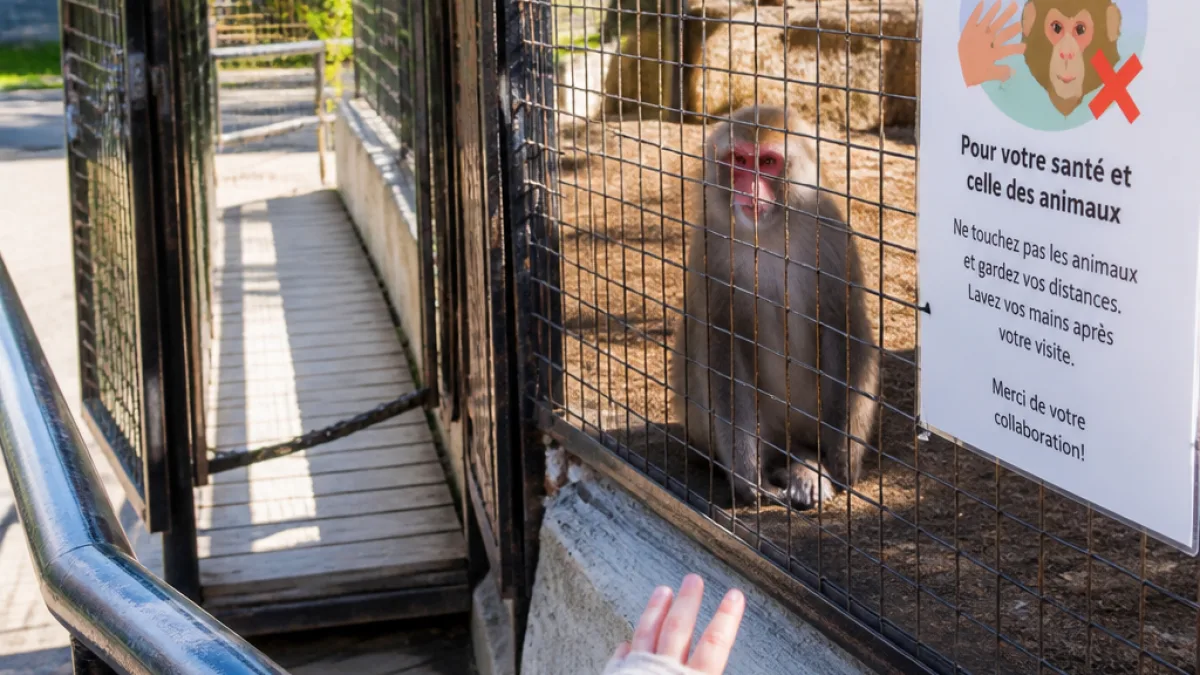
Granby public-health officials and zoo management are asking visitors who may have had direct physical contact with a Japanese macaque at the Granby Zoo on Aug. 4 to contact Info‑Santé by calling 811 for assessment. The appeal follows an incident earlier this week in which a visitor was scratched after entering an area of the exhibit that is normally restricted to staff.
What happened
According to zoo officials, a platform near the macaque enclosure that is meant for employees was not properly secured and became accessible to visitors for several hours. A woman visiting with her children attempted to feed a macaque and, as she reached to retrieve one of her children, was scratched by the animal. The visitor received first aid on site, underwent further medical follow‑up and is reported to be doing well.
The zoo said it launched an internal investigation and reviewed procedures after the episode. It is working with public-health authorities to identify and support anyone who may have been exposed.
Public‑health concern: herpes B virus
Japanese macaques (Macaca fuscata) can carry the herpes B virus, a pathogen that is ordinarily asymptomatic in macaques but, in rare cases, can cause severe illness in people if infection is not treated promptly. Health officials stress that human infection is extremely rare, but the potential consequences are serious enough that anyone with a possible exposure should be assessed.
“If anyone came in contact with the Japanese macaque and was scratched, bitten, or had its saliva on an open wound or mucous membrane, they should call Info‑Santé by dialing 811,” said Dr. Mélissa Généreux, medical adviser at the Public Health Directorate of Santé Québec Estrie – CHUS.
Signs, recommended actions and follow‑up
Dr. Généreux outlined the possible progression of illness following exposure, noting initial local skin lesions may be followed by flu‑like symptoms and, if untreated, more serious complications. Zoo staff and public‑health officials say they have put measures in place to support anyone who may have been exposed.
- Who should call 811: anyone scratched, bitten or whose fresh wound came into contact with macaque saliva on Aug. 4 at the Granby Zoo.
- Who does not need follow‑up: visitors who were present but did not have direct physical contact with a macaque.
- Immediate steps: wash wounds thoroughly and seek medical assessment through Info‑Santé for guidance on testing and treatment.
Zoo veterinarian Dr. Cédric Larouche said the platform in question was not closed as it should have been, allowing access to visitors. Alex Chandonnet, head of animal care, said the macaques have not shown abnormal behaviour and that the animals do not usually enter the presentation area on their own, adding that the situation arose when a visitor approached the animal.
Local impact and prevention
The Granby Zoo is a major local attraction and a core part of regional tourism. While officials emphasise that this was an isolated incident, the episode underlines the need for strict access controls around animal enclosures and clear messaging to visitors about interacting with wildlife. The zoo said it has reviewed its procedures and continues to work closely with public‑health authorities.
| Action | When to do it |
|---|---|
| Call Info‑Santé (811) | If scratched, bitten, or saliva contacted an open wound/mucous membrane on Aug. 4 |
| Seek medical assessment | Immediately after potential exposure |
| No action needed | If no direct physical contact occurred |
For Granby residents and visitors, the message is practical and precautionary: if you believe you had direct contact with a macaque at the zoo on Aug. 4, contact 811 for an assessment. The risk of human infection with herpes B remains very low, but timely evaluation and treatment are important should exposure have occurred.
The Granby Zoo, public‑health officials and local medical partners will continue monitoring the situation and have said they will provide updates as necessary.