
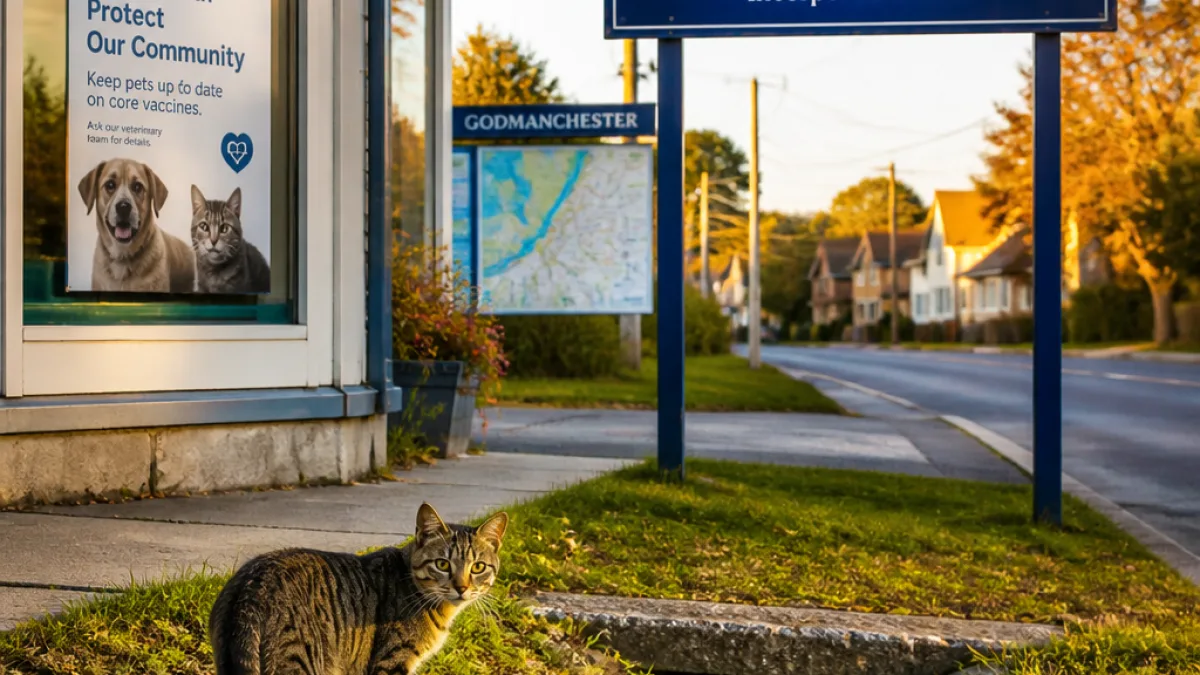
The Quebec government has confirmed the province’s first case of raccoon-variant rabies found in a stray cat, a development public-health officials say underlines the need for immediate vigilance among pet owners.
Where and when
The positive test was recorded on July 23 in Godmanchester, a municipality in the Montérégie region. The case shows that the virus, already detected among wild animals in parts of southern Quebec, can cross into domestic animals.
Why this matters
Rabies is a fatal viral disease affecting the central nervous system of mammals — including humans. Once clinical signs appear, there is no effective treatment. Prevention through vaccination and prompt post-exposure care are therefore the primary defences.
| Item | Detail |
|---|---|
| Location detected | Godmanchester, Montérégie |
| Date of case | July 23 |
| Variant | Raccoon-variant rabies |
| Confirmed wildlife cases in Quebec this year | More than 100 |
Public-health advice
The province’s Ministry of Agriculture, Fisheries and Food is reminding residents of key prevention measures. Officials advise against allowing pets to roam unsupervised, and recommend keeping vaccination records current. People should also avoid contact with wild animals — even if an animal looks healthy or is deceased.
- Ensure dogs and cats are vaccinated and boosters are up to date.
- Do not let pets wander off-leash in areas where rabies has been detected.
- Avoid touching or approaching wild or unfamiliar animals.
- If bitten or scratched, immediately wash the wound with soap and water for 15 minutes and call Info-Santé at 811.
- Report animals showing unusual behaviour to local animal control or public-health authorities.
What to do after a suspected exposure
In the event of a bite, scratch or contact with saliva from an animal suspected of carrying rabies, quick action is critical. The ministry stresses immediate wound cleansing followed by contacting health services. Preventive rabies treatment, when administered promptly after exposure, can prevent the disease from developing in humans.
Impact on pets and people
The confirmation that a stray cat contracted raccoon-variant rabies demonstrates that domestic animals can become infected when the virus is circulating in wildlife. That raises the risk for households with unvaccinated or free-roaming pets and for people who might handle strays or injured wildlife. The ministry advises isolating any pet that displays changes in behaviour or other symptoms consistent with rabies and seeking veterinary advice.
Broader context
Raccoon-variant rabies has been identified in several parts of southern Quebec in recent months. Provincial authorities and partners have been working to curb spread among wildlife and to protect communities through surveillance, public information and targeted interventions. The ministry’s notice serves as a reminder that the movement of rabies from wildlife to domestic animals is a real and present risk.
Practical steps for pet owners
Pet owners should keep vaccination certificates handy and discuss rabies prevention with their veterinarians, particularly if they live near wooded areas or in communities where wildlife cases have been reported. For those who encounter sick or dead wildlife, public-health or municipal animal-control services can advise on safe handling and reporting procedures.
As the situation evolves, public-health officials urge calm and prompt preventive action: vaccination, supervision of pets and immediate care after any potential exposure remain the most effective protections against this deadly disease.