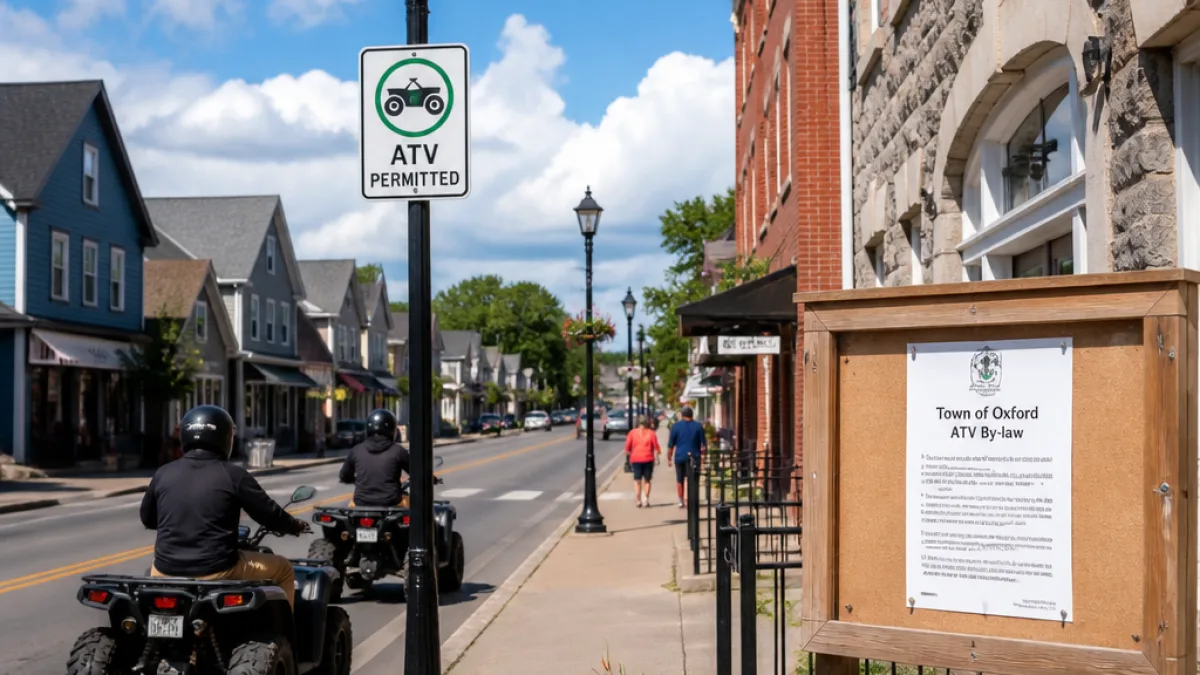
OXFORD, N.S. — The town of Oxford has opened all of its municipal streets to use by all-terrain vehicles (ATVs), a step local reporting describes as part of a growing number of so-called "road trails" across Nova Scotia.
What happened in Oxford
The policy change in Oxford was reported by CBC and covered in other outlets. Media coverage notes the measure effectively allows ATV riders to travel on any municipal street within town limits. Local reaction, media report, has been mixed.
The move places Oxford among municipalities experimenting with ways to accommodate recreational and utility ATV users while balancing traffic safety, residential concerns and the needs of local businesses. Advocates of expanded ATV access say road trails can boost access to services in rural communities and bring economic activity. Opponents often cite safety, noise and concerns for pedestrians and cyclists.
Community reaction and questions
Public response to Oxford's decision, according to reporting, ranges from support among some residents who welcome easier access for farm and property maintenance, to unease from neighbours worried about increased noise and safety risks. Coverage indicates the debate is familiar in other Nova Scotia communities where municipal leaders have considered or adopted road-trail policies.
Because the story is unfolding, residents and visitors will be watching for practical consequences in Oxford: how ATV traffic will be managed, whether signage or traffic-calming measures will be introduced, and how emergency services and law enforcement will respond to incidents. Provincial rules and licensing requirements also shape how municipalities manage motorized off-road vehicles, and are likely to be part of conversations following Oxford's change.
What to watch for next
- Any municipal bylaws, signage or operational rules Oxford adopts to govern ATV use on streets.
- Responses from provincial authorities about safety standards or guidance for municipalities on road-trail policies.
- How local law enforcement, emergency services and businesses adapt to a possible increase in ATV traffic.
For residents, practical considerations include awareness of speed and visibility when sharing the road with ATVs, potential restrictions on where ATVs may be parked, and any noise bylaws that remain in force.
Broader context across the province
Oxford's decision reflects a broader conversation in Nova Scotia about how to integrate recreational and utility off-road vehicles into communities. Proponents argue road trails can connect rural residents to services and boost local tourism; critics point to safety, environmental impacts and quality-of-life concerns. The discussion often forces municipalities to weigh economic benefits against the day-to-day effects on neighbourhoods.
From a regulatory perspective, municipalities and provincial regulators share responsibility for setting out where ATVs may operate, the equipment they must carry and the behaviour expected of riders. As more towns consider similar policies, consistency in rules and clear public communication become key to preventing confusion and conflict.
Practical information for Oxford residents
While the town has opened streets to ATVs, residents should look for official communications from municipal offices for details, including:
| Area | What to expect |
|---|---|
| Signage | New signs or markings indicating route use or speed limits may be installed. |
| Enforcement | Local policing or bylaw officers will likely outline enforcement priorities and safety checks. |
| Public meetings | Opportunities for residents to ask questions or express concerns may be scheduled. |
Until those details are available in official notices, residents and visitors should exercise caution when sharing roads with ATVs and stay informed through municipal channels.
Oxford's step is emblematic of a conversation playing out in small towns across the province. How it unfolds locally — in terms of safety outcomes, neighbourhood relations and municipal policy — may help shape decisions in other communities considering similar changes.
Jerome Beals, NEXO RADAR Nova Scotia correspondent. Reporting from Oxford and surrounding communities continues as the story develops.