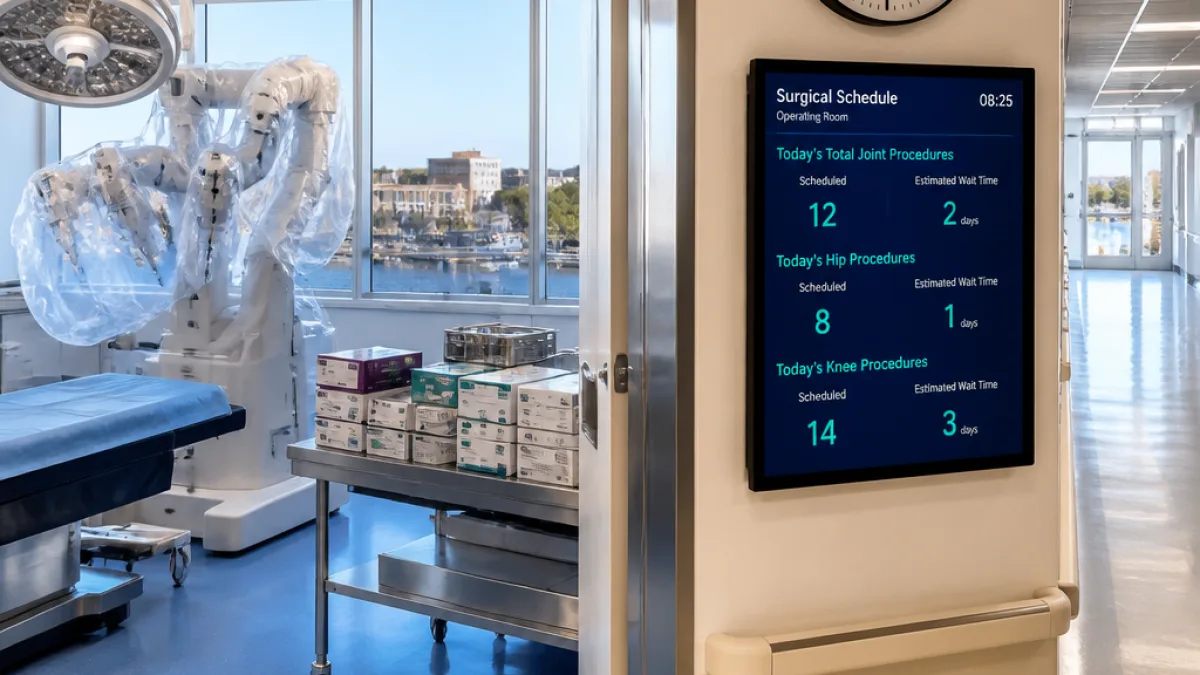
HALIFAX — Waits for hip and knee replacement surgeries in Nova Scotia have fallen by roughly 40 per cent, health officials say, a decline attributed to a mix of streamlined hospital practices, philanthropic support and the adoption of new surgical technology.
What changed in the system
Provincial health administrators and surgical teams told reporters that multiple measures were combined to reduce backlogs and speed patient throughput. The improvements occurred as hospitals reworked surgical schedules and pathways, while also benefiting from targeted donor funding and investments in technology that shorten operative time and recovery.
Those involved say the result is not the product of any single fix but rather the cumulative effect of operational changes across several facilities. For patients waiting months for joint replacement, the impact can be life-changing — reducing pain, regaining mobility and lowering the chance that mobility-related complications will worsen.
Practical measures that helped
Officials highlighted a range of practical steps that together lowered waits. Among them:
- Optimizing surgical scheduling to make better use of available operating-room time
- Streamlining pre-operative assessment and patient flow to reduce cancellations and delays
- Introducing newer surgical tools and techniques that shorten procedures and hospital stays
- Using donor-funded programs to expand capacity or support equipment purchases
While provincial authorities say the combination of measures has produced measurable gains, they also caution that continued attention and resources will be required to sustain and extend improvements across the province.
Local impact and demand
Joint replacement is among the most commonly performed elective surgeries for older adults and people with chronic joint disease. Long waits for hip and knee arthroplasties can prolong suffering and increase the burden on caregivers and primary-care services. A 40 per cent reduction in wait times therefore has implications not only for surgical departments but for broader community health and social supports.
Health-care leaders say that reducing waits also helps emergency departments and acute-care wards by lowering the number of patients who deteriorate while waiting for surgery and require more intensive interventions.
Questions that remain
Despite the improvement, officials acknowledge that challenges remain. Variation in wait times between regions, the need for sustained funding, recruitment and retention of surgical staff, and the management of other types of surgical backlogs were all raised as ongoing concerns.
Hospital administrators will need to report on whether the gains hold through the fall and winter, seasons that often place additional pressure on acute-care capacity. Observers say it will also be important to monitor whether the drop in waits is evenly distributed across urban and rural communities.
What patients should know
For patients on the joint-replacement list or those referred for assessment, health officials encourage staying in touch with their surgical team or regional health authority to confirm appointment dates and to take advantage of pre-surgery planning supports. Small steps — such as maintaining a safe level of activity, managing comorbid conditions, and keeping lines of communication open with clinicians — can improve surgical readiness.
Clinics and hospitals typically contact candidates directly when an operating date is secured. People with worsening symptoms or new mobility concerns should contact their family physician or surgeon's office so their case can be reassessed.
| Measure | Effect |
|---|---|
| Streamlined scheduling | Better use of OR time, fewer cancellations |
| Donor funding | Expanded capacity, equipment purchases |
| New surgical technology | Shorter procedures, quicker recovery |
For many Nova Scotians waiting for relief from chronic joint pain, the reported reduction in delays represents a tangible sign of progress. Hospital teams now face the challenge of embedding the changes and ensuring access keeps improving across the province.
Reporting for NEXO RADAR