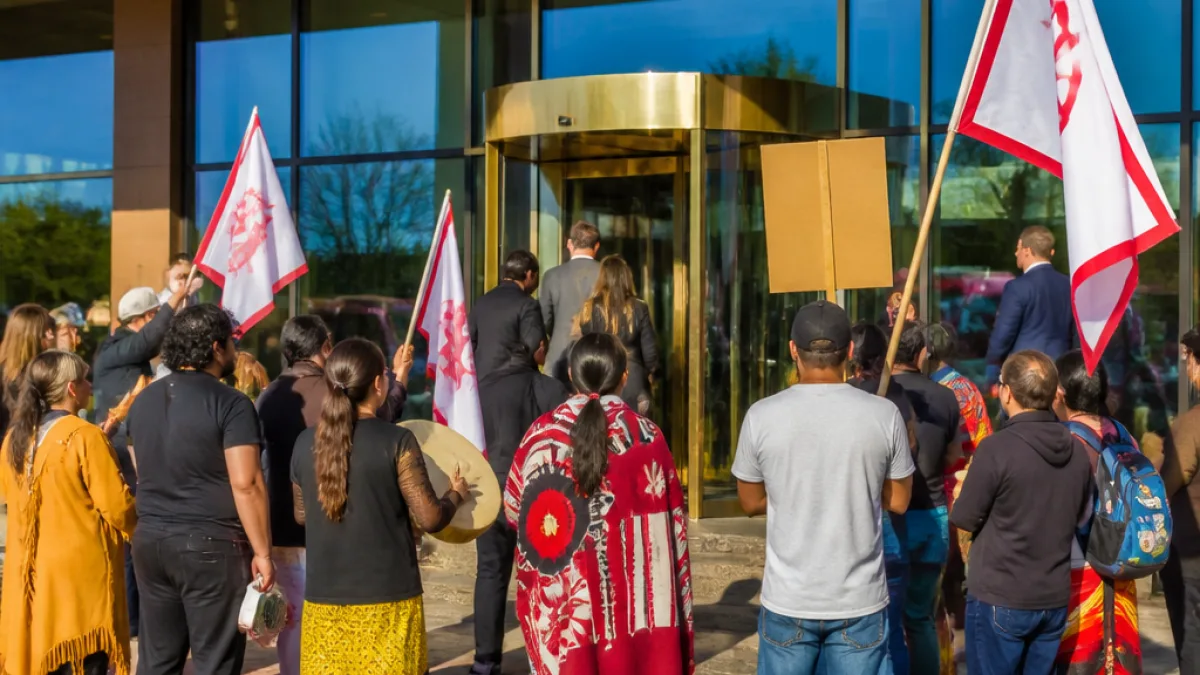
TRURO, N.S. — About two dozen Mi’kmaw land and water protectors and supporters gathered outside a hotel in Truro on Wednesday to press Premier Tim Houston on what they say is a failure by the provincial government to consult Indigenous communities about resource projects.
Protest at business luncheon
The demonstrators arrived ahead of a lunch where the premier was meeting local chamber of commerce members. The event was described as a fundraiser with a $100 plate and was part of a series of stops Mr. Houston is making to speak with business leaders; Truro was identified as the fifth stop on that tour.
Those gathered said they had been waiting for a chance to speak directly to the premier about the protection of unceded Mi’kmaw territory and the province’s handling of resource-extraction projects, including concerns about fracking and other developments.
“We’re here today as land protectors and waters protectors and to protect the un-ceded Mi’kmaw territory and to let him know he needs to come and talk to us,”
said Thunderbird Swooping Down Woman, one of the protest organisers.
Voices from the rally
Speakers at the rally said Mi’kmaw communities and their allies feel sidelined in public consultations and that provincial plans ignore obligations under the Peace and Friendship Treaties. Glenda Juanita told reporters the province has repeatedly addressed issues that affect Mi’kma’ki without engaging the Mi’kmaw people themselves.
Another participant, Wolf Knows Fangs, said demonstrators tried to use their democratic rights to be heard but were blocked from access, adding: “Even as we try to use our democratic right to come down here and voice, we’re being denied access at the gate, this needs to stop.”
Premier says there is a process
After the luncheon, Mr. Houston told reporters he is consulting with Mi’kmaw leadership and pointed to what he described as a defined consultation process. He said the government tries to keep channels of communication open and that discussions on resource projects happen through established mechanisms.
“There’s a very defined consultation process. We of course respect that and try to keep the conversation open both ways,”
Mr. Houston said, adding that he routinely meets with protesters and is prepared to engage with those who are peaceful.
What protesters say they want
Those at the demonstration emphasised they were seeking direct talks and meaningful engagement, not merely procedural consultation. They framed their action as part of ongoing land- and water-protection efforts in Mi’kma’ki and voiced frustration at what they described as exclusion from decision-making on projects that could affect their territory and livelihoods.
- Want direct meetings with provincial leaders outside formal processes
- Demand recognition of treaty obligations and respect for unceded territory
- Oppose resource projects they see as harmful to land and water, including fracking
Local context and implications
Nova Scotia has been navigating a series of tensions between economic development goals and Indigenous rights. The protest in Truro underscores ongoing mistrust between some Mi’kmaw communities and the provincial government over how consultation is conducted and whether it is substantive.
Experts and Indigenous leaders have repeatedly said that effective consultation requires early, meaningful engagement and, in many cases, accommodation of concerns raised by communities. Disputes about the adequacy of consultation can delay projects, spark legal challenges and heighten social tensions, which in turn affect local economies and community relations.
Event details
| Detail | Information |
|---|---|
| Location | Truro hotel (chamber of commerce luncheon) |
| Attendees | About two dozen Mi’kmaw land and water protectors and supporters |
| Premier’s tour stop | Fifth stop on chamber of commerce tour |
Protest organisers said they waited for hours hoping for a chance to speak to the premier; Mr. Houston reiterated his willingness to meet peaceful demonstrators but also stressed the government’s reliance on formal consultation mechanisms.
The standoff in Truro is a reminder that conversations around resource development in Nova Scotia remain complex. For many Mi’kmaw people, those conversations are inseparable from questions of sovereignty, treaty rights and the long-term health of land and waterways.
As the province pursues economic strategies that emphasise resource expansion, the debate over how — and with whom — those choices are made is likely to continue. Both sides say they are open to dialogue; for now, activists in Truro say they will keep pressing for direct access to decision-makers until they feel their concerns are genuinely heard.
Jerome Beals is the Nova Scotia correspondent for NEXO RADAR.