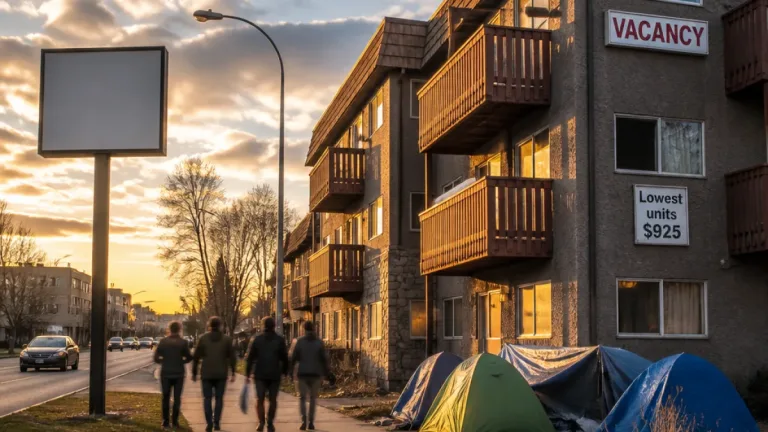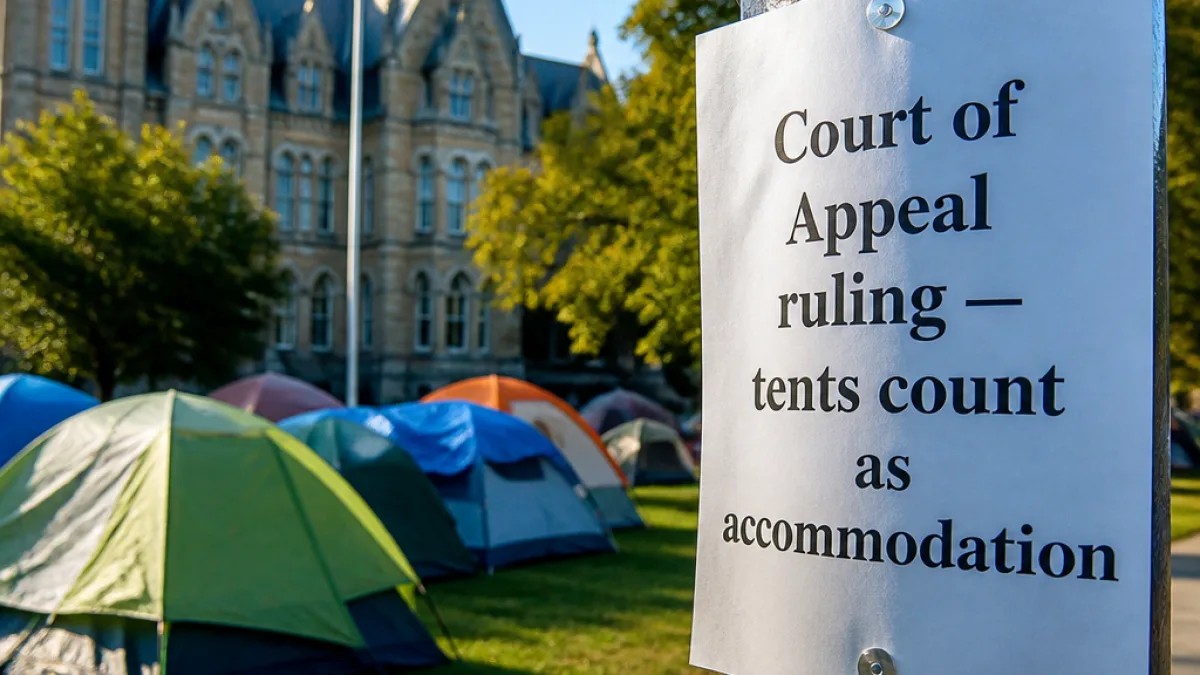
HALIFAX — Nova Scotia’s Court of Appeal has concluded that tents qualify as legal accommodations for the purpose of enhanced income assistance, ruling the province cannot deny higher disability-related benefits solely because an applicant lives in a tent.
Ruling overturns earlier denials
A three-judge panel on Wednesday overturned a Nova Scotia Supreme Court decision and an earlier administrative finding that had rejected an application for the enhanced assistance rate on the grounds of the applicant’s living situation. The case stemmed from an application made in 2023 by Bradley Lowe, who was living in an encampment in Halifax.
Lowe qualified for the standard income assistance rate of $380 per month but sought the province’s enhanced rate of $974 per month, available to people with disabilities. That additional benefit had been denied by an assistance appeal board and later by a lower court because Lowe was residing in a tent.
Mr. Lowe died in December 2023 while living in the encampment. His family, and the lawyer who represented him, continued to pursue the case after his death. Lawyer Vince Calderhead told reporters the deceased man’s mother was surprised and pleased with the appeal court’s decision and that Lowe himself would have been happy with the outcome.
Advocates welcome decision
Advocates for people who are unhoused saw the ruling as a recognition of dignity for those living in non-traditional or precarious shelters. Emma Halpern, executive director of the Elizabeth Fry Society of Mainland Nova Scotia, described the outcome as a meaningful affirmation.
"A win that recognizes the humanity of the most vulnerable people in society,"
Her comment underlines a broader debate in the province about how social supports are structured and who qualifies for higher levels of assistance when disability and housing status intersect.
Legal and practical implications
The Court of Appeal ruling clarifies eligibility criteria for enhanced income assistance, and it changes the legal reading of what constitutes accommodation under provincial rules. The decision both reverses earlier findings and creates precedent that may affect other cases where applicants live in tents or shelters that fall outside conventional housing definitions.
Practically, the ruling may open the door for other applicants in similar circumstances to challenge prior denials or to apply for the enhanced benefit. It could also prompt the province to reassess its administrative policies and eligibility checks to align with the court’s interpretation.
- Standard assistance: $380 per month (as cited in the case)
- Enhanced assistance: $974 per month (sought by the applicant because of disability)
- Key parties: Applicant Bradley Lowe (deceased), lawyer Vince Calderhead, Elizabeth Fry Society
| Benefit | Amount |
|---|---|
| Standard income assistance | $380/month |
| Enhanced income assistance (disability) | $974/month |
Broader context in Nova Scotia
The ruling arrives amid increased scrutiny of how provincial systems serve people with disabilities and those experiencing homelessness. Legal decisions that delineate eligibility for supports have immediate consequences for individuals and for the agencies that administer benefits.
For families and advocates, the appeal court’s judgment is likely to be read as recognition that poverty and housing insecurity should not automatically exclude someone from protections intended for people with disabilities. For the provincial government, it may require administrative changes and careful communication to ensure the decision is applied consistently.
What comes next
Because the court overturned both a lower-court judgment and an administrative ruling, the decision could trigger further negotiations or claims by others who faced similar denials. It may also lead to policy adjustments by provincial officials overseeing income assistance programs.
For those directly affected, the ruling provides a legal basis to reapply or to appeal previous determinations that denied enhanced assistance on the basis of non-traditional housing. Service providers and legal clinics that support unhoused Nova Scotians will likely review their caseloads in light of the judgment.
As this case moves from courtrooms into everyday administration, communities across Nova Scotia will be watching how the province implements the appeal court’s direction and what it means for access to support for the province’s most vulnerable residents.
— Jerome Beals, NEXO RADAR Nova Scotia correspondent