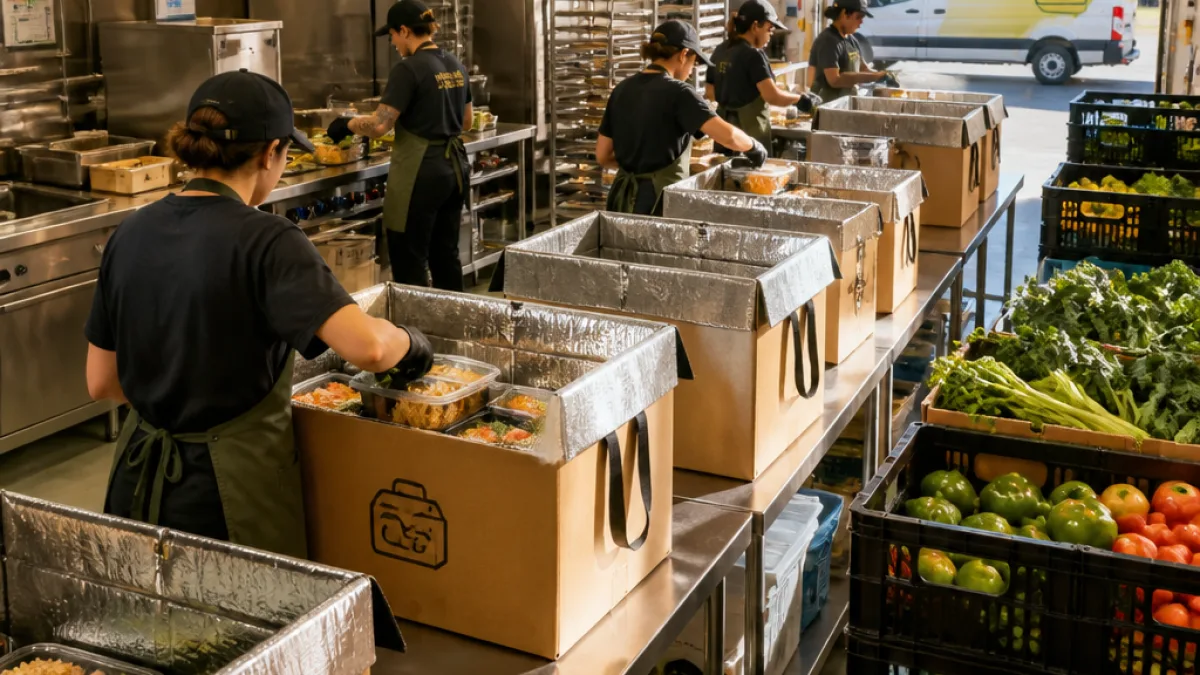
The provincewide school lunch program in Nova Scotia is moving into its third year with suppliers reporting tangible economic benefits: businesses have expanded operations and hired staff to meet demand created by the program.
Program scale and finances
According to provincial figures, the government spent about $80 million on the school lunch program in the last school year and recovered roughly $2.45 million through its pay-what-you-can model. Education Minister Brendan Maguire has described the approach as successful and sustainable as the program continues to roll out.
| Item | Amount |
|---|---|
| Provincial spending (last school year) | $80 million |
| Recovered from parents (pay-what-you-can) | $2.45 million |
Local suppliers say the program is creating jobs
Upward Mobility Kitchens, a Halifax-based food producer involved with the program, said the contract work has allowed it to scale up. Founder Mark Brand told CBC that the organisation has grown substantially, moving from three staff to 33.
"It leverages our buying power. We're able to afford more food, we're able to provide more food, we're able to provide more programming, more employment, and those things trickle down across the region," said Mark Brand.
Brand also noted the group works with non-profit partners and aims to source ingredients from independent suppliers, including produce from its own farm. Those links to local producers are one of the elements suppliers cite as an economic benefit of the program.
What suppliers report seeing on the ground
Businesses engaged to prepare and deliver meals for schools have told provincial media they are expanding production capacity, hiring additional staff and deepening relationships with local farmers and vendors. The result, supporters say, is not only more meals for children but wider community economic activity tied to the program.
- Expanded kitchen capacity and staffing among contracted food providers.
- Increased purchasing from local growers and independent suppliers.
- Stronger partnerships with community organisations and nonprofits.
Policy implications and community impact
The pay-what-you-can model aims to remove barriers to access while allowing families who can afford it to contribute. Officials say it has helped the program recover a portion of costs while maintaining broad coverage. As the program grows, officials and providers will be watching indicators such as take-up rates, the share of families paying full price, and the degree to which contracts support local supply chains.
For many communities, a central question is how the program intersects with broader efforts to address food insecurity and child poverty. Provincial reporting has linked the initiative to a range of social goals, while also highlighting the economic activity generated for local food businesses.
Practical takeaway for families and businesses
Families using the program should expect continued access to school meals under the pay-what-you-can model as the initiative expands. For businesses in the food sector, the program represents a steady revenue stream but also calls for the capacity to meet nutritional standards, delivery schedules and volume requirements set by school boards and their contractors.
As the lunch program enters another school year, its supporters point to both social and economic returns: feeding students while supporting local jobs and suppliers. The province will face ongoing pressure to balance affordability, quality and fiscal sustainability as the program grows.
— Jerome Beals, NEXO RADAR