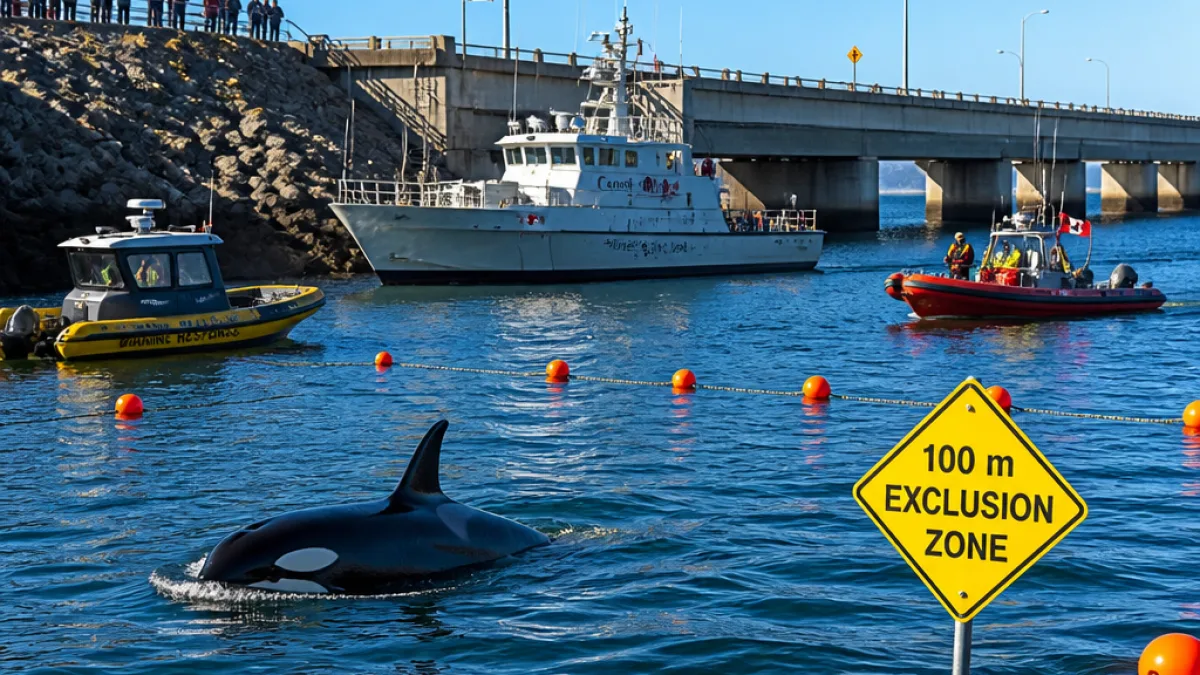
Community members and visitors along the Strait of Canso spent the weekend watching a rare visitor glide through familiar waters: a solitary killer whale that has been reported several times near the Canso Causeway.
Conservation group confirms multiple sightings
The Marine Animal Response Society (MARS) in Nova Scotia said it received numerous recent reports of the orca and posted updates on social media indicating the animal appeared to be in good physical condition. The daily appearance of such a large, solitary cetacean in the Canso area — which links mainland Nova Scotia with Cape Breton — has drawn both casual observers and concerned callers to provincial authorities.
Alongside the sightings, MARS issued guidance aimed at minimising disturbance and ensuring public safety. It reminded mariners that federal regulations require vessels to remain at least 100 metres from whales and urged people to enjoy the sighting from land where possible.
“The best way to enjoy this rare visitor is from shore,”
The group added that giving the animal space helps it move through the area without added stress.
Reports of vessels too close, federal officers dispatched
MARS said it had received multiple reports of boats operating near the whale. That information was forwarded to the federal Fisheries Department, which has sent fishery officers to the scene to look into possible contraventions of the federal Fisheries Act.
Local residents reported an influx of people and boats over the weekend as word of the orca spread. While many observers stayed on land or maintained respectful distances, the conservation group and officials expressed concern about incidents where vessels appeared to come too close.
- Recommended viewing: From shore whenever possible
- Legal buffer: Keep at least 100 metres from any whale
- If you see a boat too close: Report the behaviour to authorities
Why this matters locally
To coastal communities, a killer whale sighting is more than a spectacle. It can affect local marine traffic, tourism and the fragile balance between human activity and wildlife. The Strait of Canso is a busy corridor for fishing vessels, recreational boaters and commercial traffic. A large predator passing through can alter those routines and requires calm, coordinated responses from the public and enforcement agencies.
For conservation groups, sightings of solitary orcas raise questions about individual health, social structure and feeding patterns. While MARS has said the animal appears healthy, solitary behaviour can sometimes indicate separation from a pod, unusual for this species, which is typically highly social. Monitoring by responders and reports from the public help build a picture of an animal’s condition without adding stress.
What boaters should do
Officials reiterated practical steps for mariners to reduce disturbance:
- Slow down and alter course well before reaching 100 metres from the whale.
- Reduce noise and avoid sudden changes in speed or direction.
- Keep groups of vessels dispersed and do not encircle the animal.
- Report any collisions, injuries to the animal, or aggressive vessel behaviour to the proper authorities.
Quick reference
| Item | Detail |
|---|---|
| Location | Canso Causeway area, Strait of Canso |
| Species | Killer whale (orca) — solitary individual |
| Recommended separation | 100 metres (federal requirement for vessels) |
| Responsible authorities | Marine Animal Response Society; Fisheries Department fishery officers |
For residents, the sight has been a reminder of the region’s rich marine life and the responsibilities that come with it. While the possibility of a dramatic encounter draws cameras and curiosity, the guidance from conservationists and federal officials is straightforward: observe responsibly, keep your distance and allow the animal to continue on its way.
Those with photos, videos or detailed accounts of the animal’s location and behaviour have been asked to share them with MARS to aid monitoring efforts. Fishery officers on site will determine whether any enforcement action is warranted based on reports alleging vessels entered zones that could disturb the whale.
As evening fell on the causeway, locals I spoke with reflected on the mix of excitement and caution the visit stirred — a reminder that Nova Scotia’s shorelines are living places where human and marine lives intersect, sometimes unexpectedly.
Updates will follow as federal officers complete their inquiries and as responders continue to monitor the orca’s movements in the coming days.