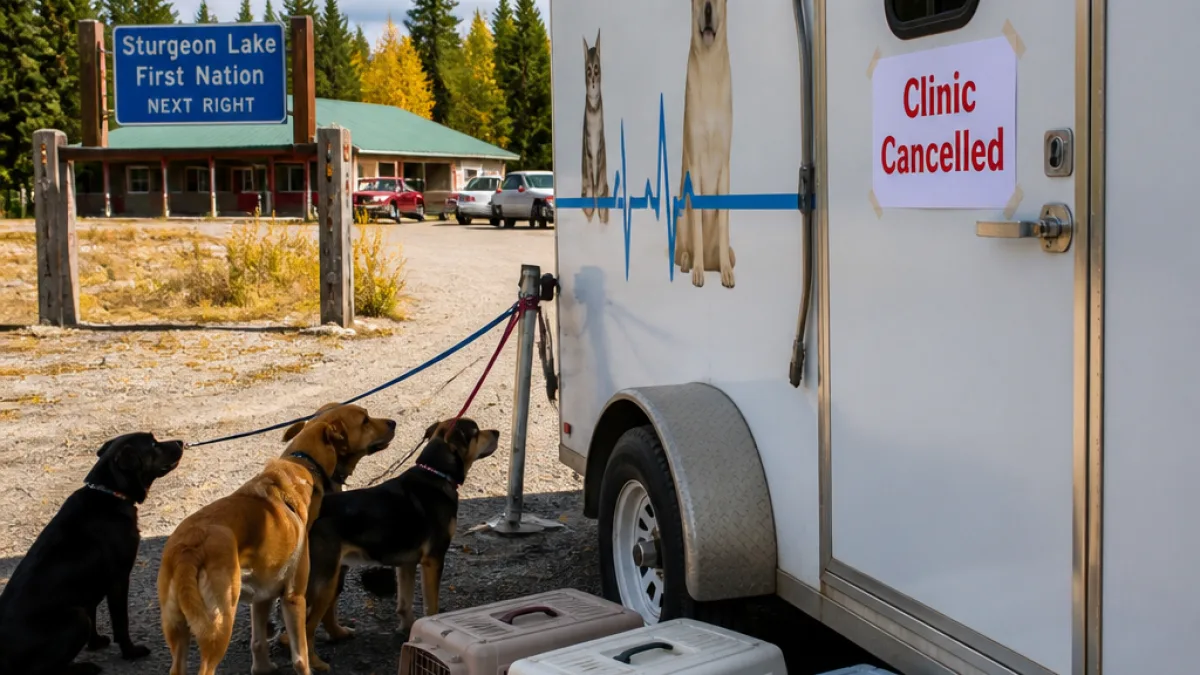
STURGEON LAKE FIRST NATION — A planned temporary veterinary clinic that would have served up to 150 animals at Sturgeon Lake First Nation has been cancelled after the province’s veterinary association denied a licence application, a move local leaders and the charity involved say will hurt animal welfare and may create public-safety risks.
Charity says distance rule blocked clinic
The Canine Action Project (CAP), a charity that organises temporary spay-and-neuter clinics across the province, said it was set to operate an on-site clinic in mid-August at the northern First Nation community, about a 40-minute drive northwest of Prince Albert.
CAP co-executive director Meagan Schmitz told NEXO RADAR the Saskatchewan Veterinary Medical Association (SVMA) refused the temporary clinic licence after concluding the site fell within 150 kilometres or two hours of existing veterinary practices.
“We were advised that because they were within 150 km or two hours of existing veterinary practices, our application to do the on-site clinic was denied,”
Schmitz said the charity was surprised by the decision because in more than a decade of running mobile clinics it had not previously encountered a distance-based restriction. CAP has conducted more than 20 clinics since 2012, including one in Sturgeon Lake in 2022 and a recent clinic in Big River this June that proceeded with approval, she said.
Appeal denied; community left without service
CAP appealed the SVMA decision on July 24, Schmitz said, but that appeal was denied. Global News has contacted the SVMA for comment but has not received a response.
For residents of Sturgeon Lake First Nation, losing the temporary clinic represents a major setback. Band councillor Anita Parenteau told media many community members lack access to private transportation or the funds to drive animals to clinics outside the community.
“A lot of people don’t have access to their own vehicle. They don’t have gas funds to take their animal to these veterinary clinics,”
Local officials and CAP warned that when animals go unneutered, communities can see increases in roaming and strays, which may lead to animal welfare concerns and, they say, potential public-safety impacts.
What’s at stake
- Animal health: Spay-and-neuter procedures lower rates of disease and overpopulation among dogs and cats.
- Community access: Many on-reserve residents have limited transportation and financial options to reach off-reserve clinics.
- Public safety: Uncontrolled animal populations can increase the number of roaming animals, creating safety and hygiene concerns.
Context and past practice
CAP said it has a long record of running short-term clinics in rural and Indigenous communities. The charity noted that the distance criterion it was told about has not been part of its experience running these clinics over the last 15 years.
| Fact | Detail |
|---|---|
| Planned clinic location | Sturgeon Lake First Nation (≈40-minute drive NW of Prince Albert) |
| Expected animals served | Up to 150 |
| Licence denied due to | Proximity to existing veterinary practices (within 150 km or two hours) |
| CAP clinics since | More than 20 since 2012 |
Questions for regulators and next steps
The SVMA’s rationale and any written policy explaining the distance or time threshold have not been publicly provided. CAP said it submitted supporting letters from three nearby veterinary clinics and a letter from the chief of Sturgeon Lake First Nation as part of the appeal.
Without the temporary clinic, CAP and community leaders will need to explore alternatives: seeking a reversal from the regulator, organising transportation supports to off-reserve clinics, or coordinating with practising veterinarians to provide limited services locally under different arrangements. None of those options have been confirmed.
For many northern Saskatchewan communities, mobile clinics have offered a practical way to provide essential animal-health services when local veterinary infrastructure is scarce. The denial highlights a tension between regulatory oversight and efforts by charities to fill unmet needs in remote and Indigenous communities.
As of publication, the SVMA had not responded to requests for comment and details about the decision remain limited. CAP and Sturgeon Lake leaders say they will continue seeking a solution that restores services for residents and their animals.
Wade Cardinal
NEXO RADAR, Saskatchewan Correspondent